

According to TechSci Research report, “Ferrocement Market– Global Industry Size, Share, Trends, Competition Forecast & Opportunities, 2031F,” the Global Ferrocement Market is projected to grow from USD 2.12 Billion in 2025 to USD 2.92 Billion by 2031, registering a CAGR of 5.48% during the forecast period. Ferrocement is gaining increasing attention across construction, marine, agriculture, water infrastructure, rural energy, and housing applications because of its combination of strength, durability, flexibility, and cost efficiency.
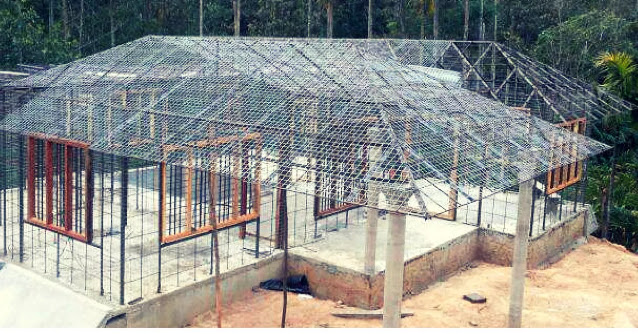
Ferrocement is a versatile composite construction material generally characterized by a cement mortar matrix reinforced with layers of wire mesh or other suitable reinforcement. Its ability to create relatively lightweight yet durable structures has made it an attractive material for applications where conventional construction methods may involve higher material consumption, greater labor requirements, or increased lifecycle costs.
Industry Key Highlights
Global Ferrocement Market is expected to reach USD 2.92 Billion by 2031, up from USD 2.12 Billion in 2025.
The market is projected to expand at a 5.48% CAGR during 2025–2031.
Hand Plastering held the largest share based on manufacturing process in 2024.
Asia-Pacific is identified as the fastest-growing regional market.
Increasing urbanization and affordable housing requirements are supporting market expansion.
Ferrocement is gaining traction because of its durability, flexibility, cost efficiency, and relatively low maintenance requirements.
Technological advancements are improving manufacturing efficiency and structural performance.
Request For Sample Report: https://www.techsciresearch.com/sample-report.aspx?cid=12807
Main Drivers & Trends
Growing Demand for Cost-Effective Construction Materials
Cost efficiency remains one of the major factors supporting ferrocement adoption. Construction companies and infrastructure developers are increasingly evaluating materials based not only on initial purchase costs but also on durability, maintenance requirements, labor efficiency, and overall lifecycle economics.
Ferrocement can provide an attractive balance between material performance and construction cost, particularly in applications where lightweight and customized structures are required.
Rising Focus on Sustainable Construction
The global construction industry is increasingly moving toward sustainable materials and resource-efficient construction practices. This shift is creating opportunities for ferrocement because of its potential to reduce material wastage and support long-lasting structures.
The growing adoption of green building practices and low-carbon construction strategies is encouraging developers to examine alternatives to conventional construction materials. Ferrocement's durability and adaptability can make it suitable for projects where sustainability and lifecycle performance are important considerations.
Expansion of Affordable Housing
Affordable housing development is becoming an important construction priority in emerging markets. Rapid urbanization and population growth are creating demand for economical construction solutions that can deliver acceptable durability and performance.
Ferrocement can be utilized in housing-related applications because of its flexibility, relatively lightweight nature, and suitability for different structural designs. The continued expansion of residential construction therefore provides an important growth opportunity.
Emerging Trends
Integration of 3D Printing
3D printing is emerging as an innovative opportunity for ferrocement construction. The technology can enable the development of customized structures with greater design precision while potentially reducing material wastage.
Complex shapes and customized components that may require significant manual effort through traditional techniques can potentially be produced more efficiently using automated fabrication systems.
Robotic Fabrication and Automated Application
Robotic systems are increasingly being explored for construction applications. In ferrocement projects, automation can support mortar application and improve consistency across larger projects.
Robotic fabrication may also reduce dependence on repetitive manual processes and improve workplace efficiency. As construction companies seek greater productivity, automated ferrocement application could become increasingly relevant.
Advanced Reinforcement Technologies
New reinforcement approaches are enhancing the structural characteristics of ferrocement. Advanced steel wires, improved mesh configurations, composite reinforcement, and specialized additives can improve strength, durability, and resistance to environmental conditions.
These developments can expand ferrocement's suitability for demanding applications.
Eco-Friendly Cement Formulations
Sustainability is encouraging research into improved cement formulations and environmentally conscious construction materials. The development of innovative cement mixtures and eco-friendly additives can help improve ferrocement's environmental profile while maintaining structural performance.
Market Segmentation Analysis
The Global Ferrocement Market is segmented based on Application, Manufacturing Process, Region, and Competition.
By Application
The market includes:
Housing
Marine
Agriculture
Rural Energy
Water Supply & Sanitation
Others
Housing represents an important application area because ferrocement can provide cost-effective and durable construction solutions. Growing urbanization and affordable housing requirements can create opportunities for its use in residential construction.
The Marine segment is another significant application area due to ferrocement's durability and suitability for water-related structures. Its use in marine environments can include specialized construction and infrastructure applications.
Agricultural applications include structures associated with farming, storage, irrigation, and related infrastructure. Meanwhile, water supply and sanitation applications can benefit from the material's durability and adaptability.
By Manufacturing Process
The market is segmented into:
Hand Plastering
Semi Mechanized
Guniting
Centrifuging
Hand Plastering held the largest market share in 2024.
The segment benefits from ferrocement's ease of application, flexibility, and suitability for projects requiring customized finishes. Hand plastering can provide smooth and durable surfaces while supporting different reinforcement configurations.
Semi-mechanized methods and guniting are gaining importance as construction projects increasingly seek improved productivity and consistency. Meanwhile, centrifuging can support specialized applications requiring specific manufacturing characteristics.
By Region
The market covers:
North America
Europe
Asia-Pacific
South America
Middle East & Africa
Asia-Pacific is expected to remain a major growth region due to rapid urbanization, infrastructure development, rising construction activity, and increasing demand for affordable housing.
Regional Analysis
Asia-Pacific
Asia-Pacific is the fastest-growing region in the Global Ferrocement Market.
Countries including India, China, and Indonesia are contributing to regional growth through expanding construction activities, infrastructure development, urbanization, and housing requirements.
The region's demand for affordable and durable construction materials provides a favorable environment for ferrocement. In addition, the increasing focus on sustainable construction is encouraging the adoption of alternative building materials.
Marine and water-related applications are also contributing to market opportunities across the region. Southeast Asian countries are witnessing increasing ferrocement applications in agriculture, construction, and power-related infrastructure.
North America
North America represents a technologically advanced construction market where material performance, sustainability, automation, and lifecycle costs are important considerations. Increasing adoption of advanced construction technologies can create opportunities for modern ferrocement manufacturing and application techniques.
Europe
Europe's focus on sustainability, resource efficiency, and environmentally responsible construction practices can support demand for durable and efficient building materials. The region's emphasis on advanced construction technologies may also encourage innovation in ferrocement applications.
South America
Growing infrastructure requirements, urbanization, and housing development can provide opportunities for ferrocement in South American markets. Cost-effective construction solutions can be particularly relevant in developing infrastructure environments.
Middle East & Africa
The Middle East & Africa region presents opportunities associated with infrastructure development, water management, housing, and climate-resilient construction. Ferrocement's adaptability and durability can support its application in challenging environmental conditions.
Competitive Analysis
The Global Ferrocement Market includes established construction material manufacturers and companies with capabilities across cement, steel, building products, and related construction solutions.
[Saint-Gobain]
Saint-Gobain operates across the global building materials industry and maintains a broad portfolio associated with construction solutions. Its scale, technological capabilities, and focus on innovative building materials position it as an important participant in the broader construction materials ecosystem.
[LafargeHolcim Ltd.]
LafargeHolcim is a major construction materials company with extensive capabilities in cement and building solutions. Its global presence and focus on construction materials support its relevance to evolving demand for durable and sustainable construction solutions.
[CRH plc]
CRH operates across construction materials and building products markets. Its broad geographic presence and diversified portfolio provide exposure to infrastructure, residential, and commercial construction activities.
[Boral Limited]
Boral Limited has a strong presence in building and construction materials. Its activities across construction-related products make it relevant to the broader market for innovative building solutions.
[Cemex S.A.B. de C.V.]
Cemex is a major global building materials company with capabilities in cement and concrete solutions. Its extensive market presence supports participation in the changing global construction materials landscape.
[UltraTech Cement Ltd.]
UltraTech Cement is a major cement and building materials company with significant exposure to India's expanding construction and infrastructure market. Increasing construction activity in India creates opportunities for advanced and alternative construction solutions.
Future Outlook
The future of the Global Ferrocement Market Size is closely linked to the evolution of sustainable and cost-efficient construction. With the market projected to reach USD 2.92 Billion by 2031, opportunities are expected to emerge across housing, marine, agriculture, water infrastructure, sanitation, and rural development.
The increasing use of automation and digital construction technologies could further transform ferrocement manufacturing and application. Advanced machinery can improve production efficiency, while robotic systems can support consistent application on large-scale projects.
The development of stronger reinforcement systems and improved cement formulations is also expected to expand the material's performance capabilities.
Asia-Pacific is likely to remain an important growth engine because of urbanization, infrastructure investment, construction activity, and affordable housing demand.
Benefits of the Research Report
The Global Ferrocement Market research report provides valuable insights for businesses, investors, manufacturers, construction companies, and other stakeholders.
Comprehensive Market Assessment – Provides an overview of the global ferrocement industry and its growth trajectory.
Market Size & Forecast Insights – Covers market size projections from 2025 to 2031 and the expected CAGR.
Key Growth Drivers – Identifies the major factors influencing ferrocement market expansion.
Emerging Trend Analysis – Highlights technology, automation, sustainability, and advanced manufacturing trends.
Segmentation Analysis – Examines the market by application and manufacturing process.
Regional Market Insights – Identifies growth opportunities across major global regions.
Competitive Landscape – Provides an overview of major companies operating in the market.
Investment Support – Helps businesses identify potential areas of opportunity within the ferrocement industry.
Strategic Decision-Making – Supports companies in developing market entry, expansion, and product strategies.
Future Market Opportunities – Highlights potential opportunities associated with affordable housing, infrastructure, marine applications, sustainability, and advanced construction technologies.
Frequently Asked Questions (FAQs)
1. What is the projected size of the Global Ferrocement Market by 2031?
The Global Ferrocement Market is projected to reach USD 2.92 Billion by 2031, growing from USD 2.12 Billion in 2025.
2. What is the CAGR of the Ferrocement Market during 2025–2031?
The market is expected to register a 5.48% CAGR during the forecast period.
3. Which segment dominated the Ferrocement Market in 2024?
Based on the manufacturing process, Hand Plastering held the largest market share in 2024.
4. Which region is expected to grow fastest in the Ferrocement Market?
Asia-Pacific is identified as the fastest-growing region, supported by urbanization, construction activity, affordable housing demand, infrastructure development, and increasing interest in sustainable building materials.
Comments
Log in or sign up to join the conversation.