


Bitcoin (BTC.X) dropped as much as 3% to $63,020 during Asian trading on July 28, its lowest level in 11 days, as derivatives markets priced in roughly a 1-in-3 chance of a surprise 25-basis-point Fed rate hike at Wednesday’s Federal Open Market Committee meeting.
This is according to Bloomberg reporting by Suvashree Ghosh. Ethereum fell a steeper -3.3% over the same session, reflecting broad-based crypto market selling pressure tied to the recalibrated rate expectations.

The BTC price decline coincided with a structural rupture in ETF flow data: US spot Bitcoin ETFs shed more than $465M over July 23–24, snapping a seven-session inflow streak that had provided a consistent demand floor beneath the market, according to TradingKey.
That reversal removed a critical support pillar at a moment when macro headwinds were already intensifying, leaving the crypto market exposed to the full weight of institutional de-risking ahead of the FOMC decision.
The Fed Rate-Hike Probability Transmission Channel: How Rising Hike Odds Reach Bitcoin’s Order Book
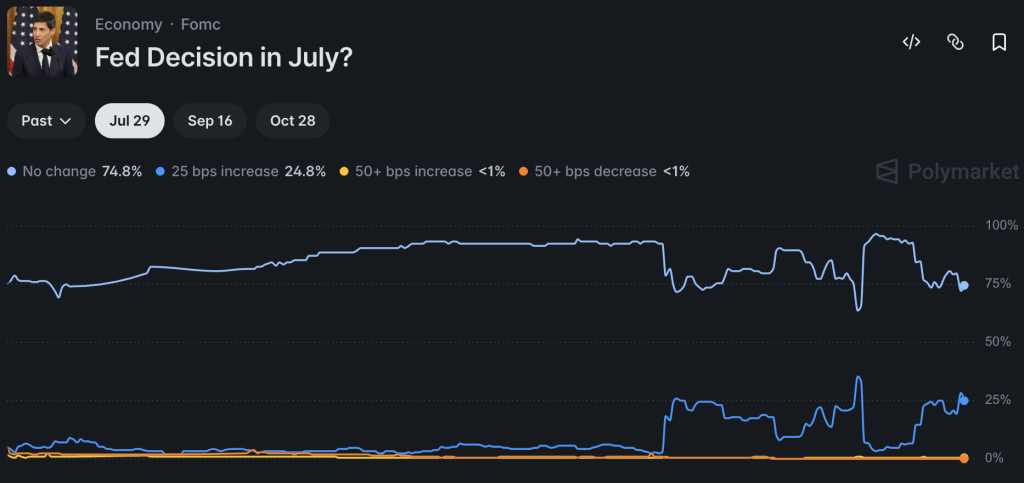
The connection between FOMC rate expectations and Bitcoin’s order book hinges on institutional investors’ opportunity-cost considerations.
When the probability of a Fed rate hike rises, front-end Treasury yields increase, making non-yielding assets like Bitcoin less attractive. For example, the 2-year Treasury yield rose by 15-20 basis points ahead of the July 28 session, driven by stronger US economic data.
Caroline Mauron from Orbit Markets noted that selling during this session was linked to heightened Fed-hike probabilities and macro concerns about AI-related credit risks, with $62,000 identified as a key support level.
Citadel Securities indicated that a surprise 25-basis-point hike could enhance Fed Chair Kevin Warsh’s credibility in fighting inflation, signaling a policy shift rather than just a minor adjustment.
Additionally, thinner liquidity during the Asian trading session intensified price movements, pushing Bitcoin toward $63,200. The 90-day correlation between Bitcoin and the Nasdaq 100 has risen to the 0.4-0.5 range, while its correlation with real yields has become more negative.
This dynamic means a hawkish Fed not only impacts sentiment but also tightens financial conditions for institutional investors, with Bitcoin ETF redemptions being a direct consequence of this tightening.
DISCOVER: Crypto Expert Report – What Are the 10 Next Crypto to Explode in 2026?
ETF Outflow Mechanics: The $465M Two-Day Redemption and What the Cross-Fund Alignment Reveals
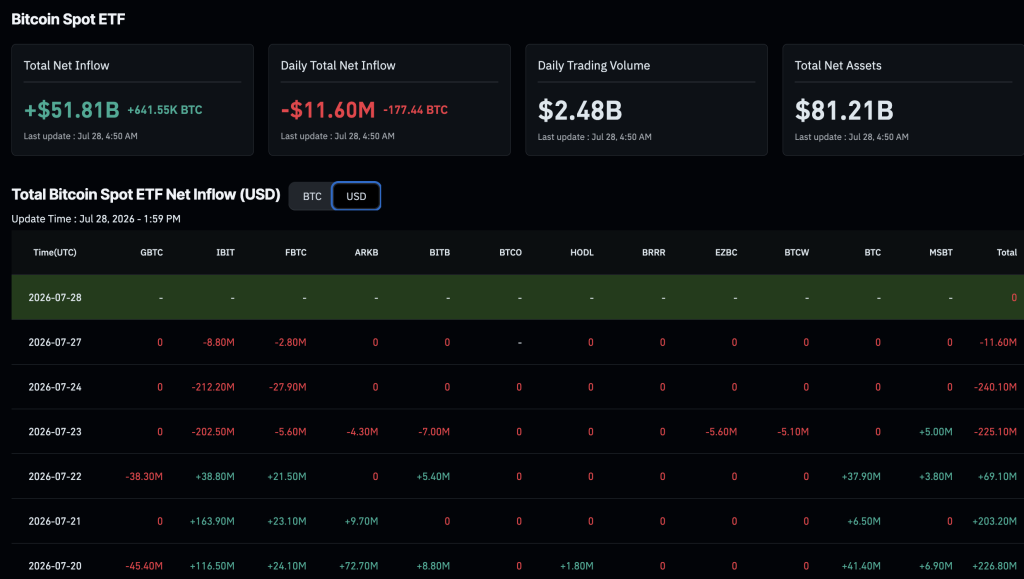
US spot Bitcoin ETFs experienced net outflows exceeding $465M on July 23–24, breaking a seven-session inflow streak. IBIT was identified as a primary contributor to these outflows.
The simultaneous redemptions suggested that institutional investors were reacting to a common macroeconomic event, specifically the repricing of Fed rate-hike odds ahead of the July 29 FOMC decision.
This cooling institutional activity indicated a temporary exhaustion of the recent accumulation phase, with spot Bitcoin ETFs now accounting for 20–30% of US Bitcoin spot trading volume on peak days.
Additionally, around 60,000 BTC were transferred to exchanges by short-term holders during this period, further intensifying selling pressure and leading to a technical breakdown in the market.
Macro Backdrop and Institutional Context: How Elevated Rate-Hike Odds Are Channeling Capital Away From Spot Bitcoin
The July 28 session was influenced by Bitcoin’s trading range of $60,000–$70,000 over the prior month, with 30-day realized volatility dropping to the mid-teens.
This volatility compression and stalled upside momentum made holding Bitcoin through an FOMC meeting risky for institutional investors, given the potential for a disorderly break below $62,000 if rates were increased.
According to Mudrex’s Akshat Siddhant, the crypto market experienced bearish sentiment due to weaker US labor data and concerns that AI-sector spending is impacting risk appetite.
The strengthening US dollar, which is inversely correlated with Bitcoin’s value, added pressure, as rising real yields diminished the appeal of non-sovereign assets. The total crypto market cap fell about 1.6% to $2.26 trillion, indicating a broader risk-off trend.
The inflation backdrop raised Fed rate-hike odds to one-in-three, influenced by persistent above-target CPI readings. This situation has undermined the macro tailwind that previously supported Bitcoin’s rise.



Comments
Log in or sign up to join the conversation.