

Give Warsh an A+ for question avoidance.
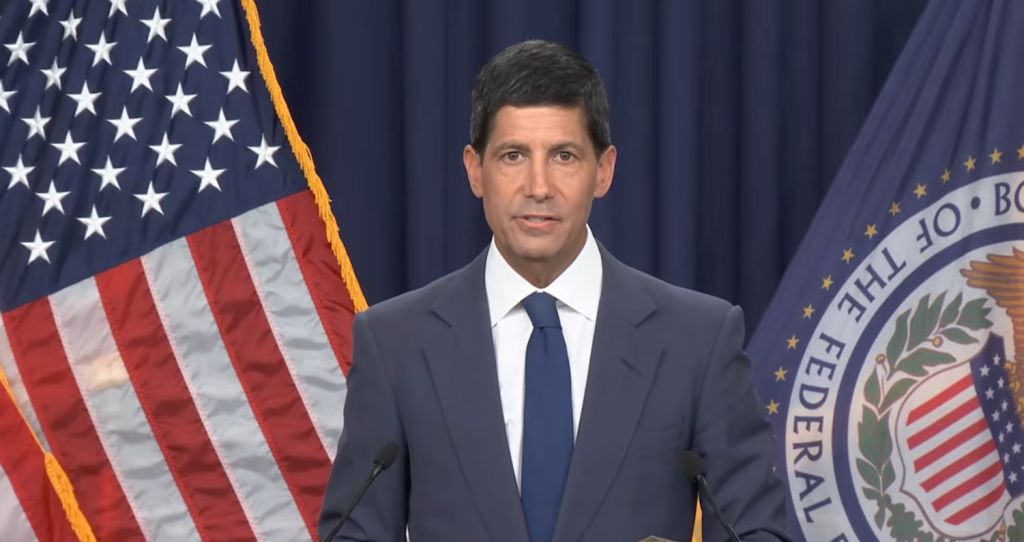
Key Press Conference Statements
You’ve heard this before, but we will deliver price stability.
Five years of high inflation has left an impression that’s hard to shake. That the Fed’s implicit inflation targe is above 2 percent. Let me reiterate, there is no soft inflation target. There is no soft implicit target. There is only a target and it’s 2 percent.
We understand that 5 plus years of inflation cannot be cured in 9 weeks or by a single month of modest price decreases.
[Regarding forward guidance] Market participants are learning to play the ball and not the referee. This is in my view a change for the better. I understand the desire for rolling forecasts and commentary from this committee, but for our part, we need to observe market reaction to developments, direct and unfiltered.
Where appropriate, we will not hesitate to act. To echo an old phrase, has the past really become the past.
Reporter Q&A
Message from the Markets
Q: Steve Liesman, CNBC: What message are you getting from the market as to where policy out to be right now?
A: The message from markets is the message from markets. What we are tying to de is get an unfiltered message from markets.
Mish: Warsh rambled on for a minute unwilling to say the message from the markets is rates are too low.
Q: Steve Liesman: I get that Mr. Chairman. An the follow-up question is if the market’s are talking to you, and if it’s real rates are higher, it would suggest that’s where the funds rate out to go.
A: Interpreting markets is an imperfect business. We can think these things are over-determined. Blah blah blah Even though we have not done much in 42 days the markets have done quite a bit.
Question on Dissents
Q: Claire Jones, Financial Times: Can you characterize the arguments that the three dissenters put forward?
A: I asked for a good family fight and I got one. That’s the purpose. That’s a design feature. It was a real family fight. We have the power, the tools to deliver stable prices. Blah blah blah. The problem with data dependence is the data and the dependence.
Mish: He never answered the question.
Why Shouldn’t Rates Be Higher?
Q: Neil Irwin, Axios: Why should rates not be higher today?
A: Rates are higher today than they were 42 days ago. Markets have made decisions because we stepped back in part from trying to influence those. Market judgements have moved up. We are observing them. So I think it’s a mischaracterization to say the markets haven’t reacted because we didn’t move today. We will continue to monitor the markets and see how they react and that can help our decision making when we meet in 7 or 8 weeks. … This is a period of watchful thinking not watchful waiting.
Mish: That is disingenuous. Nobody is saying the markets didn’t react. What we are saying is the Fed is ignoring the markets and doing what it wants.
Explain the Pause
Q:Edward Lawrence, Fox News: What specifically in your mind would be the argument for a pause today?
A: I wouldn’t characterize what we did today as anything like a pause. I would characterize what we did as a rigorous review of the economic situation. I would characterize what we did as a review of the big hard questions. And I characterize it as a view of what our own homework is. If you were to force a description of this as a pause, I would say financial market prices would take the other side of that. The financial markets in this intermeeting period did not pause. They reacted to the inflation data in one direction, strong economic growth in the other direction.
MIsh: A pause by any other name is a pause.
A Disingenuous Warsh
I watched the video live and I replayed it again to capture the above highlights.
What stands out isn’t Warsh’s refusal to answer questions. Rather, it’s is the convolutions he went through on multiple occasions to explain how a pause isn’t a pause.
The irony is the Fed once again is ignoring market signals, just as it always does.
Instead of transitory nonsense, we have nonsense on how and why a pause isn’t a pause.
Warsh says this is watchful thinking not watchful waiting. But thinking instead of doing is why we have five years of high inflation.
How Does the Fed Maintain its Target Rate?
When the FOMC sets or changes the target range for the federal funds rate, the Fed primarily moves two administered rates in lockstep:
Interest on Reserve Balances (IORB) — the rate paid to banks on their reserves at the Fed (the main floor tool).
Overnight Reverse Repo (ON RRP) rate — the rate offered to a wider set of money-market participants (the supplementary floor).
These ceiling tools, backed by an ample supply of reserves, keep the market federal funds rate inside the target range.
Balance-Sheet Consequence
Because the Fed has chosen an ample-reserves framework, it must keep the quantity of reserves large enough that ordinary fluctuations do not push the system into scarcity causing higher rates.
The result is a Fed balance sheet that ~$6.7 trillion and trending higher to maintain the “ample” condition.
Under the current rules and bank preferences, keeping reserves ample requires net asset purchases and a rising (or at least non-permanently-contracting) balance sheet over time.
The reasons may be different, but an expanding balance sheet is synonymous with QE.
Warsh Stated Preferences
Warsh wants to eliminate the balance sheet and eliminate QE.
Well, good luck with that when the Fed has set rates lower than where the market thinks they should be.
This is why Warsh went to great lengths today disingenuously answer two questions on market views and how a pause isn’t a pause.
Unfortunately, no one pinned Warsh on QE or balance sheet issues today.
Regardless, a bond market revolt will eventually force the Fed’s hand, especially given the fact Warsh does not want forward guidance to try to steer the market to the Fed’s view.
The next month will be very interesting if inflation data at all disappoints.
Meanwhile, Trump is doing everything he can with tariffs and Mideast policy to drive prices higher.
Related Posts
July 29, 2026: The Fed Holds Interest Rates Steady with Three Dissents for a Hike
With a very short statement the Fed remains on pause.
July 27, 2026: How Much Credit Growth Does It Take to Expand Real GDP?
Here’s the shocking answer in several pictures.
Everything is set to blow up with a September rate hike less than two months before the election.


Comments
Log in or sign up to join the conversation.