
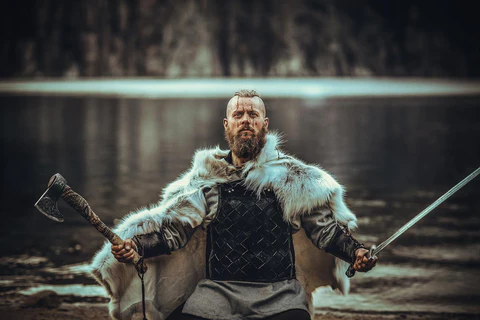
The Viking Age produced many legendary warriors whose names have survived in sagas, chronicles, and folklore. Among their most iconic weapons was Viking axe—a symbol of power, skill, and identity. These warriors were often remembered not only for their deeds, but also for the axes they wielded in battle.
Ragnar Lothbrok
One of the most famous Viking figures, Ragnar Lothbrok, is often depicted carrying a mighty axe. Although his existence blends myth and history, he represents the ideal Viking warrior—fearless, cunning, and ambitious. His axe symbolizes leadership and conquest, as he led raids across England and Francia.
Eric Bloodaxe
Eric Bloodaxe, a 10th-century king of Norway, earned his fearsome name through violent battles and ruthless rule. His association with Norse axe reflects brutality and dominance. For warriors like Eric, the axe was not just a weapon, but a tool of terror that reinforced their reputation.
Harald Hardrada
Harald Hardrada, known as one of the last great Viking kings, fought in many battles across Europe. His use of the axe demonstrated both strength and tactical skill. The long-handled “Dane axe,” often linked to elite warriors, required training and precision, making it a symbol of expertise.
Legendary Axes and Their Meaning
Axes used by these warriors were not always ordinary. Some were decorated with carvings, runes, or intricate metalwork, suggesting they held personal or even spiritual significance. A well-crafted axe could symbolize honor, heritage, and loyalty.
Conclusion
Famous Viking axe for sale warriors and their axes remain powerful symbols of the Viking Age. Figures like Ragnar Lothbrok, Eric Bloodaxe, and Harald Hardrada show how the axe was more than a weapon—it was a mark of identity, strength, and legacy. Even today, the image of a Viking with an axe continues to represent courage and warrior spirit.
Comments
Log in or sign up to join the conversation.