

We’ve been providing sector updates to a number of clients recently. Midstream had a good 1Q but stalled during 2Q. The resumption of hostilities last week pushed stocks higher, but even without that we think valuations remain attractive.
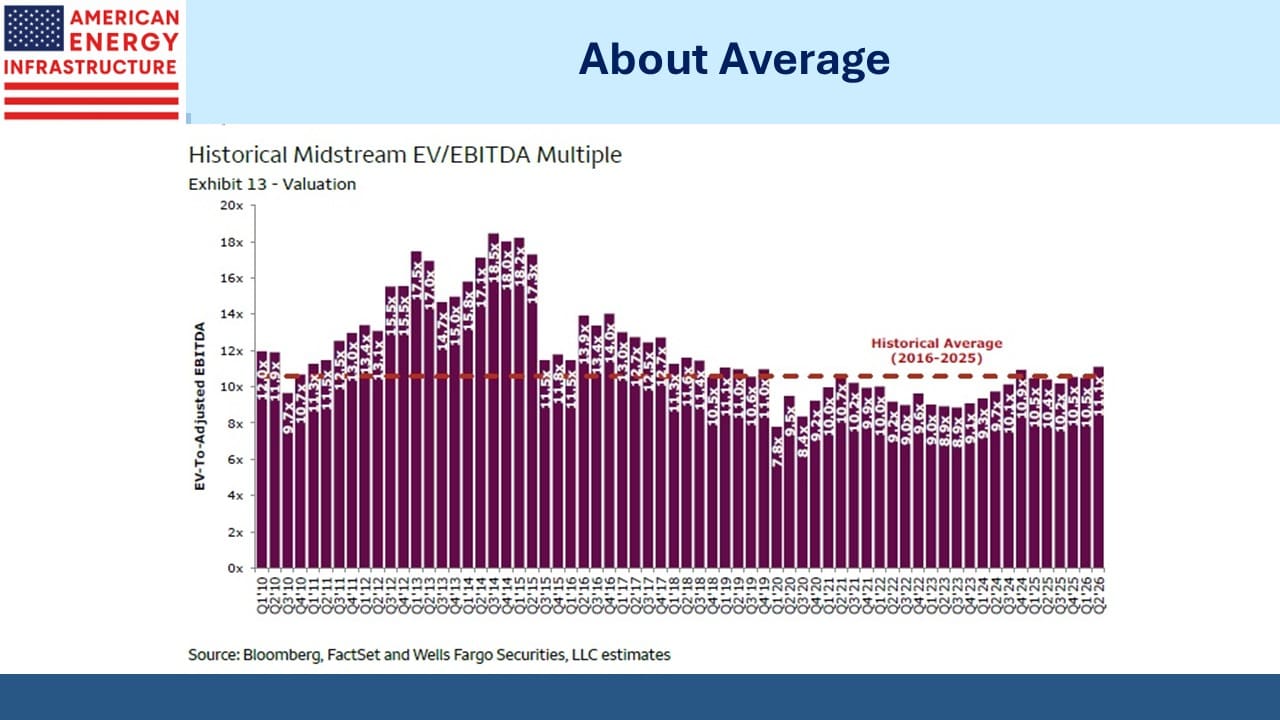
Enterprise Value/EBITDA at 11.1X is close to the ten-year average, a period which includes the 2020 pandemic when valuations hit all-time lows. Considering that the ten-year return on the American Energy Infrastructure Index (AEITR) is 13.6% through June, it shows that cash flows have roughly grown commensurately with stock prices during this time.
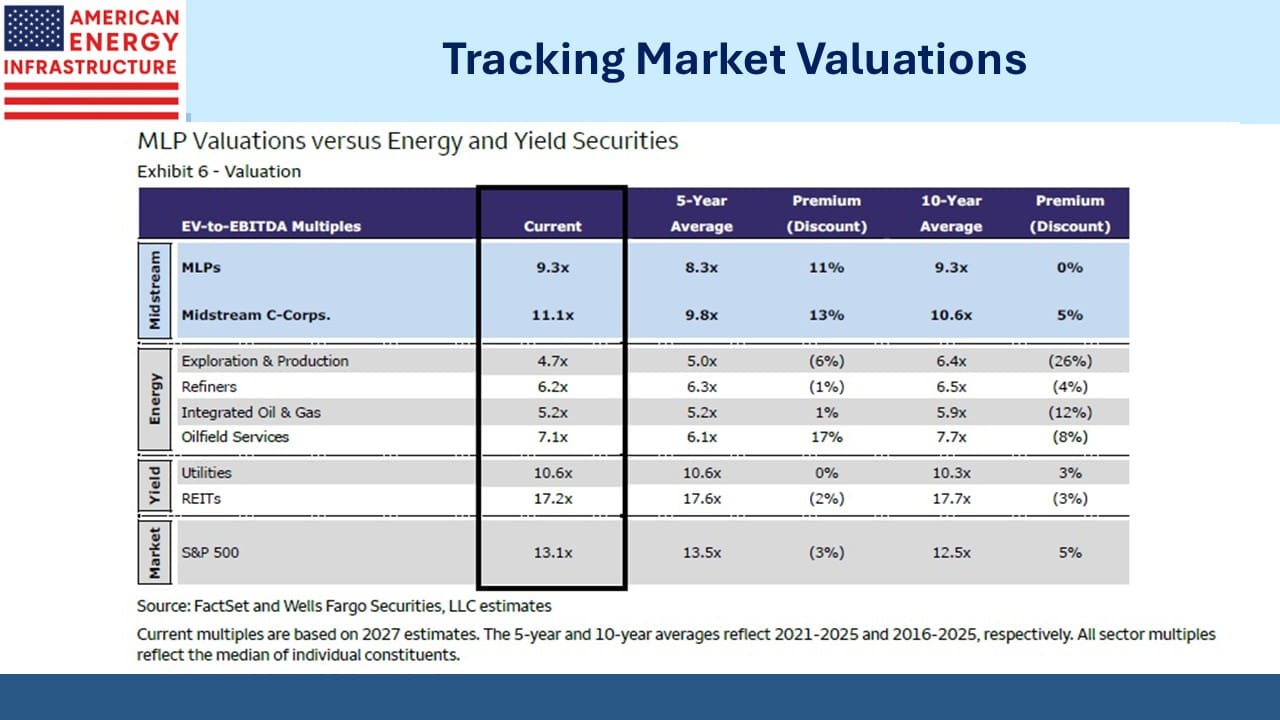
Utilities and REITs, two sectors that yield-seeking investors often compare with midstream, are close to their ten-year average EV/EBITDA.
This is also true for the S&P500. So when investors compare the AEITR’s YTD return of 25% with the overall market’s +11% and wonder if it’s too late to participate in America’s booming energy sector, this should assure them that growing EBITDA has maintained the relative value between midstream and the S&P500.
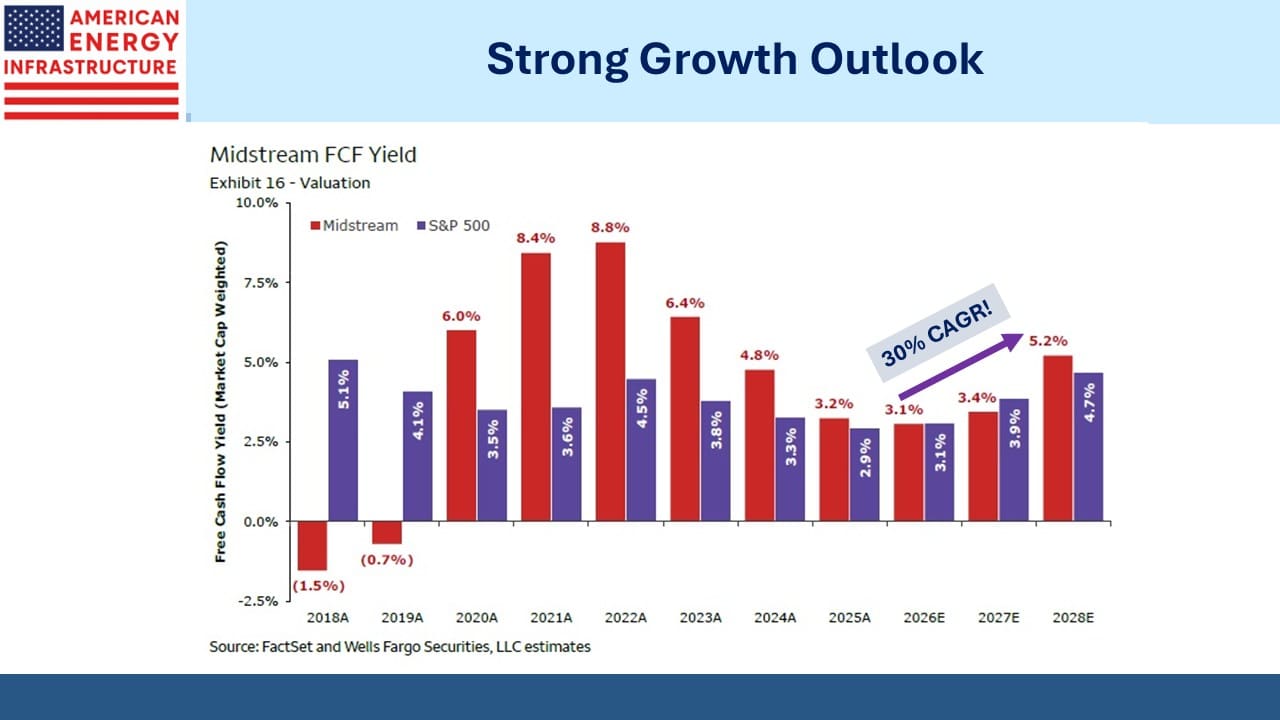
The sector’s Free Cash Flow (FCF) yield is not especially high and is, unusually, equal to the FCF yield for the S&P500. However, Wells Fargo expects much faster growth. The 2028 projected FCF yield translates into a 30% compounded annual growth rate.
Capex plans in 2028 will change, which will affect FCF. It’s likely that if cash flows grow as fast as implied by the 2028 projected 5.2% FCF yield, capex will increase too as companies identify more accretive projects. Nonetheless, industry-wide cash flow from operations is on a solid growth path.
Prior to the President’s declaration on Wednesday that the ceasefire was over, the White House was disappointed that the drop in crude had not been matched by refined products. The International Energy Agency (IEA) estimates that 9% of global refining capacity has been taken offline this year.
Ukraine’s increasingly successful drone strikes on Russian energy infrastructure have knocked out up to 40% of their refining capacity, around 2 Million Barrels per Day (MMB/D). Russia has started importing gasoline from India, Kazakhstan and Belarus, the first time they’ve had to do so since the collapse of the Soviet Union in the 1990s. At last week’s NATO summit Trump expressed support for Ukraine’s long-range drone strikes, saying it might hasten the end of the war.
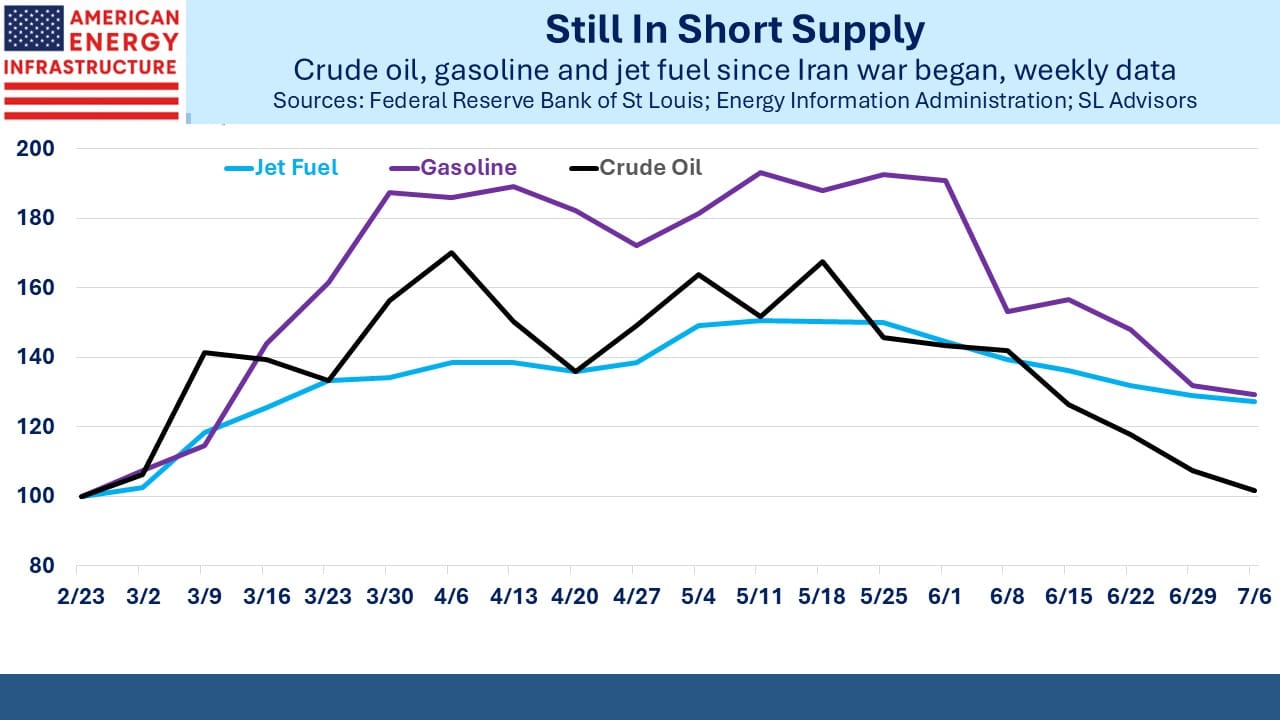
The closure of the Strait of Hormuz forced Persian Gulf refiners to shut down production as they ran out of storage capacity for their output. This took another 3.5MMB/D of refining capacity offline across the Middle East.
China also restricted exports of refined products such as jet fuel and diesel once war broke out at the end of February. In early July they relaxed that ban as crude supplies resumed, but recent developments will likely see the export ban reinstated.
Gasoline and jet fuel are both 30% above their former levels. On Thursday, diesel futures jumped 11% after Russia halted exports.
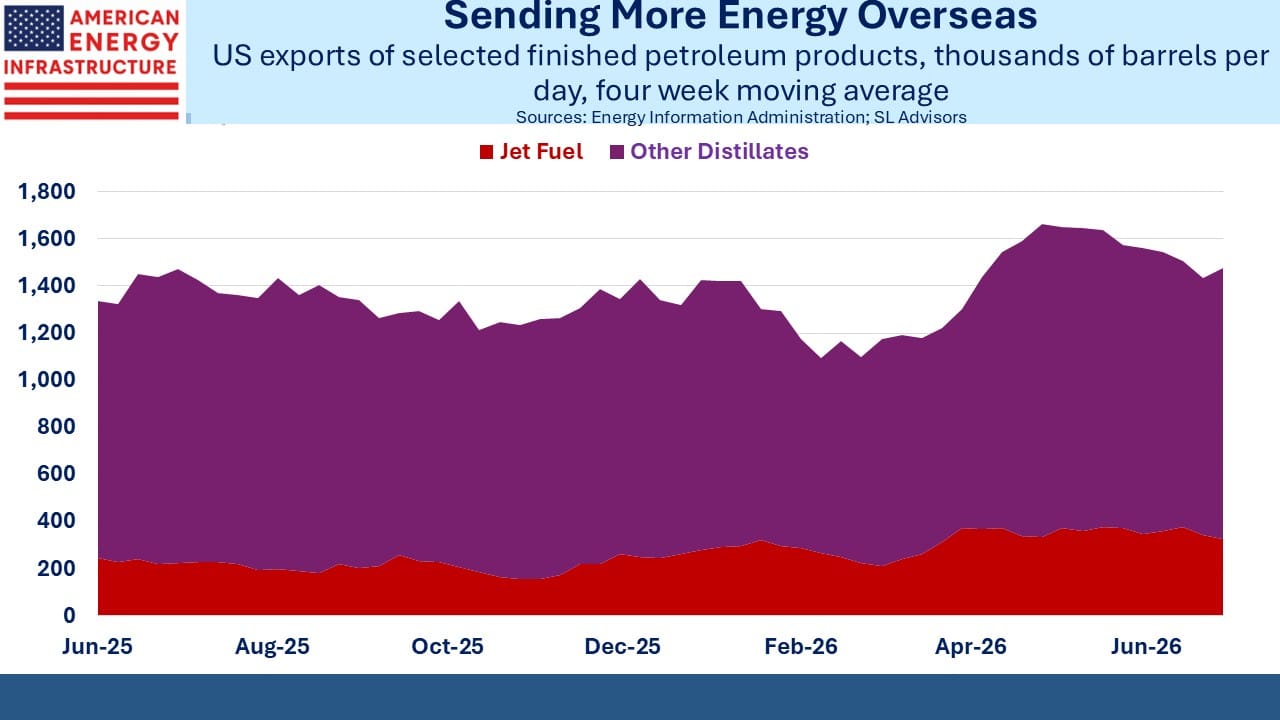
The tightness in refined products, especially gasoline, will be frustrating the White House and further contribute to the war’s unpopularity. The connection between Ukraine’s success at hitting Russian energy infrastructure hundreds of miles in land and the prices US drivers pay at the pump is not obvious, until you examine the shifting trade flows for refined products.
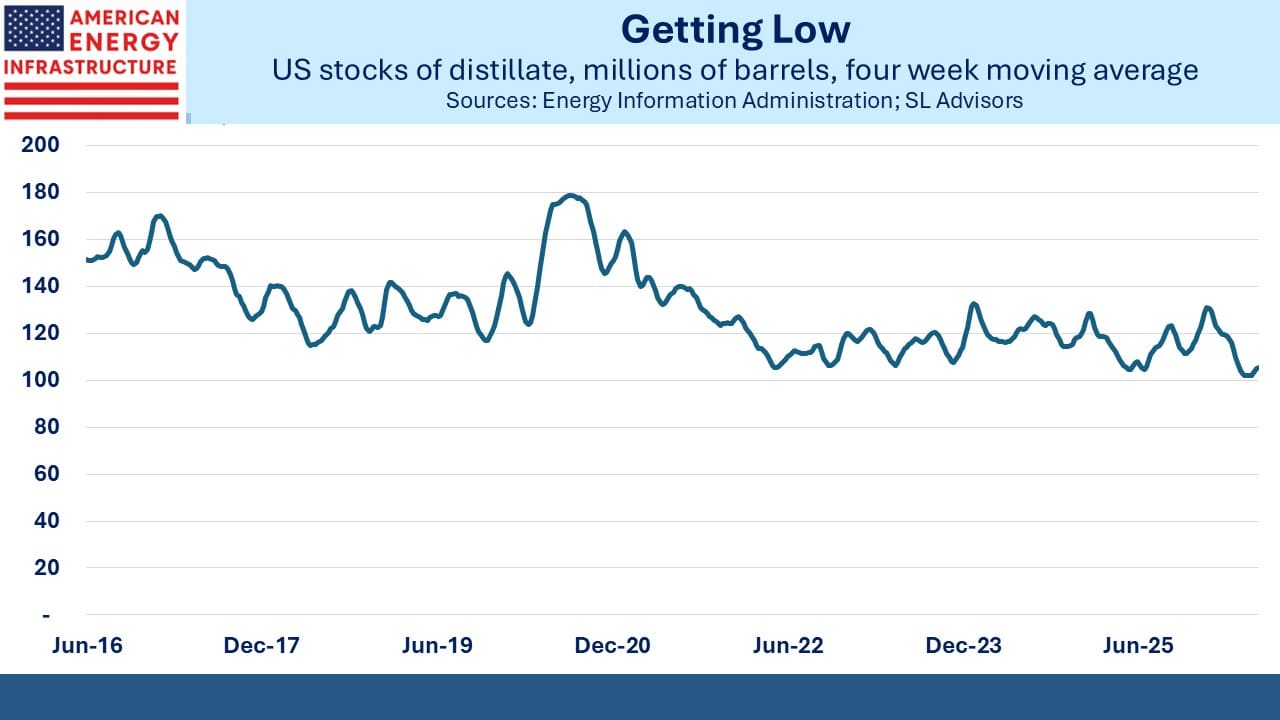
US exports of distillate products, chiefly diesel, are up 10% over the past year. Jet fuel exports are up 34%. Consequently, US stocks of distillates are the lowest in a decade. Industry analysts expect domestic diesel prices will need to rise to moderate exports.
It turns out that restoring crude supplies through the Strait of Hormuz isn’t all that’s required to lower refined product prices. And it’s the prices of gasoline, diesel and jet fuel that impact consumers more than the price of a barrel of oil.
Airfares remain significantly higher than six months ago – I estimate the cost to fly to London to watch your favorite English Premier League team is 50% above its pre-war level. In spite of the price hikes, United Airlines CEO Scott Kirby reports “robust demand”, so higher airfares may be here to stay.
Inflation for the basket of goods and services bought by readers of this blog is most assuredly well above 3%.
JPMorgan reported that Venture Global (VG) earned an average price of $6.45 per Million BTUs of natural gas that they liquefied for shippers in 2Q26. This is roughly double prevailing rates, reflecting the scramble to replace Qatar’s lost exports. It’s an example of how VG’s strategy of retaining around a third of its capacity uncontracted can reap benefits at times like this.
Wars create unintended consequences. Midstream investors are generally on the right side of them.


Comments
Log in or sign up to join the conversation.