

Introduction
According to TechSci Research report, “Extended Reality Market - Global Industry Size, Share, Trends, Opportunity and Forecast, 2021-2031”, The Global Extended Reality Market will grow from USD 184.91 Billion in 2025 to USD 958.75 Billion by 2031 at a 31.56% CAGR.
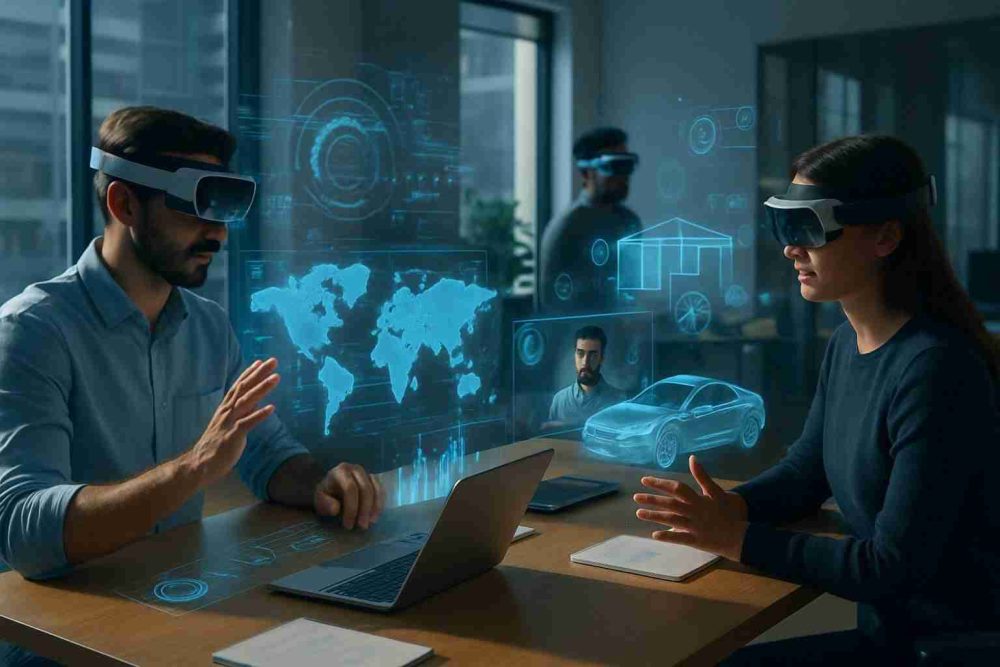
Extended Reality (XR) represents a broad technology ecosystem that combines Virtual Reality (VR), Augmented Reality (AR), and Mixed Reality (MR) to create immersive or digitally enhanced environments. These technologies allow users to interact with computer-generated content, digital objects, and simulated environments in increasingly realistic ways.
Businesses are exploring XR to develop more engaging customer experiences, improve employee training, visualize complex products, support remote collaboration, and create new digital services. Consumers are also becoming more familiar with immersive experiences through smartphones, gaming devices, headsets, and AR applications.
Despite its significant growth potential, the market faces certain challenges. Limited connected infrastructure and high hardware costs can restrict adoption, particularly among organizations and consumers with limited access to advanced devices and high-speed connectivity. However, improvements in hardware capabilities, software development, connectivity, and application ecosystems are expected to create new opportunities for XR adoption across industries.
Industry Key Highlights
The Global Extended Reality Market is projected to grow from USD 184.91 billion in 2025 to USD 958.75 billion by 2031.
The market is expected to register a 31.56% CAGR during the forecast period.
Extended Reality encompasses Virtual Reality, Augmented Reality, and Mixed Reality technologies.
Business-based delivery is expected to account for the largest market share during the forecast period.
Hardware is expected to maintain the leading position within the component segment.
Healthcare is emerging as an important application environment for immersive technologies.
Retail and e-commerce are increasingly using XR to create interactive and personalized shopping experiences.
North America is expected to dominate the global market during the forecast period.
High hardware costs and insufficient connected infrastructure remain important market constraints.
Major companies include Qualcomm Technologies, Accenture, Northern Digital, SoftServe, SphereGen Technologies, Gofind, Dassault Systèmes SolidWorks, Agile Lens, Tata Elxsi, and Medtronic.
Request For Sample Copy of Report For More Detailed Market insight
Main Drivers
Increasing Demand for Immersive Digital Experiences
The growing demand for interactive and immersive digital experiences is one of the primary factors supporting the Extended Reality Market. Conventional digital platforms generally rely on two-dimensional interfaces, whereas XR allows users to interact with digital environments in a more direct and engaging manner.
Businesses are adopting immersive technologies for product demonstrations, virtual events, employee training, design visualization, and customer engagement. This enables organizations to communicate complex concepts in ways that can be more interactive than conventional presentations or videos.
As consumers become increasingly comfortable with immersive digital environments, the potential applications of XR are expanding beyond entertainment and gaming.
Growth of XR in Retail and E-Commerce
Retail and e-commerce are becoming important areas of XR adoption. Consumers increasingly want to understand products before purchasing them, particularly when shopping online.
AR applications can allow customers to visualize products within their own environments. Furniture, home décor, fashion, cosmetics, and other products can be digitally displayed to help shoppers understand how they may look or fit before making a purchase.
XR can also provide 360-degree product views, virtual showrooms, and interactive demonstrations. These capabilities can create more engaging shopping journeys while giving brands new methods of communicating product information.
The increasing use of mobile-based AR applications is expected to further support XR adoption in retail.
Increasing Use of XR for Training and Education
Training and education are rapidly evolving through immersive technologies. VR can create simulated environments where users can practice procedures without requiring access to a physical training facility.
Organizations can use virtual environments to train employees in situations that may be expensive, difficult, or risky to reproduce in the real world. Educational institutions can similarly use XR to provide virtual field trips, laboratory simulations, technical demonstrations, and interactive learning experiences.
The ability to repeat simulations and provide consistent training environments makes XR particularly useful for organizations seeking scalable learning solutions.
Expansion of Smart Devices and Digital Ecosystems
The increasing penetration of smartphones, connected devices, sensors, cameras, and advanced computing systems is strengthening the foundation for XR applications.
Many AR experiences can be accessed through mobile devices, reducing the need for dedicated hardware in certain applications. At the same time, specialized headsets and immersive equipment are improving in terms of processing power, display quality, tracking, and interaction capabilities.
As device ecosystems become more capable and interconnected, developers can create increasingly sophisticated XR experiences.
Emerging Trends
Convergence of AR, VR, and MR
The boundaries between different immersive technologies are becoming increasingly interconnected. Businesses are exploring applications that combine physical surroundings with digital objects and fully simulated environments.
This convergence is creating opportunities for more flexible XR solutions across manufacturing, healthcare, education, retail, and enterprise collaboration.
Immersive Healthcare Applications
Healthcare represents a significant growth opportunity for XR. VR can be used to create calming environments for patients, including simulated beaches, mountains, and other relaxing settings.
Immersive experiences may help patients manage stress before or during certain medical procedures. VR-based meditation and relaxation applications are also gaining attention as digital wellness tools.
AR can provide healthcare professionals with digital overlays and visual information that may assist with understanding anatomical structures or visualizing specific problems.
Virtual Product Visualization
Manufacturers and retailers are increasingly using XR to visualize products before physical production or purchase. Designers can create digital models that allow users to examine products from different perspectives.
This can support product development, customer demonstrations, marketing campaigns, and sales activities.
Expansion of Mobile XR
Mobile devices are expected to remain important to the development of XR because smartphones provide a widely available platform for AR experiences.
Mobile AR can allow businesses to reach consumers without requiring specialized headsets, making it useful for retail promotions, product visualization, advertising, navigation, and interactive marketing.
Enterprise Adoption of Immersive Collaboration
Organizations with geographically distributed teams are exploring immersive technologies for collaboration, training, meetings, and remote assistance.
XR can provide three-dimensional environments in which employees can interact with digital models, virtual objects, and other participants. This is particularly relevant to engineering, manufacturing, architecture, healthcare, and technical training.
Real-World Use Cases
Healthcare and Patient Wellness
Healthcare providers can use VR to create simulated environments designed to provide patients with relaxing experiences. Immersive meditation environments can also be used to support wellness and stress-management activities.
AR can additionally help professionals visualize digital information alongside physical environments, creating opportunities for enhanced medical training and visualization.
Retail Product Visualization
Retailers can use AR applications to allow customers to visualize products before buying them. Consumers can see how furniture might appear in a room or how certain products may look within a particular setting.
This creates a more interactive shopping experience and provides brands with another method of engaging potential customers.
Employee Training
Businesses can create VR-based training environments that replicate workplace situations. Employees can practice tasks, procedures, and responses in a controlled virtual setting.
This approach can be particularly useful for industries where practical training involves complex equipment or potentially hazardous environments.
Manufacturing and Industrial Design
Manufacturers can use XR to visualize machinery, components, production environments, and product prototypes.
Engineers and designers can examine digital models before physical construction, potentially supporting faster design reviews and more collaborative development processes.
Education
Educational institutions can incorporate XR into lessons to create immersive learning experiences. Students can explore virtual environments, conduct simulated experiments, or interact with three-dimensional educational content.
These applications can complement conventional teaching methods by providing visual and experiential learning opportunities.
Entertainment and Gaming
Media and entertainment remain important application areas for XR. VR can place users inside fully simulated environments, while AR can integrate digital content into real-world surroundings.
Gaming companies and content developers continue to explore new interaction models as XR hardware and software capabilities improve.
Competitive Analysis
Qualcomm Technologies Inc.
Accenture PLC
Northern Digital Inc.
Softserve Inc.
SphereGen Technologies
Gofind Inc.
Dassault Systems SolidWorks Corporation
Agile Lens
Tata Elxsi
Medtronic Inc.
Customers can also request for 10% free customization on this report.
Segmentation
The Global Extended Reality Market can be segmented based on component, type, delivery model, end user, application, and region.
By Component
Hardware
Sensors
Cameras
Transducers
Speakers
Software and Services
Professional Services
Managed Services
The hardware segment is expected to hold the largest market share throughout the forecast period. XR experiences require specialized physical components such as sensors, cameras, transducers, speakers, and other immersive equipment.
The growing sophistication of XR applications is increasing the need for hardware capable of supporting advanced tracking, visualization, audio, and user interaction.
By Type
Mobile XR
PC-Tethered XR
Mobile XR benefits from the widespread availability of smartphones and other mobile devices, while PC-tethered XR can support more demanding immersive applications requiring higher computing capabilities.
By Delivery Model
Consumer-Based
Business-Based
The business-based delivery model is expected to account for the largest market share during the next five years. Enterprises are increasingly adopting XR to improve customer engagement, training, product demonstrations, visualization, and operational processes.
By End User
Healthcare
Media and Entertainment
Manufacturing and Industrial
Retail and E-Commerce
Transportation
Others
Healthcare is expected to present significant growth opportunities as XR applications expand across patient experiences, medical visualization, training, wellness, and treatment-related environments.
Retail and e-commerce are also becoming important adoption areas because XR enables interactive product exploration and personalized customer experiences.
By Application
Virtual Reality
Augmented Reality
Mixed Reality
Each application provides different levels of interaction between digital and physical environments. VR creates highly immersive simulated environments, AR overlays digital information onto the physical world, while MR enables interaction between physical and virtual elements.
By Region
North America
Europe
Asia Pacific
South America
Middle East & Africa
North America is expected to dominate the Global Extended Reality Market during the forecast period. The region's early adoption of emerging technologies, strong technology ecosystem, widespread smart-device usage, and presence of major XR companies are supporting market development.
Companies such as Qualcomm Technologies, SoftServe, SphereGen, and Northern Digital are contributing to the region's XR ecosystem. Organizations are also exploring immersive technologies for training and education.
4 Frequently Asked Questions
1. What is the projected size of the Global Extended Reality Market?
The Global Extended Reality Market is projected to grow from USD 184.91 billion in 2025 to USD 958.75 billion by 2031, registering a 31.56% CAGR during the forecast period.
2. Which delivery model is expected to dominate the Extended Reality Market?
The business-based delivery model is expected to account for the largest market share during the forecast period, supported by growing enterprise adoption for training, customer engagement, visualization, and other business applications.
3. Which region is expected to dominate the Extended Reality Market?
North America is expected to dominate the market during the forecast period, supported by early technology adoption, advanced digital infrastructure, smart-device penetration, and the presence of major technology and XR solution providers.
4. What factors could restrain Extended Reality Market growth?
High hardware costs and limited connected infrastructure may restrict market expansion. The cost of specialized XR devices and the need for reliable connectivity and computing infrastructure can create adoption barriers, particularly in markets where supporting digital infrastructure is still developing.
Contact US:
Techsci Research LLC
420 Lexington Avenue, Suite 300,
New York, United States- 10170
Tel: +13322586602
Email: [email protected]
Web: https://www.techsciresearch.com/
Comments
Log in or sign up to join the conversation.