

Industry Key Highlights
The global Extended Reality (XR) market is witnessing unprecedented expansion, emerging as one of the most transformative technology sectors of the digital era. Extended Reality, which encompasses Virtual Reality (VR), Augmented Reality (AR), and Mixed Reality (MR), is fundamentally reshaping how individuals interact with digital content, businesses engage with customers, and organizations optimize operations. As immersive technologies continue to mature, XR is moving beyond gaming and entertainment to become an essential tool across healthcare, education, manufacturing, retail, transportation, and enterprise collaboration.
According to TechSci Research report, “Extended Reality Market Growth - Global Industry Size, Share, Trends, Opportunity and Forecast, 2021-2031”, The Global Extended Reality Market will grow from USD 184.91 Billion in 2025 to USD 958.75 Billion by 2031 at a 31.56% CAGR.
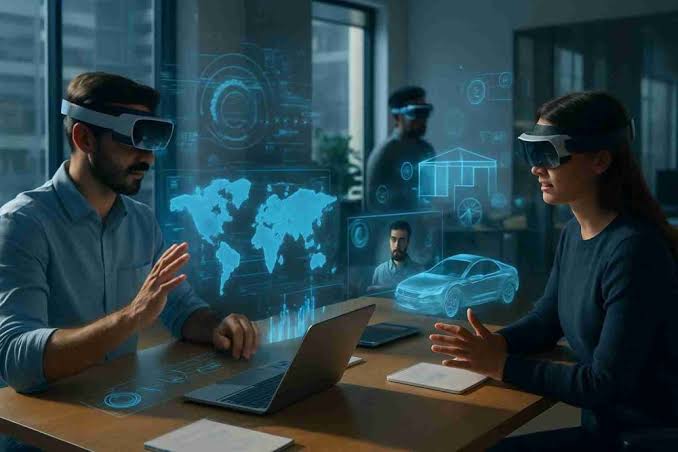
Extended Reality serves as an umbrella term that integrates physical and digital environments, creating immersive experiences that enable users to interact with virtual objects and information in real time. The convergence of artificial intelligence, cloud computing, 5G connectivity, edge computing, and advanced graphics processing has accelerated the adoption of XR solutions across industries worldwide.
Businesses are increasingly leveraging XR technologies to improve employee training, optimize workflows, enhance customer engagement, and create innovative product experiences. Simultaneously, consumers are embracing immersive applications for entertainment, education, shopping, social interaction, and wellness. As technological barriers continue to diminish and XR ecosystems become more sophisticated, the market is expected to witness exponential growth throughout the forecast period.
Request For Sample Copy of Report For More Detailed Market insight: https://www.techsciresearch.com/sample-report.aspx?cid=8299#requestform
Market Overview
The Extended Reality market has evolved from a niche technological innovation into a mainstream digital transformation catalyst. The increasing integration of XR into enterprise operations, consumer experiences, and educational frameworks is driving rapid market expansion globally.
Organizations across various industries are recognizing the value of immersive technologies in solving complex business challenges. XR solutions provide realistic simulations, facilitate remote collaboration, improve training effectiveness, and create engaging customer experiences that enhance brand loyalty.
The widespread adoption of smartphones, wearable devices, advanced sensors, and high-speed internet connectivity has significantly contributed to market growth. Furthermore, technological advancements in display technologies, graphics processing units, motion tracking systems, and spatial computing are making XR solutions more accessible and effective than ever before.
As businesses increasingly prioritize digital innovation and customer-centric strategies, the demand for XR technologies is expected to accelerate substantially throughout the forecast period.
Key Market Drivers
Rising Adoption of Immersive Technologies Across Industries
One of the primary drivers of the Extended Reality market is the growing adoption of immersive technologies across diverse industry verticals. Organizations are leveraging XR solutions to improve operational efficiency, reduce costs, enhance employee productivity, and deliver superior customer experiences.
From virtual product demonstrations and employee training simulations to remote maintenance and digital collaboration platforms, XR technologies are becoming integral components of modern business strategies.
As organizations continue investing in digital transformation initiatives, the demand for XR solutions is expected to rise significantly.
Growing Demand for Enhanced Customer Experiences
Today's consumers increasingly seek interactive and personalized experiences. Extended Reality technologies enable businesses to create engaging customer journeys that go beyond traditional digital interactions.
Retailers, automotive companies, real estate developers, and travel providers are utilizing XR technologies to offer virtual product trials, immersive showrooms, interactive tours, and customized shopping experiences.
The growing emphasis on customer engagement and experiential marketing continues to drive XR adoption across consumer-facing industries.
Expansion of Remote Work and Collaboration
The rise of remote and hybrid work environments has highlighted the need for advanced collaboration tools. XR platforms facilitate immersive virtual meetings, digital workspaces, and collaborative simulations that improve communication and productivity among distributed teams.
Organizations are increasingly investing in XR-powered collaboration solutions to overcome geographical barriers and create more engaging work experiences.
As hybrid work models become permanent components of corporate strategies, XR technologies are expected to play a vital role in enterprise collaboration.
Advancements in Hardware Technologies
Continuous innovation in XR hardware is significantly improving user experiences while reducing device costs and limitations.
Modern XR devices offer:
Higher display resolutions
Improved field of view
Enhanced motion tracking
Lightweight designs
Longer battery life
Better ergonomics
These improvements are making immersive experiences more realistic and accessible, thereby accelerating market adoption.
Increasing Investments in Metaverse Development
The growing interest in metaverse ecosystems has created substantial momentum for XR technologies. Extended Reality serves as the foundational infrastructure enabling immersive digital environments and virtual interactions.
Major technology companies are investing billions of dollars in developing metaverse platforms, digital assets, and immersive experiences. These investments are fueling innovation across the XR value chain and creating new growth opportunities for market participants.
Emerging Trends in the Extended Reality Market
Integration of Artificial Intelligence with XR
Artificial Intelligence is transforming the capabilities of Extended Reality platforms by making immersive experiences more intelligent, responsive, and personalized.
AI-powered XR applications can:
Analyze user behavior
Generate realistic virtual environments
Enable intelligent virtual assistants
Improve object recognition
Deliver adaptive learning experiences
The combination of AI and XR is expected to unlock entirely new use cases across healthcare, education, retail, and industrial sectors.
Emergence of Spatial Computing
Spatial computing is rapidly becoming a defining trend in the XR landscape. It enables digital content to interact intelligently with physical environments, creating seamless and context-aware experiences.
Spatial computing technologies facilitate advanced navigation systems, digital twins, industrial automation, and immersive collaboration environments. As adoption increases, spatial computing is expected to become a key growth driver for the XR market.
Expansion of XR in Healthcare
Healthcare is emerging as one of the most promising sectors for XR adoption.
Medical institutions are increasingly utilizing XR technologies for:
Surgical planning
Medical training
Pain management
Physical rehabilitation
Mental wellness programs
Patient education
Virtual reality meditation applications and immersive therapy programs are gaining popularity as healthcare providers seek innovative approaches to improve patient outcomes and experiences.
Rise of XR-Based Education and Training
Educational institutions and corporate training departments are embracing XR technologies to enhance learning effectiveness.
Immersive learning environments enable students and employees to gain hands-on experience in realistic simulations without physical risks or limitations.
The increasing demand for experiential learning solutions is expected to drive substantial growth in XR-based education and workforce development programs.
Proliferation of 5G-Enabled XR Experiences
The deployment of 5G networks is significantly enhancing the performance of XR applications by providing ultra-low latency and high-speed connectivity.
5G technology supports:
Real-time rendering
Cloud-based XR applications
Remote collaboration
High-definition streaming
Interactive virtual environments
The widespread rollout of 5G infrastructure is expected to accelerate XR adoption globally.
Market Challenges
High Hardware Costs
Despite technological advancements, XR hardware remains relatively expensive for many consumers and organizations.
The cost of advanced headsets, sensors, controllers, and supporting infrastructure can create barriers to adoption, particularly in developing regions and among small businesses.
However, ongoing innovation and economies of scale are expected to gradually reduce hardware costs over time.
Lack of Connected Infrastructure
The effectiveness of XR applications often depends on robust connectivity and computing infrastructure.
Regions with limited access to high-speed internet, cloud services, and advanced digital infrastructure may face challenges in adopting immersive technologies.
Bridging these infrastructure gaps will be critical for expanding XR adoption worldwide.
Data Privacy and Security Concerns
XR technologies collect substantial amounts of user data, including biometric information, movement patterns, and behavioral insights.
Protecting sensitive user information and ensuring compliance with data privacy regulations remain important challenges for XR developers and service providers.
Content Development Complexity
Creating high-quality immersive content requires specialized expertise, advanced tools, and significant investment.
The complexity of developing compelling XR experiences can limit content availability and slow adoption in certain sectors.
Regional Analysis
North America
North America is expected to dominate the global Extended Reality market throughout the forecast period.
The region benefits from:
Early technology adoption
Strong innovation ecosystem
High consumer spending
Advanced infrastructure
Presence of leading XR companies
The widespread adoption of smart devices and substantial investments in immersive technologies continue to support market expansion across the region.
Europe
Europe represents a significant market driven by industrial digitization, advanced manufacturing initiatives, and increasing investments in immersive technologies.
Asia-Pacific
Asia-Pacific is anticipated to emerge as one of the fastest-growing regional markets due to rapid digital transformation, expanding internet penetration, and increasing investments in next-generation technologies.
Countries such as China, Japan, South Korea, and India are actively embracing XR solutions across multiple sectors.
Latin America
The region is witnessing growing awareness of immersive technologies and increasing adoption across education, retail, and healthcare sectors.
Middle East & Africa
Smart city initiatives, digital transformation programs, and investments in innovation ecosystems are creating new opportunities for XR market growth in the Middle East and Africa.
Competitive Analysis
Qualcomm Technologies Inc.
Accenture PLC
Northern Digital Inc.
Softserve Inc.
SphereGen Technologies
Gofind Inc.
Dassault Systems SolidWorks Corporation
Agile Lens
Tata Elxsi
Medtronic Inc.
Customers can also request for 10% free customization on this report.
Future Outlook
The future of the global Extended Reality market appears exceptionally promising. As immersive technologies become more sophisticated, affordable, and accessible, XR is expected to transition from an emerging technology to a mainstream digital platform.
Several factors will shape future market growth:
Expansion of metaverse ecosystems
Increasing adoption of AI-powered XR applications
Growth of 5G infrastructure
Rising enterprise investments
Advancements in wearable devices
Development of spatial computing technologies
Enhanced cloud-based XR platforms
Increasing consumer acceptance
The convergence of XR with artificial intelligence, cloud computing, blockchain, and Internet of Things technologies will create highly immersive and intelligent digital ecosystems.
By 2031, Extended Reality is expected to become an integral component of everyday life, transforming how people work, learn, shop, communicate, and experience digital content.
10 Benefits of the Research Report
1. Comprehensive Market Understanding
Provides detailed insights into market dynamics, trends, and growth opportunities.
2. Accurate Growth Forecasts
Offers reliable projections for market expansion through 2031.
3. Competitive Intelligence
Analyzes key players, strategies, and competitive positioning.
4. Emerging Trend Analysis
Identifies technological advancements shaping the future market.
5. Driver and Challenge Assessment
Evaluates critical factors influencing market performance.
6. Segment-Wise Insights
Provides detailed analysis across components, applications, end users, and regions.
7. Strategic Planning Support
Assists organizations in developing effective business strategies.
8. Investment Opportunity Identification
Highlights lucrative growth areas and emerging opportunities.
9. Regional Market Evaluation
Delivers in-depth insights into regional growth prospects.
10. Future-Oriented Business Intelligence
Supports informed decision-making with forward-looking market analysis.
Contact US:
Techsci Research LLC
420 Lexington Avenue, Suite 300,
New York, United States- 10170
Tel: +13322586602
Email: [email protected]
Web: https://www.techsciresearch.com/
Comments
Log in or sign up to join the conversation.