

Market Analysis
Similar to the corn market, wheat’s focus maybe split between the upcoming quarterly stocks and the US pro-ducers’ prospective planting survey since both these USDA reports will be released on March 31. Given last fall’s sharp drop in US winter wheat seedings to its low-est level since 1909, the trade will watching to see if pro-ducers will also drop their durum & hard red spring seed-ings. However, the upcoming quarterly wheat stocks re-port remains highly important to see if this year’s current trends will keep the USDA’s export and feed demand forecasts on target. Interestingly, wheat milling and food demand has been stagnant on a quarterly basis recently.
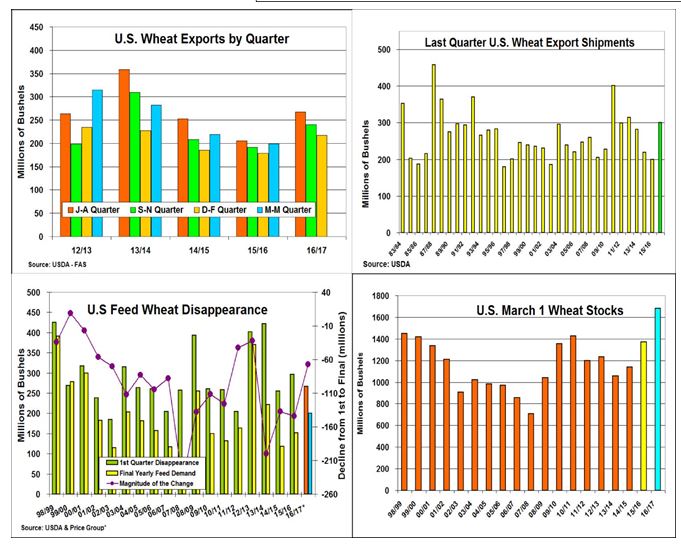
With export sales staying on its 5 year average pace in early March, the USDA left its 2016/17 yearly export out-look unchanged. However, this past quarter’s wheat ship-ments have likely slipped to 217 million. This brings 2016/17’s exports to nearly last year’s total (725 vs.775). However, this means wheat’s final quarterly shipments will need to be 300 million bu. to hit the current forecast and be the third highest export level since 1992/93 crop season. A lofty goal it looks to us.
To measure US wheat feeding, the USDA needs to survey commercial and producers on a quarterly basis similar to corn to determine this feed demand portion of US usage. Traditionally, the highest unexplained disap-pearance occurs on September 1 report each year when export shipments & spring wheat bushels remain in some fields. This level normally falls in the following reports through the balance of year. However, given this year’s inexpensive corn in the Plains where much of the US wheat is fed in cattle feedlots, I’m cautious that another 20-30 million more wheat will show up in stocks. Despite strong exports, this year’s March 1 stocks are likely to be 1.682 billion bu., the highest level since the Farm Crisis days in mid-1980s.
What’s Ahead
After the release of the USDA’s March 31 reports stocks, the focus will likely return to Southern US Plains and the Black Sea Region’s growing conditions. Currently, more moisture will be needed after a dry winter in the Southwest while the European Bread Basket is in better shape at this time. Given the vulnerabil-ity of the US crop to spring weather, producers should hold sales at this time.



Comments
Log in or sign up to join the conversation.