

As household savings and cash flow have been increasingly needed for basic necessities like food, fuel and housing, the economically-sensitive household spending intentions on durable goods have tumbled to the lowest level since the double-dip recession of 1980-81. One of the most impactful sectors here, auto sales fell to a 13.33 million annualized rate in March, down 30% from their cycle peak last April.
(Click on image to enlarge)

At the same time, importers of durable goods, stressed by supply chain disruptions during the pandemic, over-ordered goods in anticipation of a continuation in elevated demand. This has helped to push inventories (logistics managers index below) to a record high above 80 as of February data.
(Click on image to enlarge)
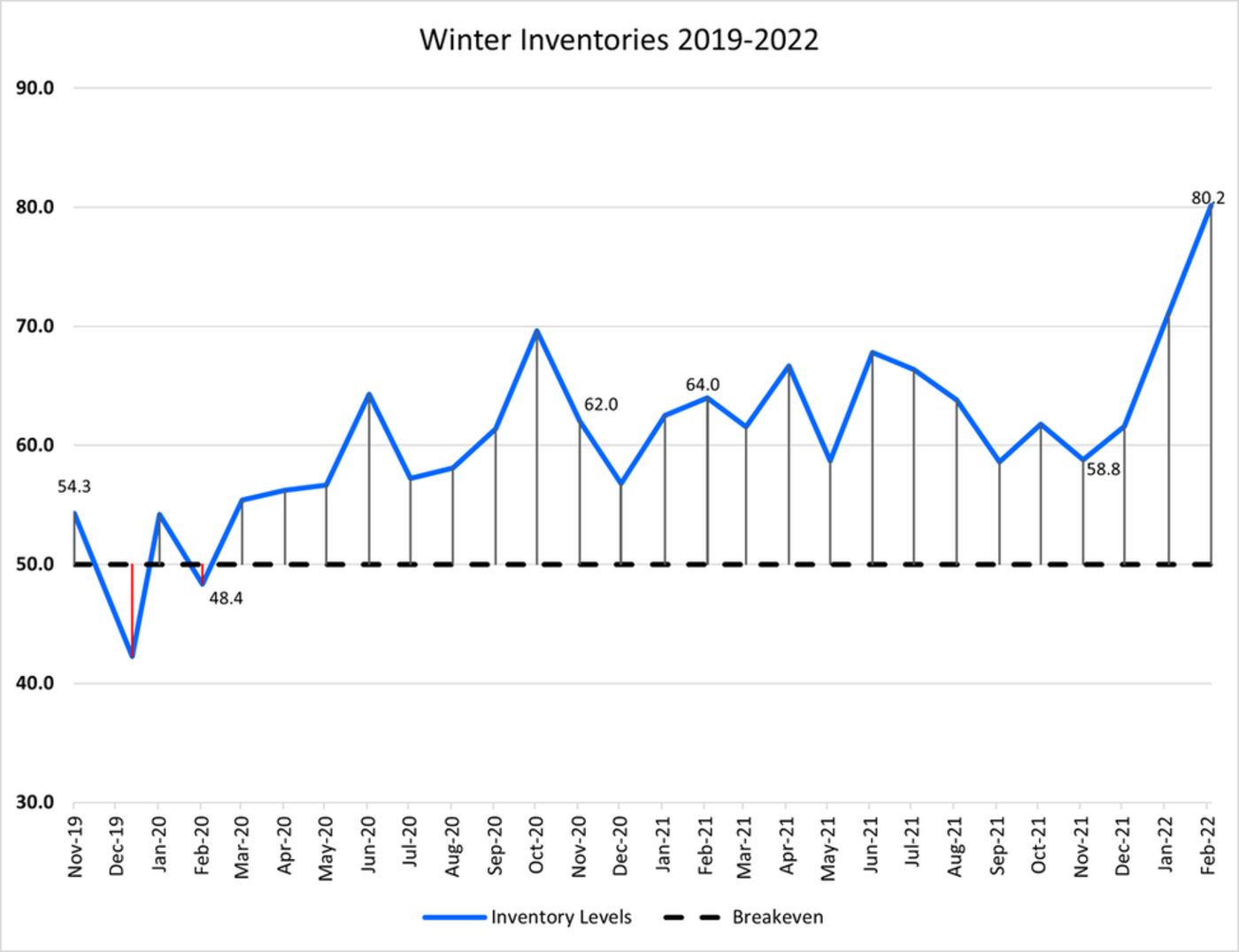
Inventory overbuilds typically lead to deflationary liquidation cycles and economic weakness as prices get marked down to clear.
The transportation sector also ramped up its fleets for hire since 2020. In the chart below, forty-two-year transport analyst Craig Fuller shows that trucks in the market recently surpassed freight volume as they have at other cycle tops. (blue= trucks in the market; green = truckload volume).
(Click on image to enlarge)

Craig doesn’t think this time is different, as he explained on Twitter last week:
Why? It happens in every cycle. Trucking always over builds. The market is way too fragmented for anyone to have real discipline on managing the total fleet count. I have been around trucking my whole life (42 years) and the cycle has always existed. 8/n
— Craig Fuller 🛩🚛🇺🇦 (@FreightAlley) March 29, 2022



Comments
Log in or sign up to join the conversation.