

EURUSD has been on a sharp decline since topping out near the 1.2000 major psychological area back in late January, shedding significant ground over the following months.
Price is currently trading around 1.1529 and closing in fast on a prominent horizontal support level at 1.1500, which has held as a major floor on the chart going back several months. This level represents a critical line in the sand for the pair’s broader directional bias.
If this support zone is able to keep losses in check, EURUSD could stage a meaningful bounce back toward the moving averages converging near the 1.1700–1.1750 area. A more sustained recovery could then target the swing highs around 1.1800 or higher.
On the other hand, a clean break and daily close below the 1.1500 support could open the door for a measured move selloff, potentially dragging the pair toward the 1.1300 major psychological handle or lower.
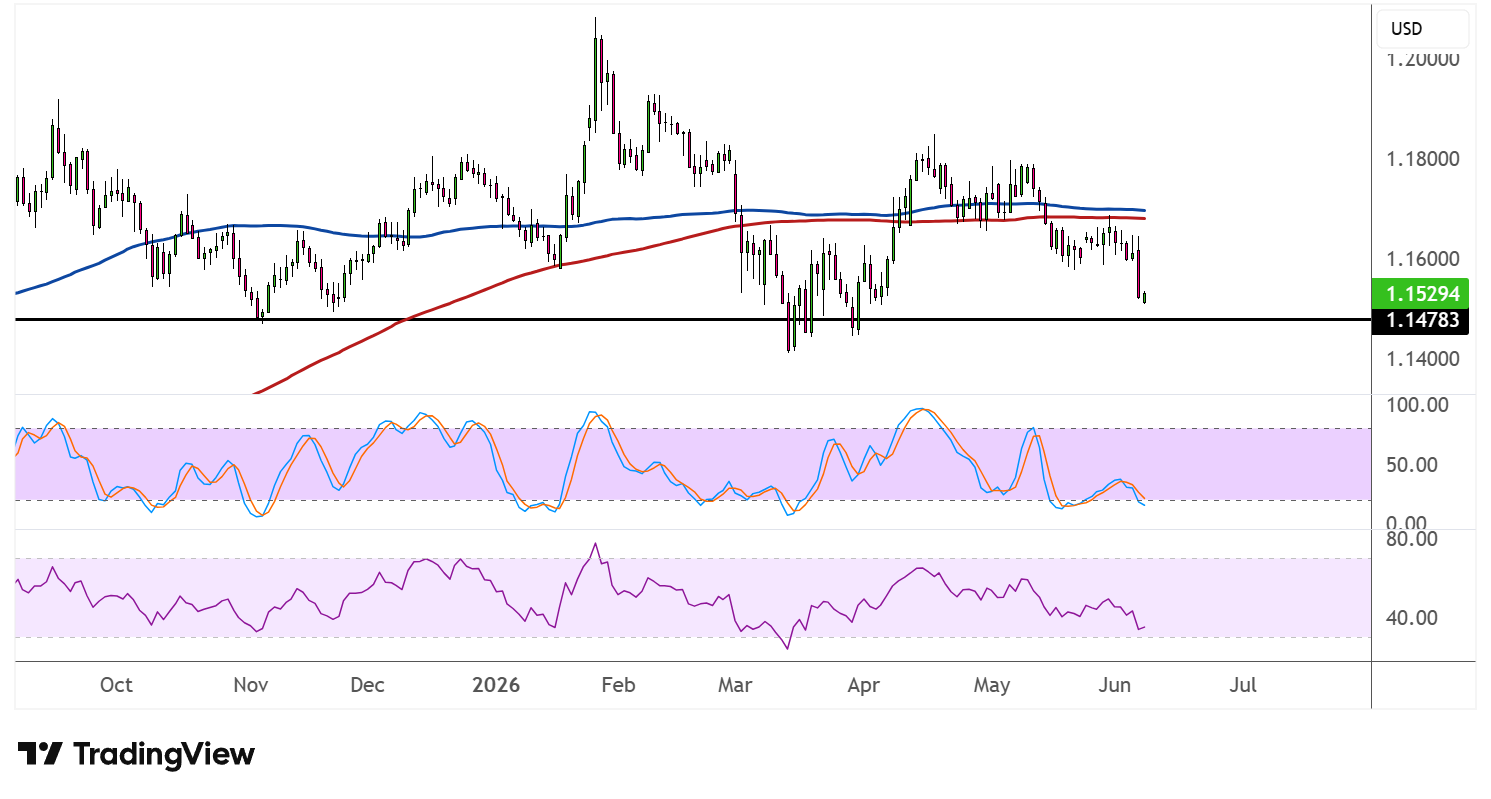
The 100 SMA (blue) has crossed below or is converging with the 200 SMA (red) in the current price zone, suggesting that the path of least resistance is shifting to the downside or that bearish momentum is building. Both indicators are beginning to flatten and roll over, which could add further selling pressure if price remains beneath them.
Stochastic has dropped into the oversold region and appears to be attempting a turn higher, which could signal a near-term bounce is brewing. If the oscillator crosses upward from oversold, buying pressure could return quickly.
RSI, however, is still trending south and approaching the oversold area with room left to slide, suggesting that downside pressure could persist a little longer before exhaustion sets in. A bullish divergence developing at the support level would be a welcome sign for euro bulls.
EURUSD has been dragged lower by a combination of risk aversion from persistent geopolitical uncertainty and strong US NFP data that stoked hawkish Fed bets.



Comments
Log in or sign up to join the conversation.