

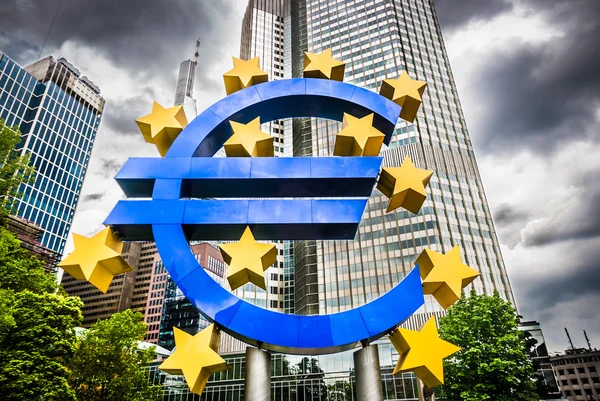
Eurozone economy stabilised as manufacturing growth offset weaker services activity.
Service sector cost pressures cooled sharply, supporting demand.
Softer inflation may reduce expectations of near-term ECB rate hikes.
The eurozone economy showed signs of stabilisation in June as manufacturing activity remained in expansion territory and the services sector contracted at a slower pace, according to the latest S&P Global Purchasing Managers' Index (PMI) survey.
The survey indicated that the services industry continued to shrink during the month, but the pace of contraction eased compared with previous months.
At the same time, cost pressures declined at the sharpest rate on record outside the pandemic-era lockdowns, providing relief to businesses and helping steady the broader economy after two consecutive months of falling output.
Oil prices fell for a third straight day on Thursday as concerns over potential supply disruptions eased after Qatar said Iran and the United States had made progress in discussions regarding the Strait of Hormuz.
Manufacturing remains in expansion
The S&P Global Eurozone Manufacturing PMI stood at 51.4 in June 2026, down slightly from 51.6 in May and broadly in line with the preliminary estimate of 51.3.
Although the index moderated marginally from the previous month, it remained above the 50-point threshold that separates expansion from contraction.
June marked the fifth consecutive month of manufacturing growth and completed the strongest calendar quarter for euro area manufacturing production since the early months of 2022.
According to the survey, stronger manufacturing activity helped offset the recent weakness in the services sector and contributed to stabilising overall economic activity.
Manufacturing output growth accelerated from May's four-month low. However, new orders increased only marginally, while employment continued to decline.
Supplier capacity also remained under pressure amid the ongoing conflict in the Middle East.
The survey further showed that both input and output cost inflation eased from recent multi-year highs. Meanwhile, business confidence improved to its highest level in four months.
The S&P Global Eurozone Manufacturing PMI is compiled from monthly responses collected from approximately 3,000 private sector manufacturing companies across Germany, France, Italy, Spain, the Netherlands, Austria, Ireland, and Greece.
The headline PMI is calculated as a weighted average of five components: New Orders (30%), Output (25%), Employment (20%), Suppliers' Delivery Times (15%), and Stocks of Purchases (10%).
For calculation purposes, the Suppliers' Delivery Times Index is inverted so that it moves in the same direction as the other components.
A PMI reading above 50 indicates an overall increase in business activity compared with the previous month, while a reading below 50 signals contraction.
Cost pressures ease sharply
Commenting on the survey findings, Chris Williamson, Chief Business Economist at S&P Global Market Intelligence, said the combination of improving services activity and continued manufacturing growth suggested that the eurozone economy had stabilised after two months of declining output.
"A key drag on economic growth since the outbreak of the war in the Middle East has been the subduing of demand from consumers due to the energy price spike, but these inflationary pressures have shown signs of cooling markedly in June," Williamson said.
Williamson also noted that business sentiment strengthened during the month as companies became more optimistic about the outlook.


Comments
Log in or sign up to join the conversation.