

The euro isn't going anywhere in a hurry, and that hesitation says more than any single move higher or lower could. When a market stalls like this, it usually means traders are waiting on something else to make the decision for them.
That's roughly where things stand right now. Rate expectations are shifting, geopolitical risk is simmering in the background, and neither side of this trade seems ready to commit. It's the kind of quiet that tends to precede a bigger decision, even if nobody can say yet which way it breaks.
Part of what's driving this hesitation is a genuine split in how traders are reading the Federal Reserve's next move. Not long ago, the interest rate differential between the euro and the dollar was one of the more straightforward reasons to lean bearish on the single currency, with US rates still offering more support for the greenback.
That picture has gotten murkier. A recent US jobs report came in negative, and that has led some traders to start pricing out the idea of aggressive rate hikes from the Fed. Whether that repricing holds is another question entirely. The president of the Cleveland Federal Reserve branch recently suggested multiple rate hikes may still be necessary to tame inflation, a reminder that the committee itself doesn't sound settled on the path forward either.
Technical Setup Suggests a Market Still Deciding
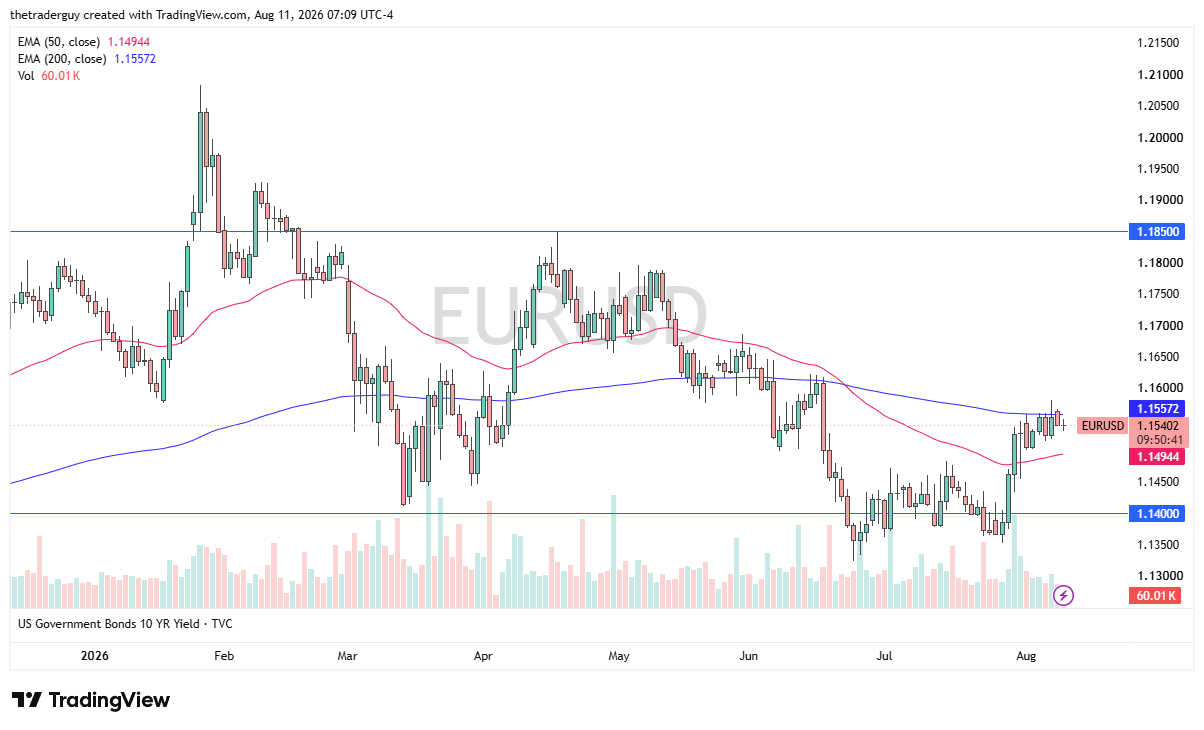
Hovering around the 200-day EMA suggests the market is still working out its longer-term attitude toward this pair, rather than committing to a clear direction. That kind of behavior around a major moving average often reflects indecision more than conviction.
Adding to that picture, the 50-day EMA sits just below current levels, which opens the door to a squeeze. When price gets pinned between two significant moving averages like this, it tends to build pressure rather than release it, and the eventual resolution can be a sharp move in either direction once the market finally picks a side.
Right now, though, the bigger constraint isn't technical at all. A large part of what's determining the euro's next move is coming out of the Middle East, and the situation there remains far from settled. That external pressure appears to be doing more to cap momentum than anything happening on the charts.
The friction point here is fairly straightforward. The Americans and the Iranians don't appear willing to back down from each other, and as long as that standoff continues, it threatens energy supply into Europe. That's a real problem for the European Central Bank, since a European industrial base facing sharply higher energy input costs is not an environment that supports a stronger currency. Traders leaning on rate differentials and technical levels alone may be underestimating just how much leverage this energy question still holds over the pair. It's the kind of risk that doesn't show up on a chart until it suddenly does, and that gap between attention and actual exposure is worth watching closely as the standoff drags on.
An Alternative Path Remains on the Table
There's a more constructive scenario here too. If the situation in the Middle East settles, something the market has already tried to price in more than once, the euro could find some support on the idea that Europe won't have to worry as much about energy costs heading into winter. That said, the Iranians appear to understand that the longer this standoff continues, the more negotiating leverage they retain, and that dynamic alone could end up being the biggest determinant of where this pair goes next.
Making high-conviction trades in this kind of environment remains difficult, and that's part of what this pause reflects. The euro continues to hug the 200-day EMA, seemingly in no hurry to move in either direction. Headlines out of the Middle East could shift that calculus quickly, though, and a single geopolitical development can change the picture faster than any chart pattern can.

Comments
Log in or sign up to join the conversation.