

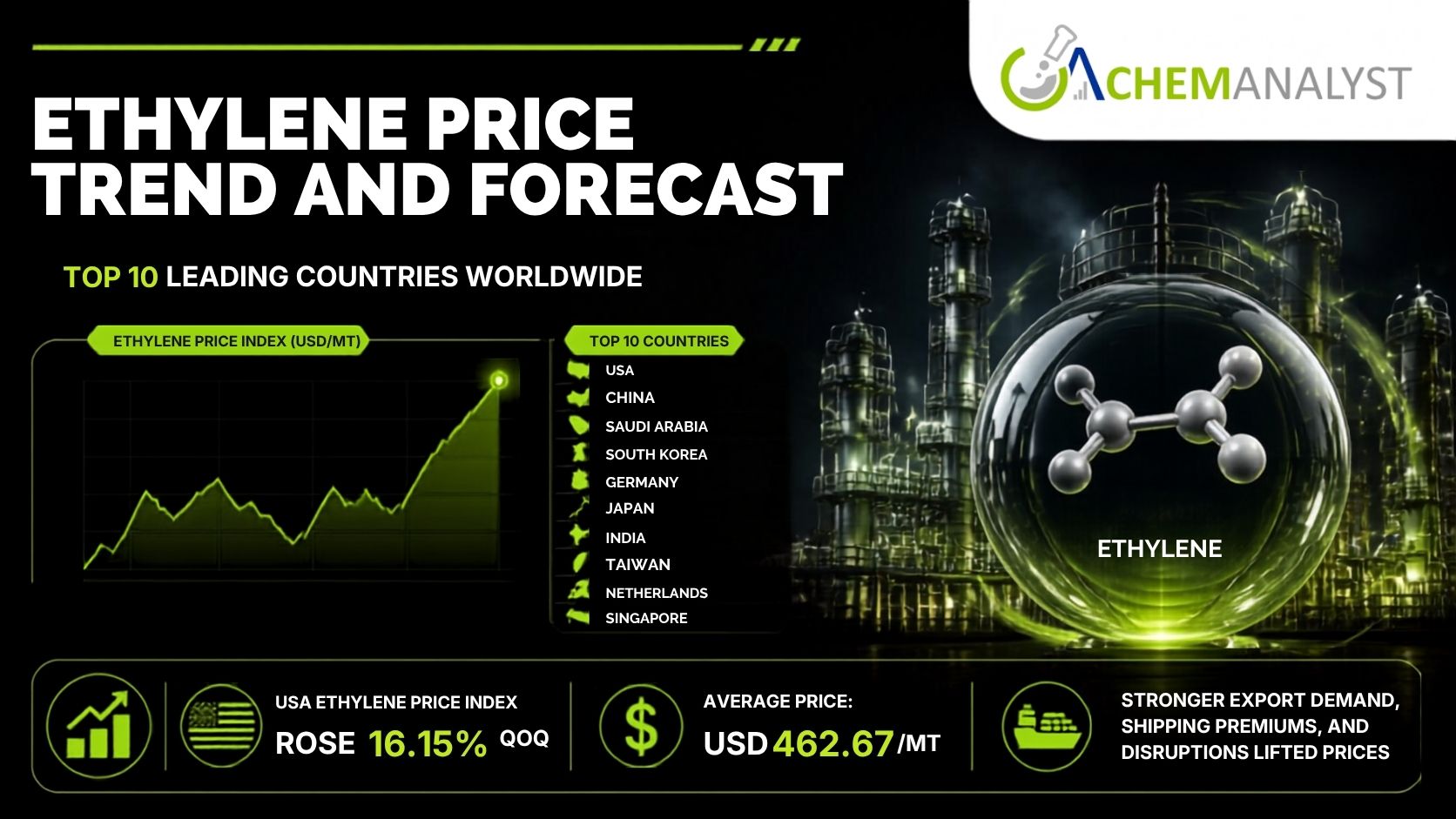
The Ethylene Price witnessed a notable upward trajectory across major global markets during the first quarter of 2026, supported by tightening feedstock availability, stronger export demand, supply disruptions, and improved downstream consumption. As the world's most widely used petrochemical building block, ethylene remains essential for manufacturing polyethylene, ethylene oxide, ethylene glycol, polyvinyl chloride (PVC), styrene, and numerous industrial chemicals.
According to ChemAnalyst Ethylene Price: - https://www.chemanalyst.com/Pricing-data/ethylene-40
The first quarter of 2026 demonstrated how regional supply-demand imbalances, fluctuations in crude oil and naphtha prices, and changing global trade patterns significantly influenced the Ethylene Price Index. While North America benefited from stronger export opportunities, Asia faced feedstock disruptions, Europe struggled with elevated production costs, and the Middle East experienced stronger export netbacks.
Global Ethylene Market Overview
Ethylene is primarily produced through steam cracking of hydrocarbons such as ethane, naphtha, propane, and butane. Production economics vary significantly across regions depending on feedstock availability.
Several factors influenced global ethylene prices during Q1 2026:
Rising crude oil prices
Higher naphtha feedstock costs
Export demand recovery
Scheduled maintenance shutdowns
Tight spot market availability
Strong downstream polymer demand
Regional logistics constraints
Improving manufacturing activity
These market dynamics collectively pushed the Ethylene Price Index higher across all major producing regions.
North America Ethylene Price Analysis
USA Ethylene Price Trends
The United States experienced a 16.15% quarter-over-quarter increase in the Ethylene Price Index during Q1 2026.
The average Ethylene Price reached approximately:
According to ChemAnalyst, USD 462.67 per metric ton
Despite considerable weekly volatility, the overall market remained bullish throughout the quarter.
Key Drivers
Several factors supported higher prices:
Strong Export Demand
Growing international demand for U.S. ethylene encouraged producers to prioritize exports, tightening domestic supply.
Competitive Feedstock
Although ethane remained relatively cost-competitive compared to naphtha-based production elsewhere, rising energy prices increased production costs.
Tight Domestic Inventories
Higher exports reduced available inventories, supporting price increases.
Stable Manufacturing Activity
Steady downstream demand from polyethylene and ethylene glycol producers further strengthened pricing.
North American Procurement Outlook
Buyers increasingly focused on:
Long-term procurement contracts
Inventory optimization
Hedging against feedstock volatility
Diversifying supplier networks
Export demand is expected to remain a major pricing factor throughout 2026.
APAC Ethylene Price Analysis
Japan Ethylene Price Trends
Japan recorded a 17.76% quarter-over-quarter increase in the Ethylene Price Index, making it one of Asia's strongest-performing markets.
Average quarterly price:
According to ChemAnalyst, USD 1,120.33 per metric ton
Prices remained elevated throughout the quarter due to supply-side constraints.
Major Market Drivers
Naphtha Feedstock Disruptions
Higher crude oil prices directly increased naphtha production costs, significantly impacting cracker economics.
Tight Domestic Availability
Scheduled maintenance and reduced operating rates limited domestic production.
Healthy Derivative Demand
Improved demand for:
Polyethylene
Ethylene oxide
Ethylene glycol
Styrene
supported higher operating rates and stronger buying activity.
Import Cost Inflation
Higher freight costs and elevated regional prices also increased replacement costs.
Procurement Perspective
Japanese buyers increasingly adopted:
Strategic purchasing
Forward inventory planning
Multi-supplier procurement
Flexible contract pricing
These approaches helped mitigate ongoing supply uncertainties.
Europe Ethylene Price Analysis
Germany Ethylene Price Trends
Germany experienced the strongest increase among all monitored regions.
The Ethylene Price Index surged:
32.54% Quarter-over-Quarter
Average quarterly price:
According to ChemAnalyst, USD 909.67 per metric ton
This represented one of Europe's sharpest petrochemical price increases during Q1.
Primary Market Drivers
Naphtha Feedstock Shock
Europe's heavy reliance on naphtha made regional producers highly vulnerable to rising crude oil prices.
Higher Production Costs
Energy-intensive steam crackers experienced increasing operating expenses.
Reduced Spot Availability
Lower production and maintenance shutdowns reduced spot market supplies.
Import Challenges
Global supply competition made imported cargoes increasingly expensive.
European Procurement Strategy
Purchasing teams focused on:
Earlier contract negotiations
Feedstock monitoring
Spot purchase reduction
Supplier diversification
Managing feedstock risk became essential for maintaining production margins.
Read the LinkedIn Article: - https://www.linkedin.com/pulse/ethylene-price-trends-2026-global-market-analysis-regional-singh-gyv1c/
Middle East & Africa Ethylene Price Analysis
Saudi Arabia Ethylene Price Trends
Saudi Arabia recorded a 10.38% increase in the Ethylene Price Index during Q1 2026.
Average quarterly price:
According to ChemAnalyst, USD 804.33 per metric ton
Although price growth was comparatively moderate, the regional market remained firm.
Market Drivers
Strong Export Netbacks
Higher international prices improved export profitability.
Balanced Domestic Supply
Domestic production remained relatively stable while exports increased.
Global Demand Recovery
Improved buying interest from Asia and Europe supported higher export values.
Competitive Production Economics
Ethane-based production continued providing Saudi producers with cost advantages despite global market volatility.
Procurement Insights
Middle Eastern producers benefited from:
Competitive feedstock
Export flexibility
Stable production
Healthy international demand
Export opportunities are expected to continue supporting prices during the coming quarters.
Feedstock Impact on Ethylene Price
Ethylene production economics are closely tied to feedstock costs.
Major feedstocks include:
Ethane
Naphtha
Propane
Butane
Among these, naphtha prices had the greatest impact during Q1 2026.
As crude oil prices strengthened, naphtha costs rose substantially, particularly affecting producers in Europe and Asia.
Meanwhile, North American ethane-based producers maintained relatively stronger cost competitiveness.
Downstream Industry Demand
Demand from downstream industries remained healthy throughout Q1.
Major consuming sectors included:
Polyethylene
Packaging, films, and consumer goods production remained strong.
Ethylene Glycol
Steady polyester and PET manufacturing supported demand.
Ethylene Oxide
Industrial chemicals and surfactants maintained stable consumption.
PVC Production
Construction activity in several regions supported vinyl chain demand.
These downstream sectors helped sustain higher ethylene prices despite regional supply challenges.
Factors Influencing Ethylene Price in 2026
Several macroeconomic and industry-specific factors are expected to influence the Ethylene Price during the remainder of 2026:
Crude Oil Prices
Any movement in crude oil directly impacts naphtha-based production costs.
Feedstock Availability
Ethane and naphtha supply conditions will continue shaping regional competitiveness.
Export Demand
Growing international trade flows remain a major pricing driver.
Plant Maintenance
Scheduled cracker shutdowns may tighten supply.
Global Economic Growth
Manufacturing expansion generally supports petrochemical demand.
Shipping Costs
Freight rates continue influencing import replacement costs.
Geopolitical Risks
Regional conflicts affecting energy markets could increase price volatility.
Procurement Intelligence for Buyers
Procurement professionals should closely monitor several indicators when planning ethylene purchases:
Weekly Ethylene Price movements
Crude oil futures
Naphtha market trends
Steam cracker operating rates
Export volumes
Inventory levels
Polymer demand
Shipping and logistics costs
Using market intelligence can significantly improve purchasing decisions and reduce procurement risks.
Regional Comparison of Ethylene Price Performance
The first quarter highlighted substantial regional differences.
Germany experienced the strongest price increase due to severe feedstock inflation and tighter supply.
Japan followed with strong gains supported by naphtha disruptions and healthy downstream demand.
The United States benefited from export-driven tightening despite relatively competitive feedstock economics.
Saudi Arabia maintained steady price growth driven primarily by improved export netbacks.
These differences illustrate how regional production economics continue shaping global ethylene competitiveness.
Ethylene Market Outlook for 2026
Looking ahead, analysts expect the Ethylene Price to remain firm throughout much of 2026, although volatility is likely to persist.
Several trends will shape the market:
Continued fluctuations in crude oil and naphtha prices
Strong demand from polyethylene and packaging industries
Ongoing maintenance at global steam crackers
Stable export demand from emerging economies
Supply adjustments following maintenance turnarounds
Potential geopolitical disruptions affecting energy markets
While additional production capacity could ease supply in some regions later in the year, feedstock costs are expected to remain the primary determinant of pricing.
Companies with robust procurement strategies, diversified sourcing, and real-time market intelligence will be better positioned to manage market uncertainty.
Conclusion
The Ethylene Price recorded strong gains across every major producing region during Q1 2026, reflecting a combination of tighter supply, higher feedstock costs, stronger export demand, and resilient downstream consumption. Germany led the global increase with a 32.54% quarter-over-quarter rise, followed by Japan at 17.76%, the United States at 16.15%, and Saudi Arabia at 10.38%.
As one of the most influential petrochemical feedstocks, ethylene continues to shape costs across the plastics, packaging, automotive, textile, and construction industries. Monitoring the Ethylene Price Index, regional supply conditions, and feedstock trends will remain essential for procurement teams, manufacturers, and investors throughout 2026.
With ongoing volatility in energy markets and evolving global trade flows, businesses that rely on timely procurement intelligence and proactive sourcing strategies will be best equipped to navigate future market fluctuations and maintain a competitive advantage.
Contact -
Address:
420 Lexington Avenue, Suite 300
New York, NY 10170
United States
Phone: +1 332 258 6602
Website: www.chemanalyst.com
LinkedIn: https://www.linkedin.com/company/chemanalyst/
X (Twitter): https://x.com/chemanalysts
Facebook: https://www.facebook.com/ChemAnalysts/
Comments
Log in or sign up to join the conversation.