


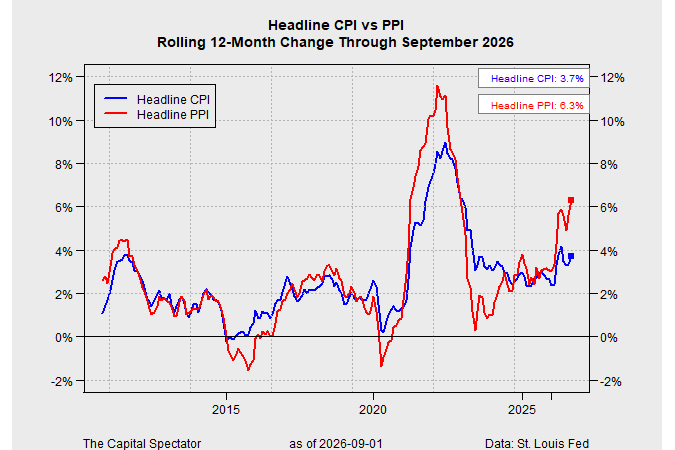
Stocks extended their decline for a third straight session on Tuesday (Aug. 18), renewing debate over the durability of the equity rally at a moment when rising Treasury yields, persistent inflation concerns, and a still‑simmering conflict with Iran threaten to keep pressure on risk assets. Short‑term market direction is unknowable, but several indicators are worth watching to gauge how resilience is evolving and if the current setback is an early clue of deeper trouble ahead.
The S&P 500 remains near record territory, but yesterday’s pullback was driven by weakness in semiconductor stocks (SMH), a leadership group that has powered much of the market’s advance. Investors will be watching this sector closely for signals on the broader risk appetite.
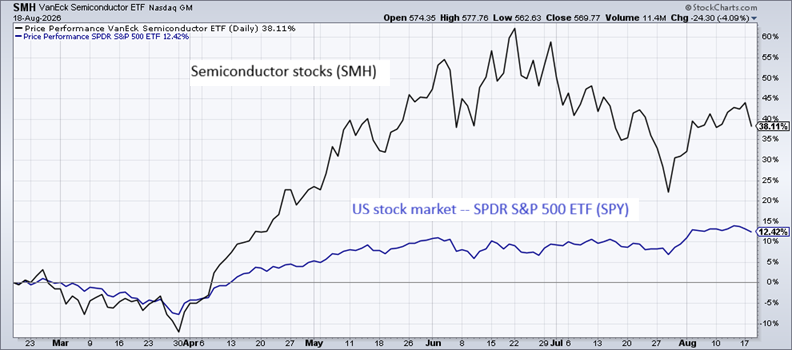
The AI‑driven surge in chip stocks has been a central pillar of bullish sentiment. Any sustained deterioration in this corner would likely weigh on equities more broadly.
A second critical factor shaping the outlook is the relentless rise in U.S. Treasury yields, which is becoming increasingly difficult for Wall Street to ignore. The 10‑year yield eased slightly yesterday, but at 4.71% it is up sharply from March and increasingly attractive as an alternative to a richly valued equity market that’s jumped more than 20% over the past year.
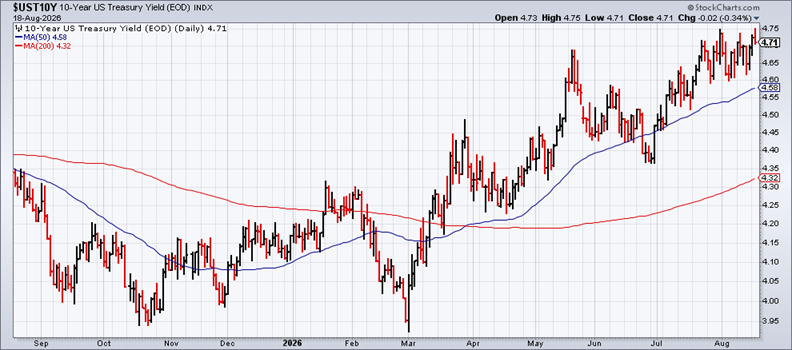
If higher yields represent a headwind for stocks, that headwind does not appear poised to fade. The forces pushing rates higher — including the Iran conflict and a widening U.S. fiscal deficit — are unlikely to resolve quickly, suggesting upward pressure may persist.
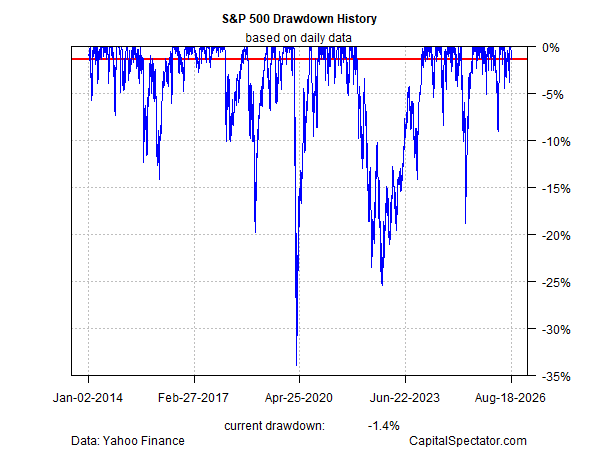
For now, the S&P 500’s 1.4% drawdown as of Tuesday’s close remains trivial by historical standards, leaving room for debate about how to interpret the recent weakness. A deeper slide that pushes the peak‑to‑trough decline beyond 5% would raise more harder questions heading into autumn.
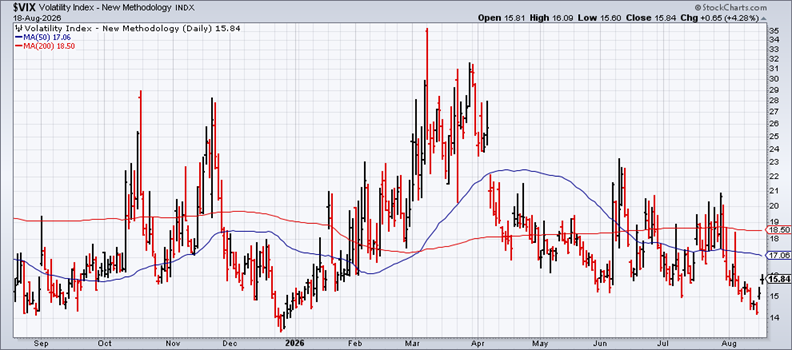
Sentiment is likely to stay cautious, in part because the recent rally has been unusually smooth. Equity volatility fell to its lowest level of the year as of Friday’s close, and historically low VIX readings can coincide with overbought conditions. From a technical perspective, the market looked stretched.
Valuation adds another layer of complexity. Bears have long warned that elevated metrics such as the CAPE ratio leave equities vulnerable, while bulls have countered that strong earnings and, more recently, the promise of AI‑driven growth, are the dominating factors.
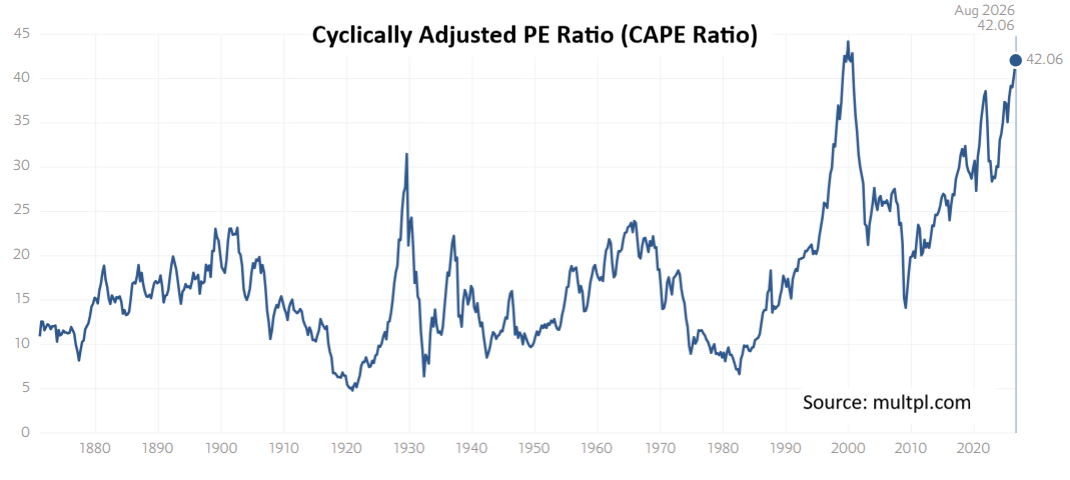
The question now is whether rising Treasury yields will force a reassessment. It is easier to dismiss valuation concerns when the 10‑year yield is relatively stable. But if the benchmark rate approaches 5%, Wall Street will face a tougher challenge justifying premium multiples.
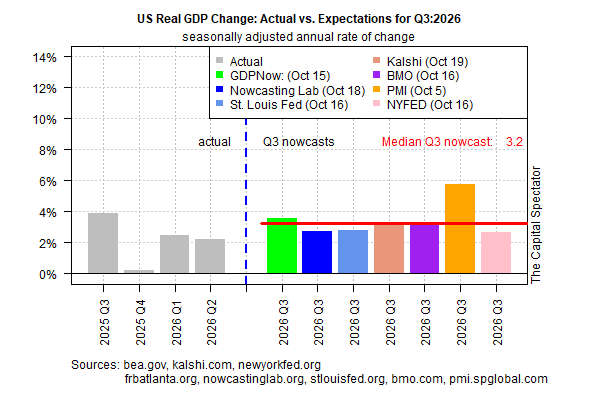
To be fair, the fundamental drivers of the rally remain intact — notably strong earnings growth supported by AI‑related capital spending. That backdrop is not disappearing. But as long as Treasury yields continue to trend higher, equities may be stuck in a holding pattern while investors digest an increasingly complicated macro environment.
Comments
Log in or sign up to join the conversation.