

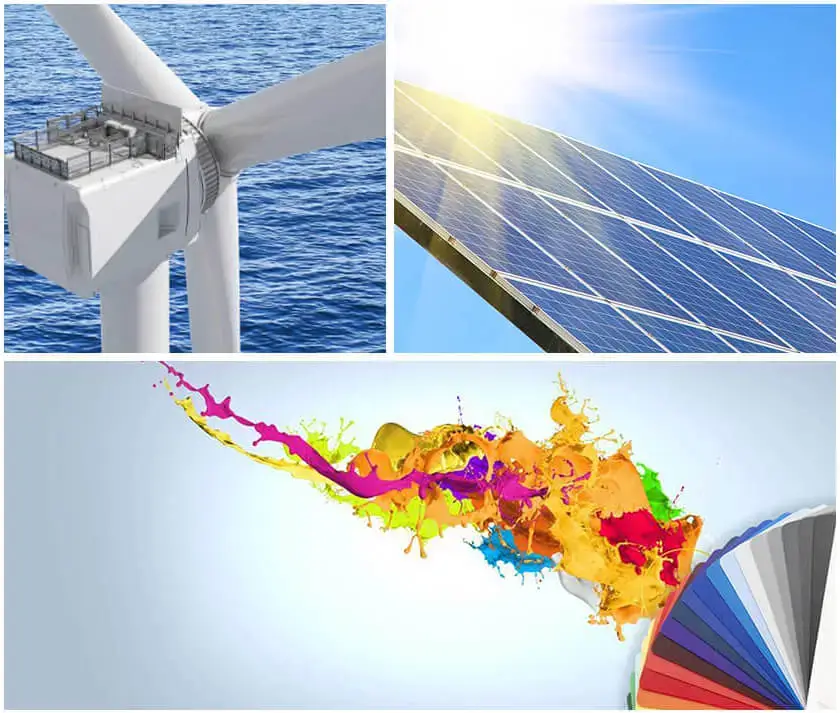
Epoxy resin has become an important material across India's manufacturing, construction, electrical, automotive, marine, industrial, and composite sectors. Its combination of adhesion, mechanical strength, chemical resistance, durability, and formulation flexibility makes it suitable for applications ranging from protective coatings and adhesives to composite components, casting, encapsulation, and industrial flooring.
As industries increasingly demand materials that can withstand demanding operating conditions, selecting the right epoxy system has become an important part of product development and manufacturing. Different applications require different combinations of viscosity, curing speed, hardness, flexibility, chemical resistance, thermal performance, and surface finish.
For businesses looking for an Epoxy Resin Supplier in India, understanding the available resin technologies and their applications can make the selection process more effective.
Orson Resins and Coatings Private Limited provides resin and coating solutions for a range of industrial requirements, including epoxy, polyester, vinyl ester, acrylic, alkyd, saturated polyester, polyamide, casting, gelcoat, and specialty resin systems.
What Is Epoxy Resin?
Epoxy resin is a thermosetting polymer containing reactive epoxy groups. It is generally supplied as a resin component that is combined with a suitable curing agent or hardener.
During curing, the resin and curing agent react to form a cross-linked polymer network. The resulting material can provide strong adhesion, mechanical performance, chemical resistance, and dimensional stability.
One of the major advantages of epoxy technology is its versatility. Formulations can be modified to achieve different processing and performance characteristics.
Depending on the application, epoxy systems may be designed for:
Adhesives
Protective coatings
Composite manufacturing
Electrical insulation
Encapsulation
Casting
Flooring
Industrial repairs
Tooling
Decorative applications
This versatility makes epoxy resin an important material category for modern industrial manufacturing.
Why Is Epoxy Resin Widely Used?
Several characteristics make epoxy resin attractive to manufacturers.
Strong adhesion
Epoxy systems can adhere effectively to many substrates when the appropriate formulation and surface preparation are used.
Mechanical performance
Depending on formulation, cured epoxy can provide useful tensile, flexural, compressive, and impact properties.
Chemical resistance
Many epoxy formulations offer resistance to a variety of chemicals, making them suitable for selected industrial environments.
Electrical properties
Certain epoxy systems are used for insulation, encapsulation, and electrical components.
Low shrinkage
Many epoxy formulations can provide relatively low curing shrinkage compared with some alternative thermosetting systems.
Formulation flexibility
Epoxy chemistry can be modified using different curing agents, reactive diluents, fillers, pigments, additives, and modifiers.
Because of these characteristics, epoxy systems are used across a broad range of industrial applications.
Types of Epoxy Resin
Epoxy resin is not a single universal material. Different grades are developed to meet different processing and end-use requirements.
General-Purpose Epoxy Resin
General-purpose epoxy systems can be used in applications where a balance of adhesion, mechanical properties, chemical resistance, and ease of processing is required.
Potential applications include industrial bonding, coatings, repairs, composite components, and general manufacturing.
However, manufacturers should always select the grade according to the intended application rather than assuming that a general-purpose product will meet every requirement.
Casting Epoxy Resin
Casting resin is formulated for applications where the resin must flow into a mould or around an object before curing.
A Casting Resin Supplier in India may serve applications involving decorative components, industrial castings, encapsulation, moulded products, and specialty manufacturing.
Important characteristics can include:
Viscosity
Flow behaviour
Pot life
Cure time
Hardness
Bubble release
Shrinkage
Surface finish
Transparency
For thicker castings, controlling exotherm during curing can also be important.
Clear Cast Resin
Transparent epoxy systems are commonly used in decorative and specialty casting applications.
A Clear Cast Resin Manufacturer in India may provide systems designed for applications where clarity, appearance, surface finish, and dimensional stability are important.
Clear casting applications can include decorative objects, encapsulation, artistic products, prototypes, and specialty components.
The final result depends not only on the resin but also on mould design, mixing, temperature, moisture, bubble management, curing conditions, and casting thickness.
Epoxy Resin for Industrial Coatings
Epoxy is widely used in industrial coating systems because it can provide strong adhesion and resistance to wear and various environmental conditions.
Epoxy coatings can be used on suitable concrete, metal, and other prepared substrates.
Potential applications include:
Industrial floors
Machinery
Storage areas
Workshops
Warehouses
Manufacturing facilities
Protective metal coatings
Chemical processing environments
The appropriate coating system depends on the substrate, preparation, chemical exposure, temperature, abrasion, UV exposure, and desired service life.
An Epoxy Resin Supplier in India should therefore understand the complete coating formulation rather than focusing only on the base resin.
Epoxy Resin for Composite Manufacturing
Epoxy resin is also used in fibre-reinforced composites.
When combined with glass, carbon, aramid, or other reinforcement materials, epoxy can form high-performance composite structures.
Compared with conventional polyester systems, epoxy is often selected when enhanced adhesion, mechanical performance, or specialized composite characteristics are required.
Applications may include:
Structural composite components
Electrical components
Industrial equipment
High-performance mouldings
Repair composites
Lightweight structures
Resin selection should take into account reinforcement type, fibre architecture, curing temperature, working time, final mechanical properties, and service environment.
Epoxy Resin and Reactive Polyamides
Polyamide curing agents are used with certain epoxy systems to achieve specific combinations of flexibility, adhesion, chemical resistance, and curing performance.
This is why Reactive Polyamides Resins are an important category for epoxy-related applications.
Manufacturers evaluating Polyamide Resin Manufacturers in India should consider the intended epoxy system, curing conditions, flexibility requirements, chemical exposure, and desired final properties.
The resin-hardener combination should be evaluated as a complete system because changing the curing agent can significantly alter processing and cured performance.
Epoxy Resin for Adhesives
Epoxy adhesives are used where strong and durable bonding is required.
Depending on formulation, epoxy adhesives can bond metals, composites, ceramics, wood, concrete, and selected plastics.
Applications can include:
Industrial assembly
Structural bonding
Machinery repair
Composite bonding
Construction
Electrical components
Engineering applications
Surface preparation is critical. Even a high-performance adhesive may fail if the substrate is contaminated, poorly prepared, or incompatible with the adhesive system.
Epoxy Resin for Electrical Applications
Epoxy materials are also used in electrical and electronic applications because selected formulations can provide useful insulation, adhesion, encapsulation, and environmental protection.
Potential applications include:
Electrical encapsulation
Component protection
Insulating materials
Transformers
Switchgear-related components
Electronic assemblies
For these applications, electrical properties, thermal behaviour, moisture resistance, curing characteristics, and dimensional stability should be evaluated carefully.
Epoxy Resin for Flooring
Industrial flooring is another application where epoxy systems are widely used.
Epoxy flooring can provide a durable surface when the correct formulation is combined with appropriate substrate preparation and installation procedures.
Potential advantages include:
Good adhesion
Abrasion resistance
Easy-to-clean surfaces
Chemical resistance
Decorative possibilities
Seamless appearance
However, flooring performance depends on concrete quality, moisture conditions, surface preparation, coating thickness, curing conditions, and operating environment.
Therefore, choosing the resin system alone is not sufficient to guarantee flooring performance.
Epoxy Resin Compared With Polyester Resin
Epoxy and polyester resin systems are both important thermosetting materials, but they serve different application requirements.
Polyester Resin
Unsaturated polyester resin is widely used for conventional FRP applications because of its processing flexibility and cost-effectiveness.
It is commonly used with glass fibre for products such as tanks, panels, pipes, mouldings, and structural profiles.
Epoxy Resin
Epoxy is often selected where stronger adhesion, specialized mechanical properties, chemical resistance, or higher-performance composite characteristics are required.
The correct choice depends on application requirements, manufacturing method, performance targets, and budget.
There is no universal rule that one resin is better than the other.
Epoxy Resin Compared With Vinyl Ester Resin
Vinyl ester resin occupies another important position within the thermosetting resin family.
Vinyl ester systems can be selected for composite applications requiring enhanced chemical resistance and demanding performance.
A Vinyl Ester Resin Manufacturer in India can recommend suitable grades based on chemical exposure, temperature, mechanical loads, and manufacturing conditions.
Epoxy, polyester, and vinyl ester should therefore be compared based on the actual application rather than general assumptions.
Factors to Consider When Choosing an Epoxy Resin
Selecting the right epoxy resin requires consideration of several technical factors.
Viscosity
Viscosity influences mixing, application, wet-out, flow, and processing.
Pot life
Pot life determines how long the mixed system remains workable.
Cure time
The curing schedule should match production requirements.
Hardness and flexibility
The correct balance depends on whether the final product needs rigidity, flexibility, impact resistance, or dimensional stability.
Chemical resistance
Chemical exposure should be identified before selecting the formulation.
Temperature resistance
Operating and curing temperatures can affect resin selection.
Surface finish
For visible or decorative products, clarity, gloss, colour, and surface quality may be important.
Application method
Brush, roller, casting, infusion, lamination, coating, adhesive bonding, and other processes can require different formulations.
How to Choose an Epoxy Resins Manufacturer in India
When selecting an Epoxy Resins Manufacturer in India, customers should consider more than the quoted price.
Important factors include:
Product consistency
Technical specifications
Application expertise
Quality-control procedures
Manufacturing capacity
Technical support
Custom formulation capability
Packaging
Supply reliability
Customer service
For industrial users, consistent batch-to-batch performance can be especially important because changes in viscosity, curing response, or pot life can affect production efficiency.
A supplier capable of understanding the customer's manufacturing process can often provide greater value than a supplier offering only a standard product.
Specialty Resin Solutions for Industrial Manufacturers
Companies working with epoxy often require additional resin technologies for different product lines.
For FRP applications, Unsaturated Polyester Manufacturers India supply polyester systems for conventional composite manufacturing.
For demanding corrosion-resistant composites, customers may evaluate vinyl ester resin.
For surface finishing, Gelcoat Resin Suppliers in India and Top Coat Manufacturer in India can support specific FRP finishing requirements.
Other industries may require Alkyd Resin Manufacturer in India, Acrylic Resin Manufacturer in India, or Saturated Polyester Resin Manufacturers in India, depending on their coating and formulation requirements.
Low-emission applications may also benefit from Low Styrene Emission resins India, while fire-performance requirements can create demand for Flame Retardant Coatings in India and related materials.
This illustrates why manufacturers often benefit from working with a resin supplier that understands multiple polymer technologies.
Orson Resins and Coatings for Industrial Resin Requirements
Orson Resins and Coatings Private Limited provides resin and coating solutions for customers across a variety of industrial applications.
Its product portfolio includes epoxy, polyester, vinyl ester, FRP, gelcoat, casting, low-styrene-emission, alkyd, acrylic, saturated polyester, polyamide, and specialty resin categories.
Businesses evaluating Orson Chemicals or Orson Resins and Coatings can discuss their manufacturing process, substrate, performance requirements, application environment, and production conditions to identify an appropriate resin solution.
For customers searching for Resin Manufacturers in India, an application-focused approach can help ensure that the selected material is aligned with the actual requirements of the finished product.
Conclusion
Epoxy resin is a versatile thermosetting material with applications across coatings, adhesives, composites, casting, electrical components, flooring, encapsulation, and industrial manufacturing.
Its performance depends on the complete formulation, including the epoxy resin, curing agent, additives, fillers, processing conditions, and application method.
When choosing an Epoxy Resin Supplier in India, manufacturers should consider viscosity, pot life, curing behaviour, mechanical properties, chemical resistance, temperature performance, surface finish, and the intended manufacturing process.
At the same time, epoxy should be compared with alternative technologies such as unsaturated polyester and vinyl ester according to the specific application.
With a broad portfolio of resin and coating technologies, Orson Resins and Coatings Private Limited supports manufacturers looking for application-oriented material solutions across India's growing industrial and composite sectors.
Comments
Log in or sign up to join the conversation.