
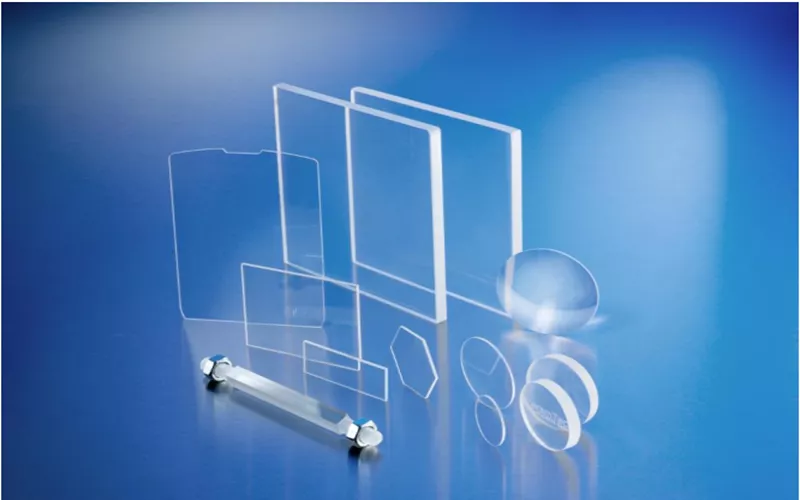
In the world of advanced materials, the demand for transparency combined with strength has led to significant innovations in ceramic technology. Traditional ceramics are known for their durability and thermal stability, but they often lack optical clarity. This limitation has been addressed through the development of transparent ceramic additive solutions, which improve light transmission while maintaining the inherent strength of ceramics.
Industries such as aerospace, optics, electronics, and medical technology are increasingly adopting transparent ceramics due to their unique combination of mechanical and optical properties. With the integration of advanced additives, these materials are now capable of delivering superior performance in high-precision applications.
What are Transparent Ceramic Additives
Transparent ceramic additives are materials incorporated into ceramic formulations to enhance optical clarity. These additives help reduce defects, improve density, and refine the microstructure, allowing light to pass through with minimal scattering.
Key characteristics include:
High purity for improved transparency
Nano-scale particle size for better dispersion
Ability to reduce porosity
Enhancement of structural uniformity
These features make them essential for producing high-performance transparent ceramics.
Challenges in Achieving Ceramic Transparency
Creating transparent ceramics is a complex process due to several factors that can interfere with light transmission.
Porosity
Even small voids in the material can scatter light, reducing transparency.
Grain Boundaries
Irregular grain structures can disrupt the passage of light through the material.
Impurities
Contaminants can absorb or scatter light, affecting clarity.
Processing Conditions
Improper sintering or manufacturing techniques can lead to defects that reduce transparency.
Addressing these challenges requires precise formulation and the use of advanced additives.
How Additives Improve Ceramic Transparency
The use of specialized additives plays a crucial role in enhancing the optical properties of ceramics.
Grain Refinement
Additives help control grain size and distribution, resulting in a more uniform structure.
Densification
They promote better packing and reduce porosity, improving light transmission.
Impurity Control
High-quality additives minimize contamination, ensuring better clarity.
Structural Uniformity
They ensure consistent microstructure, which is essential for achieving transparency.
Importance in Advanced Applications
The integration of transparent ceramic additive technology has become essential in modern material engineering.
By improving optical clarity while maintaining strength and durability, these additives enable the development of advanced materials suitable for high-performance applications.
Applications of Transparent Ceramics
Transparent ceramics enhanced with advanced additives are used across a wide range of industries.
Optical Systems
They are used in lenses, laser components, and optical windows where precision and clarity are critical.
Electronics and Displays
Transparent ceramics are used in protective screens and display components due to their durability and optical properties.
Aerospace and Defense
In aerospace, they are used for protective windows and sensors that require both strength and transparency.
Medical Equipment
They are used in imaging devices and medical instruments where clear visibility is essential.
Benefits of Transparent Ceramic Additives
The use of transparent ceramic additives offers several advantages.
It enhances optical clarity by reducing light scattering and improving uniformity.
It improves mechanical strength, making ceramics more resistant to stress and wear.
It increases thermal stability, allowing materials to perform effectively under high temperatures.
It supports advanced manufacturing processes by improving consistency and reliability.
Factors to Consider When Using Additives
To achieve optimal transparency, several factors must be carefully managed.
Proper dispersion of additives is essential to ensure uniform distribution within the ceramic matrix.
The formulation must be carefully designed to balance clarity with mechanical properties.
Processing conditions such as temperature and pressure should be optimized for maximum densification.
Impurity control is critical to maintain high optical quality.
Future Trends in Transparent Ceramic Technology
As industries continue to advance, the demand for transparent ceramics is increasing. Researchers are focusing on developing innovative materials that offer improved performance and sustainability.
Emerging trends include nanostructured ceramics, advanced sintering techniques, and hybrid materials that combine transparency with additional functionalities.
Transparent ceramic additives are expected to remain a key component in these advancements due to their effectiveness and versatility.
Frequently Asked Questions
What is a transparent ceramic additive
It is a material added to ceramics to improve optical clarity and reduce light scattering.
Why are transparent ceramics important
They combine strength and transparency, making them suitable for high-performance applications in various industries.
Can transparent ceramics replace glass
In some applications, yes. They offer higher durability and thermal resistance compared to traditional glass.
Conclusion
The development of transparent ceramics represents a significant advancement in material science, enabling the creation of materials that combine strength, durability, and optical clarity. Transparent ceramic additive technology plays a crucial role in achieving these properties by improving microstructure and reducing defects.
By incorporating advanced additives into ceramic formulations, industries can produce high-performance materials that meet the demands of modern applications. As innovation continues to drive progress, transparent ceramics will play an increasingly important role in shaping the future of advanced materials and high-tech industries.
Comments
Log in or sign up to join the conversation.