
Let us talk about something that keeps plant managers awake at night. Electricity bills. When you are moving thousands of tons of abrasive slurry every day, the power consumption of your pump station shows up as a massive line item on your monthly operating budget. Most people assume that heavy duty slurry pumps are inherently inefficient because they are built tough. That assumption is wrong. CNSME PUMP has proven that you do not have to choose between durability and energy savings. Their heavy duty slurry pump deliver both, and the efficiency gains come from smart engineering decisions that reduce friction, minimize recirculation, and keep the pump operating at its sweet spot day after day. The power savings alone often justify the investment within the first couple years of operation.
Hydraulic Design Optimized for Slurry, Not Water
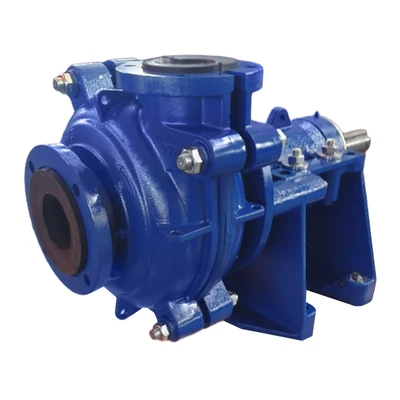
Here is a dirty secret of the pump industry. Most slurry pumps are just modified water pumps. The manufacturer takes a clean water design, adds some thick metal, and calls it heavy duty. But a pump that moves water efficiently is not automatically efficient when you add solids. The flow patterns change, the particle interactions create additional friction, and the recirculation zones behave differently. CNSME started from scratch. Their hydraulic models were developed specifically for two phase flow, meaning liquid and solid particles moving together. The volute cross sectional area expands more gradually than a water pump’s volute, which maintains velocity without creating turbulence. The impeller vanes are shaped with a logarithmic spiral that matches how particles naturally want to move. The result is a pump that converts a higher percentage of electrical energy into hydraulic energy when moving slurry, while a modified water pump wastes that energy as heat, vibration, and wear. Independent hydraulic testing has shown CNSME pumps operating five to eight percentage points more efficiently than comparable models on identical slurry duties.
Maintaining Peak Efficiency Through Wear Life
Efficiency is not a fixed number. It is a declining curve. Every pump loses efficiency as internal clearances open up due to wear. The question is how fast that decline happens. A standard pump might start at seventy five percent efficiency, but after six months of abrasive service, the impeller gaps have widened and recirculation has increased, dropping efficiency to sixty percent. That fifteen point drop means you are paying for fifteen percent more electricity to move the same amount of slurry. CNSME pumps experience a much shallower efficiency decline because their high chromium white iron components maintain their shape longer. The impeller stays tight in the volute, the vanes keep their original profile, and the throatbush clearance remains within spec. Six months into operation, a CNSME pump might have dropped only three or four percentage points in efficiency while the standard pump has dropped three times that amount. Over the course of several years, the cumulative energy savings become substantial. Mines and power plants that track their pump efficiency monthly have documented that CNSME pumps save tens of thousands of dollars annually in avoided efficiency loss.
Reducing Recirculation with Precision Clearances
Recirculation is the silent killer of pump efficiency. It happens when slurry flows backward from the discharge side of the impeller to the suction side through the gap between the impeller and the wear plate. This internal leakage does no useful work, but the pump still consumes power to create it. In poorly designed pumps, recirculation can consume fifteen to twenty percent of the total power input. CNSME achieves much tighter control over internal clearances through precision machining and rigid bearing support. The impeller and suction liner are machined to tighter tolerances than industry standards, and the bearing assembly keeps the impeller running true without wobble or deflection. The result is a recirculation loss that typically runs five percent or less, even after months of operation. That ten to fifteen percent difference in recirculation loss translates directly into lower amperage draw on your motor, which shows up as real dollars saved on your electric bill every single month.
Matching Pump Speed to Slurry Density
One size fits all operation is the enemy of efficiency. CNSME pumps are designed to work seamlessly with variable frequency drives, allowing you to dial in exactly the right speed for the slurry you are moving at any given moment. When the slurry is light, you run the pump slower and save power. When the slurry gets thick, you speed up to maintain production. Standard pumps that lack this flexibility either run too fast during light conditions, wasting energy, or too slow during heavy conditions, causing plugging and downtime. The energy savings from speed matching can be dramatic. A pump moving light slurry at seventy percent of full speed consumes only about thirty four percent of the full speed power, because power varies with the cube of speed. CNSME’s robust bearing design and balanced impeller tolerate the frequent speed changes that VFD operation requires without suffering premature wear or vibration problems. Mines that have added VFDs to their CNSME pumps report typical energy savings of twenty five to forty percent compared to constant speed operation on the same slurry duty.
Lower Shear Means Less Energy Lost as Heat
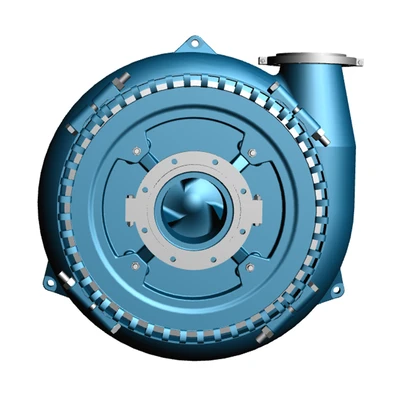
Every time slurry changes direction or accelerates inside a pump, energy converts to heat. That heat does not help you move material. It just warms up the slurry and stresses the pump components. Sharp corners, abrupt transitions, and poorly matched volute geometries create excessive shear and turbulence, wasting energy. CNSME engineers mapped the flow paths inside their pumps using computational fluid dynamics, smoothing every transition and eliminating unnecessary directional changes. The internal passages flow like a river bend rather than a series of sharp corners. The result is a pump that runs cooler, both in terms of slurry temperature rise and casing temperature. Lower operating temperatures mean less thermal stress on seals and bearings, and less energy wasted as useless heat. Plants that have compared bearing housing temperatures between CNSME pumps and other brands consistently find that CNSME runs ten to fifteen degrees Fahrenheit cooler under identical conditions. That temperature difference represents energy that stayed in the slurry as useful motion rather than escaping as waste heat into the pump house.
Oversized Bearings Reduce Frictional Losses
It sounds counterintuitive, but oversized bearings can actually improve efficiency if they are designed correctly. Standard pumps use the smallest bearing that will theoretically survive the load, which often means the bearing runs at high internal friction levels. CNSME specifies bearings one or two sizes larger than necessary, then runs them at lower preloads and with optimized internal clearances. The larger rolling elements distribute the load more evenly, reducing the contact stress and the friction that resists rotation. The larger bearing also runs cooler, which keeps the grease at its optimal viscosity. Lower friction means less power consumed just to spin the shaft before any slurry even enters the pump. While the difference per bearing is small, typically one to two percent, it adds up across hundreds of pumps in a large facility. And the extended bearing life that comes with oversized selection is a bonus on top of the efficiency gain.
Documented Savings Across Real World Installations
You can read all the engineering explanations in the world, but nothing convinces like real numbers from real operations. A copper mine in Chile replaced eight competitor slurry pumps with CNSME models and tracked their power consumption for one year. The average power draw dropped by eleven percent while maintaining the same slurry flow rate. Annual energy savings exceeded one hundred twenty thousand dollars at local electricity rates. A coal preparation plant in West Virginia installed two CNSME pumps on their heavy media cyclone feed and saw motor amperage drop by nine percent compared to the previous pumps of similar size and duty. The plant manager calculated a payback period of just fourteen months based on energy savings alone, before factoring in reduced maintenance and longer wear life. These are not laboratory results or computer simulations. These are real savings from real pumps working in real industrial environments. The energy efficiency gains with CNSME heavy duty slurry pumps are not theoretical. They show up on the electric bill, month after month, year after year.
Comments
Log in or sign up to join the conversation.