

In today's hybrid and remote-first work environment, organizations need visibility into productivity, project progress, and workforce performance. However, many businesses still confuse employee monitoring with employee surveillance.
While both involve collecting workplace data, their purpose, implementation, and impact on employees are completely different.
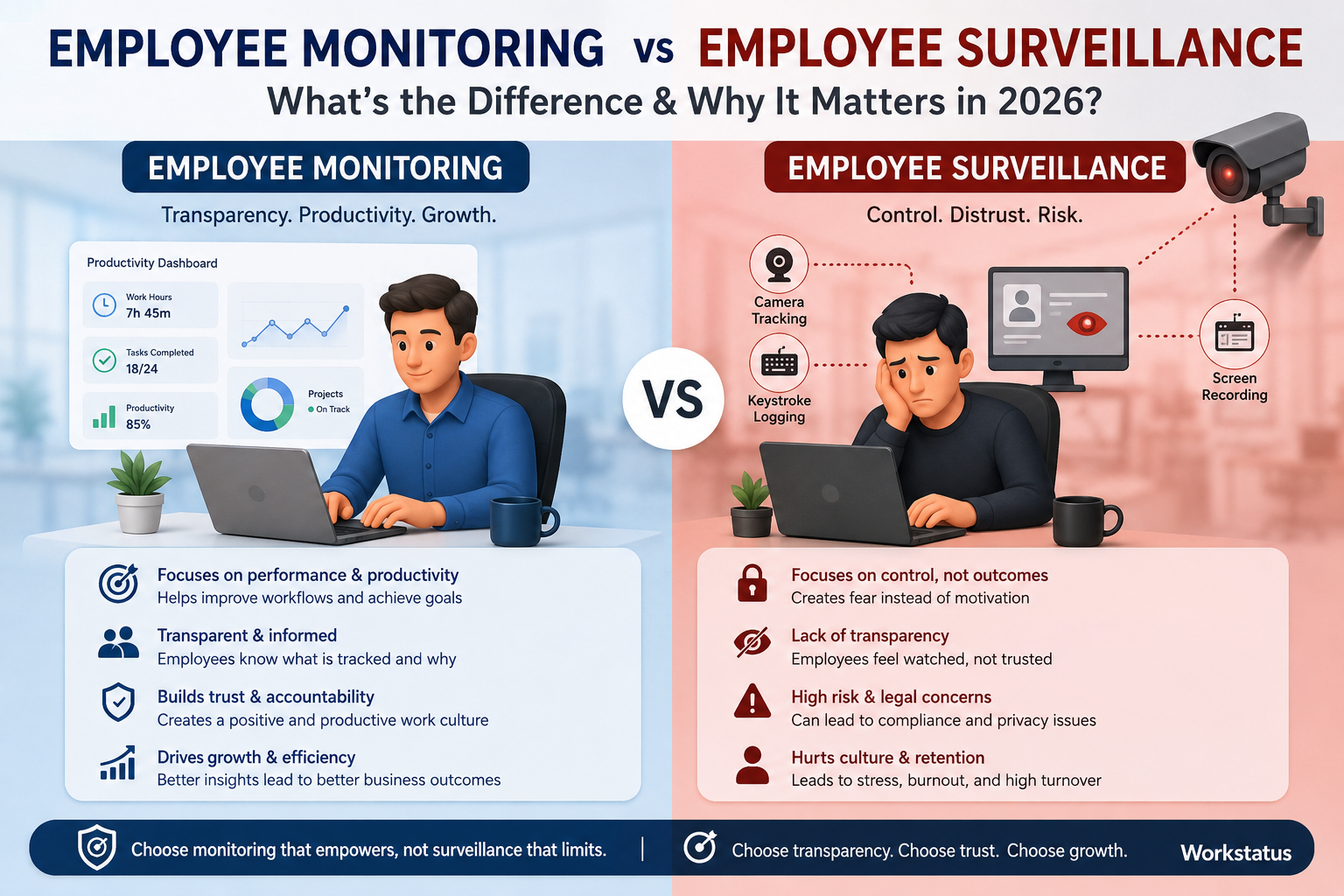
As businesses continue to adopt remote and distributed work models in 2026, understanding this distinction is critical for maintaining productivity, employee trust, compliance, and long-term business success.
This guide explains the difference between employee monitoring and employee surveillance, why it matters, and how organizations can use modern tools responsibly.
What Is Employee Monitoring?
Employee monitoring refers to the ethical and transparent process of tracking work-related activities to improve productivity, accountability, and operational efficiency.
Organizations use employee monitoring software to gain insights into:
Time spent on tasks
Project progress
Attendance and work hours
Application and website usage
Team productivity trends
Resource utilization
The goal is not to watch employees constantly but to understand workflows and identify opportunities for improvement.
Effective monitoring focuses on:
Performance optimization
Better resource allocation
Workforce planning
Employee support
Project profitability
When implemented correctly, monitoring helps employees and managers work more efficiently while maintaining trust and transparency.
What Is Employee Surveillance?
Employee surveillance involves excessive observation of workers, often without clear communication, consent, or business justification.
Examples include:
Continuous webcam monitoring
Recording private communications
Tracking employees outside working hours
Capturing unnecessary personal information
Monitoring without informing employees
Unlike monitoring, surveillance prioritizes control rather than productivity improvement.
This approach can lead to:
Reduced employee morale
Higher turnover rates
Workplace stress
Trust issues
Potential legal and compliance risks
In modern workplaces, excessive surveillance is increasingly viewed as counterproductive and harmful to company culture.Employee Monitoring vs Employee Surveillance: Key Differences
Factor | Employee Monitoring | Employee Surveillance |
|---|---|---|
Purpose | Improve productivity and workflows | Control employee behavior |
Transparency | Clearly communicated | Often hidden or unclear |
Data Collection | Work-related metrics only | Extensive personal data |
Employee Trust | Encourages accountability | Creates fear and resistance |
Compliance | Easier to align with regulations | Higher legal risks |
Business Impact | Supports growth and efficiency | Can damage workplace culture |
The most successful organizations focus on monitoring performance indicators rather than spying on employees.
Why the Difference Matters in 2026
The workplace has changed significantly over the past few years.
Remote work, hybrid schedules, and distributed teams have become standard across industries. As a result, businesses need visibility into work without compromising employee privacy.
This is where modern employee monitoring software plays an important role.
Organizations that use ethical monitoring practices benefit from:
Higher Productivity: Managers gain visibility into work patterns and can identify bottlenecks before they affect project delivery.
Better Employee Experience: Employees understand expectations and receive support based on actual performance data rather than assumptions.
Stronger Compliance: Transparent monitoring policies help organizations align with evolving workplace privacy regulations.
Improved Decision-Making: Data-driven insights allow leaders to make informed decisions about staffing, workload distribution, and resource planning.
The Rise of Remote and Hybrid Workforce Monitoring
The shift toward remote work has increased demand for specialized monitoring solutions.
Businesses managing distributed teams often rely on work from home employee monitoring software to understand how work is progressing across locations.
These solutions typically provide:
Time tracking
Productivity analytics
Attendance management
Project tracking
Team performance insights
The purpose is to create visibility into work outcomes rather than monitoring personal activities.
As remote work continues to grow, organizations are increasingly investing in wfh employee monitoring software that balances accountability with employee privacy.
How Ethical Employee Monitoring Builds Trust
Trust remains one of the most important factors in workforce management.
Employees are more likely to embrace monitoring tools when organizations:
Communicate Clearly: Explain what data is being collected and why.
Focus on Work Activities: Track productivity-related metrics instead of personal behavior.
Provide Visibility: Allow employees to access their own productivity reports and performance insights.
Use Data Responsibly: Use monitoring data for coaching, process improvement, and workload management rather than punishment.
When monitoring is transparent, employees often view it as a tool for success rather than a threat.
Features to Look for in the Best Employee Monitoring Software
Not all monitoring solutions are created equal.
When evaluating the best employee monitoring software, businesses should prioritize features that support productivity while respecting employee privacy.
Key features include:
Time Tracking: Accurate tracking of work hours and attendance.
Productivity Analytics: Insights into task completion, focus time, and work patterns.
Project Management Integration: Connection between employee activity and project outcomes.
Remote Workforce Visibility: Tools designed specifically for hybrid and remote teams.
Automated Reporting: Real-time dashboards and performance reports.
Privacy Controls: Configurable settings that ensure ethical data collection.
Organizations should avoid tools that emphasize intrusive surveillance over meaningful productivity insights.
How Workstatus Supports Ethical Employee Monitoring
Modern workforce management platforms like Workstatus are designed around transparency, productivity, and operational efficiency.
Instead of focusing on surveillance, Workstatus helps businesses:
Track employee work hours accurately
Monitor productivity trends
Manage remote and hybrid teams
Improve project visibility
Optimize workforce utilization
Generate actionable performance reports
For organizations seeking reliable work from home employee monitoring software, Workstatus provides visibility into work activities while helping maintain employee trust and accountability.
Its approach aligns with modern workforce management principles where productivity and transparency go hand in hand.
Best Practices for Employee Monitoring in 2026
To ensure monitoring remains ethical and effective, businesses should follow these guidelines:
Create a Clear Monitoring Policy: Document what information is collected, how it is used, and who can access it.
Prioritize Outcomes Over Activity: Focus on results, project progress, and productivity instead of tracking every action.
Inform Employees: Transparency reduces concerns and increases acceptance.
Protect Employee Data: Implement strong security measures and access controls.
Review Monitoring Practices Regularly: Ensure policies remain aligned with business goals and regulatory requirements.
The Future of Employee Monitoring
The future of workforce management is shifting away from surveillance and toward intelligent productivity insights.
AI-powered analytics, workforce planning tools, and advanced reporting capabilities are helping organizations understand performance without compromising employee privacy.
As businesses continue embracing hybrid work models, demand for employee monitoring software and wfh employee monitoring software will continue to grow. However, success will depend on adopting tools that prioritize transparency, trust, and measurable outcomes.
Organizations that balance visibility with employee respect will be better positioned to attract talent, improve productivity, and build sustainable workplace cultures.
Final Thoughts
The distinction between employee monitoring and employee surveillance has never been more important.
Employee monitoring focuses on improving productivity, supporting employees, and enhancing operational efficiency. Surveillance, on the other hand, often creates distrust and can negatively impact workplace culture.
In 2026, businesses should prioritize ethical monitoring practices and invest in the best employee monitoring software that provides actionable insights while respecting employee privacy.
Solutions like Workstatus demonstrate how organizations can achieve workforce visibility, improve performance, and support remote teams without crossing the line into surveillance.
When implemented responsibly, employee monitoring becomes a strategic advantage that benefits both businesses and employees alike.
Comments
Log in or sign up to join the conversation.