

Employee burnout has become one of the biggest challenges for modern workplaces. Heavy workloads, unrealistic deadlines, constant meetings, and poor work-life balance often leave employees mentally and physically exhausted. When burnout goes unnoticed, businesses experience lower productivity, higher absenteeism, declining work quality, and increased employee turnover.
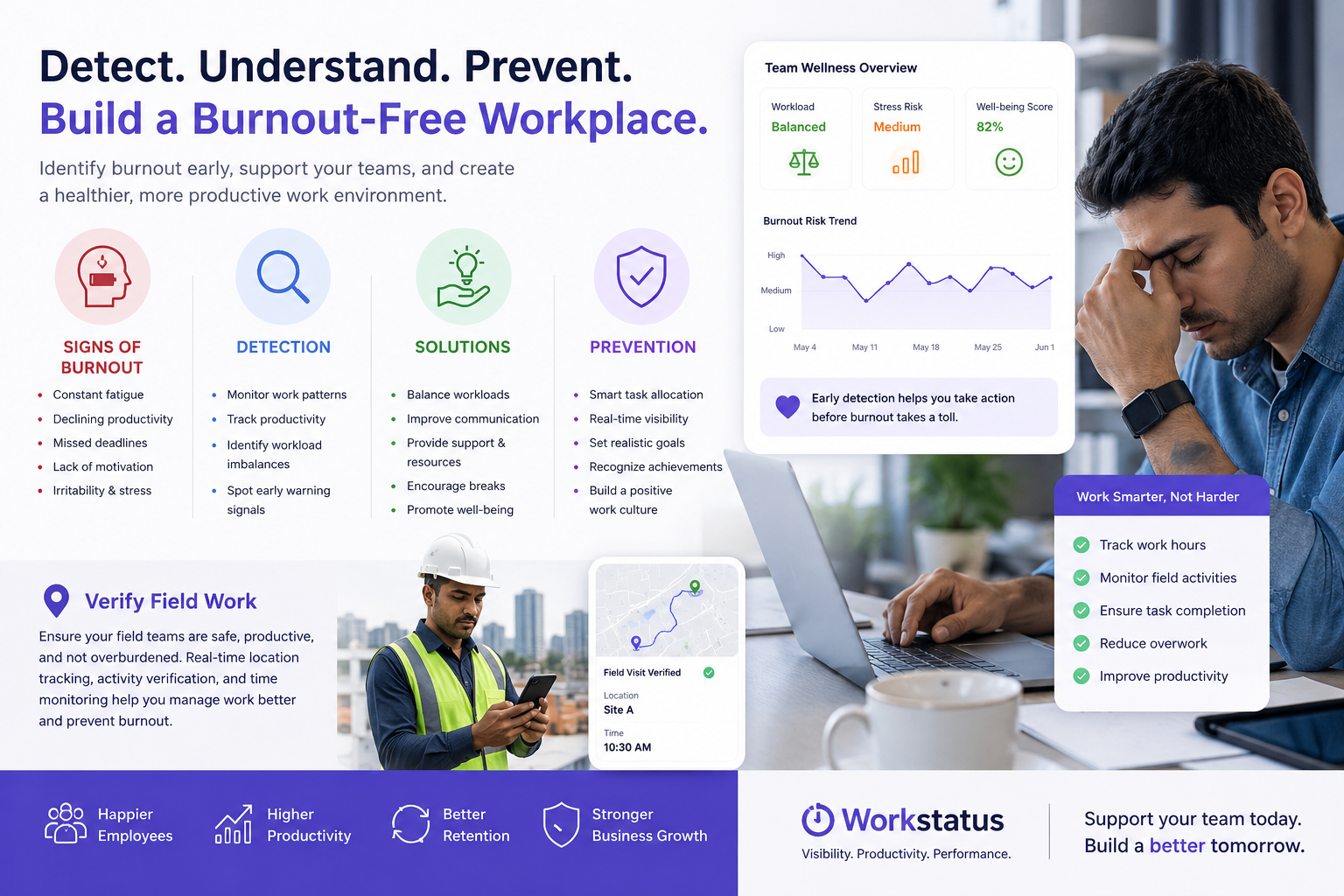
This is why employee burnout detection is no longer optional—it's a business necessity. By recognizing early warning signs and taking proactive steps, organizations can build healthier teams while maintaining consistent performance.
In this guide, you'll learn the signs of employee burnout, practical employee burnout solutions, and proven strategies to prevent employee burnout before it impacts your workforce.
What Is Employee Burnout?
Employee burnout is a state of emotional, physical, and mental exhaustion caused by prolonged workplace stress that isn't effectively managed. It develops gradually rather than overnight, making early identification critical. The World Health Organization (WHO) recognizes burnout as an occupational phenomenon resulting from chronic workplace stress.
Burnout doesn't only affect individual employees—it directly impacts project delivery, customer satisfaction, employee engagement, and overall business growth.
Common causes include:
Excessive workloads
Lack of recognition
Unrealistic deadlines
Poor workload distribution
Limited work-life balance
Constant overtime
Inadequate resource planning
Low employee engagement
Why Employee Burnout Detection Matters
Early burnout detection helps organizations identify unhealthy work patterns before they become serious problems.
Instead of reacting after productivity drops or employees resign, managers can use workload visibility and productivity insights to make timely adjustments.
Benefits of early burnout detection include:
Improved employee well-being
0Higher productivity
Better work quality
Lower employee turnover
Balanced workloads
Increased team morale
Stronger project delivery
Better workforce planning
Organizations that monitor workload patterns instead of simply tracking hours can identify potential burnout risks much earlier. Modern workforce intelligence platforms use productivity trends, workload analytics, and work pattern insights to help managers recognize these risks.
Top Signs of Employee Burnout
Recognizing burnout early allows managers to provide support before employees become disengaged.
Here are some of the most common signs of employee burnout:
Constant Fatigue: Employees appear tired throughout the day, even after weekends or vacations.
Declining Productivity: Tasks that once took hours now require significantly more time and effort.
Increased Mistakes: Frequent errors, missed deadlines, and lower-quality work often indicate mental exhaustion.
Lack of Motivation: Employees lose interest in projects they previously enjoyed and show reduced initiative.
Longer Working Hours: Working late every day doesn't necessarily mean higher productivity. It may indicate workload imbalance.
Reduced Collaboration: Burnt-out employees often withdraw from meetings, team discussions, and workplace interactions.
Higher Absenteeism: More sick leaves, unexpected time off, or frequent breaks can signal burnout.
Employee Burnout Solutions That Actually Work
Identifying burnout is only the first step. Organizations must also implement practical solutions.
Balance Team Workloads: Uneven work allocation often causes top performers to become overwhelmed. Regular workload reviews help distribute work fairly.
Encourage Healthy Work Habits: Promote regular breaks, realistic deadlines, and reasonable working hours instead of rewarding constant overtime.
Use Workforce Analytics
Monitoring workload trends, productivity insights, and capacity planning helps managers identify stress before it becomes burnout.
Solutions like Workstatus provide visibility into workload patterns, productivity trends, overtime, and capacity utilization, helping organizations detect burnout risks early while making smarter workforce decisions.
Improve Communication: Regular one-on-one meetings encourage employees to discuss workload challenges before they escalate.
Recognize Employee Contributions: Recognition improves morale and reduces emotional exhaustion caused by feeling undervalued.
Support Flexible Work: Flexible schedules and realistic expectations help employees maintain healthier work-life balance.
How to Prevent Employee Burnout
The best strategy is prevention.
Here are proven ways to prevent employee burnout:
Prioritize Resource Planning: Avoid assigning multiple high-priority projects to the same employees.
Monitor Overtime: Consistent overtime is often an early warning sign that teams need additional support or better planning.
Track Work Patterns: Instead of measuring only attendance, analyze productivity trends, workload distribution, and focus time.
Encourage Time Off: Vacation time allows employees to recover before stress becomes chronic.
Set Realistic Expectations: Overcommitting teams leads to unsustainable workloads and declining performance.
Invest in Employee Well-being: Wellness programs, mental health resources, and supportive leadership create healthier workplaces.
How Technology Helps Detect Burnout Early
Modern workforce management tools have moved beyond simple time tracking.
AI-powered workforce analytics now help organizations identify:
Workload imbalance
Excessive overtime
Declining productivity trends
Unusual work patterns
Capacity shortages
Project delivery risks
Resource utilization gaps
Instead of relying on assumptions, managers receive actionable insights that support better decision-making and healthier work environments.
Why Workforce Visibility Is Essential
Organizations cannot solve burnout if they cannot see it.
Accurate workforce visibility enables managers to:
Understand team capacity
Allocate work fairly
Improve employee engagement
Reduce employee attrition
Increase operational efficiency
Support sustainable productivity
If you're looking for a practical way to identify workload imbalance and prevent burnout before it impacts your business, explore Workstatus, which combines productivity analytics, workload management, and workforce intelligence to help organizations build healthier, more productive teams.
For organizations focused on improving workforce visibility, related resources include:
Employee Productivity Management
Workforce Analytics
Resource Capacity Planning
Workload Management
Project Time Tracking
Employee Monitoring Software
Remote Workforce Management
Team Utilization Tracking
Burnout develops gradually, but its impact can be immediate—reduced productivity, disengaged employees, missed deadlines, and higher turnover. The good news is that organizations don't have to wait until performance declines to take action.
By investing in employee burnout detection, recognizing the signs of employee burnout, implementing effective employee burnout solutions, and using data-driven strategies to prevent employee burnout, businesses can create healthier workplaces while improving long-term performance.
As work environments continue to evolve, organizations that prioritize employee well-being alongside operational efficiency will be better positioned to retain talent, improve project outcomes, and build resilient, high-performing teams.
Comments
Log in or sign up to join the conversation.