
Modern electronic devices rely on smart and efficient hardware to deliver excellent performance. Embedded hardware design services help businesses transform innovative ideas into reliable electronic products by combining engineering expertise, advanced technology, and careful product development. Whether it is an IoT device, medical equipment, industrial controller, or consumer product, a well-designed hardware platform ensures long-term performance and stability.
Professional hardware engineering solutions support every stage of development, from concept and circuit design to testing and production. This approach reduces development risks, improves product quality, and helps businesses launch products faster.
What Are Embedded Hardware Design Services?
Embedded hardware design services involve designing electronic hardware for embedded systems that perform dedicated functions within a product. The process includes circuit design, PCB layout, component selection, prototype development, testing, and manufacturing support.
The objective is to create compact, reliable, and energy-efficient hardware that works smoothly with embedded software. Every design is customized according to product requirements, operating conditions, and industry standards to ensure dependable performance.
The Complete Hardware Development Process
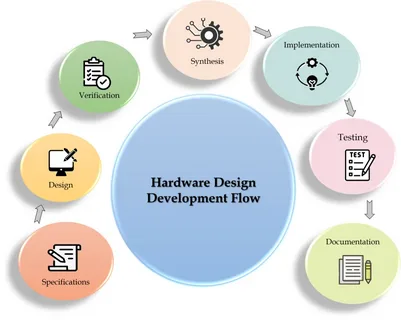
Product Requirement Analysis
Every successful project begins by understanding the product's purpose and technical requirements. Engineers evaluate performance goals, environmental conditions, connectivity needs, power consumption, and production costs before starting the design.
A clear development plan helps reduce errors and keeps the project on schedule.
Circuit Design and Schematic Development
The next step is creating electronic circuits that form the foundation of the product. Engineers carefully select microcontrollers, processors, memory devices, sensors, communication modules, and power management components.
A well-designed circuit improves reliability, energy efficiency, and overall system performance.
PCB Layout Design
Printed Circuit Board (PCB) design is one of the most important stages of embedded hardware design services. Engineers optimize the PCB layout to ensure proper signal flow, thermal management, and electromagnetic compatibility.
An efficient PCB layout also reduces manufacturing issues and improves long-term product stability.
Prototype Development
Before mass production begins, prototypes are developed to validate the hardware design. Functional testing allows engineers to identify possible issues and make improvements before manufacturing.
Prototype evaluation helps reduce development costs and minimizes production risks.
Hardware Engineering Solutions for Modern Products
Professional hardware engineering solutions cover every stage of product development. Instead of focusing only on hardware design, engineers also consider software compatibility, manufacturing feasibility, scalability, and future product upgrades.
These services typically include:
Circuit design
PCB layout
Component selection
Power management design
Prototype development
Hardware validation
Design optimization
Manufacturing support
An end-to-end development approach ensures that every product is ready for commercial production with minimal delays.
Supporting IoT and Smart Device Development
Today's connected products require intelligent hardware capable of handling wireless communication, sensor integration, and efficient power management.
Professional embedded hardware engineers design systems for:
Smart home devices
Industrial automation
Medical equipment
Consumer electronics
Automotive electronics
Wearable devices
Smart agriculture
Environmental monitoring
IoT devices often combine microcontrollers, wireless modules such as Wi-Fi, Bluetooth, or LoRa, multiple sensors, and low-power electronics to provide reliable real-time performance.
Why Professional Design Matters
Choosing experienced engineers provides many long-term advantages.
Some important benefits include:
Better product reliability
Faster development cycles
Lower manufacturing costs
Improved energy efficiency
Optimized hardware performance
Easier production scaling
Reduced product failures
Faster time-to-market
Professional engineering teams also ensure compliance with industry standards and manufacturing requirements.
Testing and Product Validation
Quality testing is an essential part of hardware development. Every prototype undergoes detailed validation before production begins.
Testing usually includes:
Functional testing
Signal integrity verification
Power consumption analysis
Thermal performance evaluation
Environmental testing
Hardware reliability testing
PCB inspection
System integration testing
These testing procedures ensure the product performs consistently under different operating conditions.
Industries Using Embedded Hardware Design
Today, embedded hardware is used across many industries because of its flexibility and performance.
Major industries include:
Healthcare
Industrial automation
Automotive
Telecommunications
Consumer electronics
Smart cities
Agriculture
Energy management
Security systems
Robotics
Each industry has unique requirements, making customized hardware engineering solutions an important part of successful product development.
Frequently Asked Questions
What are embedded hardware design services?
Embedded hardware design services involve creating electronic hardware for embedded systems. The process includes circuit design, PCB layout, component selection, prototyping, testing, optimization, and manufacturing support to build reliable and efficient electronic products.
Why are embedded hardware design services important?
These services help businesses develop high-performance, energy-efficient, and cost-effective products while reducing development risks, improving reliability, and shortening time-to-market.
Can embedded hardware design services support IoT product development?
Yes. These services are widely used in IoT development by integrating sensors, microcontrollers, wireless communication modules, power management circuits, and embedded processing capabilities into connected devices.
What are the benefits of professional embedded hardware design services?
Professional services improve hardware quality, optimize system performance, reduce production costs, increase reliability, support future scalability, and help businesses launch products more quickly.
Conclusion
Embedded hardware design services are essential for building modern electronic products that are reliable, efficient, and ready for large-scale production. From circuit design and PCB layout to prototype development, testing, and manufacturing support, every stage contributes to creating high-quality embedded systems. By choosing experienced hardware engineering solutions, businesses can reduce development challenges, improve product performance, accelerate time-to-market, and confidently deliver innovative products for IoT, healthcare, industrial automation, automotive, and consumer electronics applications.
Comments
Log in or sign up to join the conversation.