

Introduction
The global Electronic Manufacturing Services (EMS) Market is entering a new phase of accelerated growth as businesses increasingly outsource electronics design, manufacturing, assembly, testing, and supply chain operations to specialized service providers. As electronic products become more sophisticated and product life cycles continue to shorten, original equipment manufacturers (OEMs) are relying on EMS companies to improve production efficiency, reduce operational costs, and accelerate time-to-market.
According to Techsci Research, the Global Electronic Manufacturing Services Market is projected to grow from USD 630.93 billion in 2025 to USD 1,194.21 billion by 2031, registering a CAGR of 11.22% during the forecast period. The market is expanding rapidly due to growing demand for consumer electronics, automotive electronics, industrial automation, healthcare devices, telecommunications equipment, and smart connected technologies. Engineering Services are expected to be the fastest-growing service segment, while Asia Pacific continues to dominate the global market due to its strong manufacturing ecosystem and extensive electronics supply chain.
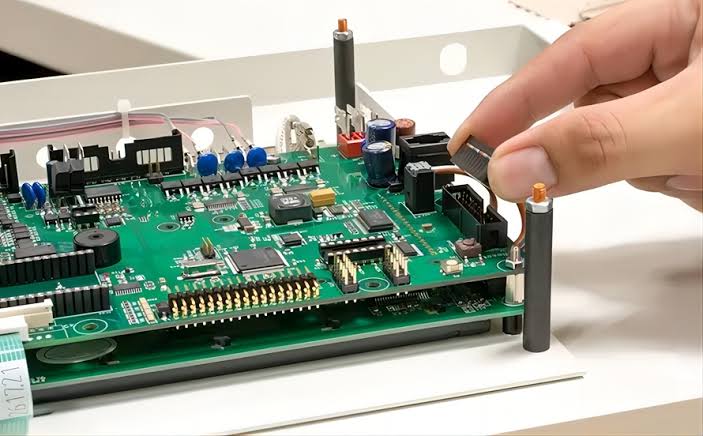
KEY HIGHLIGHTS
Market expected to grow from USD 630.93 Billion in 2025 to USD 1,194.21 Billion by 2031.
Forecast CAGR of 11.22% through 2031.
Asia Pacific remains the largest regional market.
Engineering Services expected to witness the fastest growth.
Increasing outsourcing by OEMs continues driving market expansion.
Strong demand from automotive, healthcare, industrial, and consumer electronics sectors.
Growing adoption of Industry 4.0 and smart manufacturing technologies.
Rising investments in advanced PCB assembly and electronics testing.
Increasing focus on supply chain optimization and operational efficiency.
Expanding demand for customized, high-quality electronic products.
Request For Sample Copy of Report For More Detailed Market insight: https://www.techsciresearch.com/sample-report.aspx?cid=24170#requestform
Market Overview
Electronic Manufacturing Services have become an indispensable part of the global electronics industry. EMS providers deliver comprehensive manufacturing solutions that include product design support, printed circuit board (PCB) assembly, component sourcing, testing, logistics, and after-sales services. These services enable OEMs to concentrate on product innovation, branding, and market expansion while leveraging specialized manufacturing expertise.
The rapid evolution of technologies such as artificial intelligence, the Internet of Things (IoT), 5G, electric vehicles, industrial automation, and connected healthcare devices has significantly increased the complexity of electronic products. Consequently, companies increasingly depend on EMS providers capable of delivering high-volume manufacturing with exceptional quality standards and shorter production cycles.
Modern EMS providers are no longer simply contract manufacturers. They now function as strategic partners offering end-to-end product lifecycle management, digital manufacturing capabilities, engineering support, and global supply chain management. As businesses seek greater flexibility and resilience, EMS companies continue expanding their capabilities through automation, robotics, digital twins, predictive analytics, and smart factory technologies.
MAIN DRIVERS & TRENDS
Increasing Manufacturing Outsourcing
OEMs increasingly outsource manufacturing operations to reduce capital expenditure, improve scalability, and access specialized production capabilities while focusing on product development and customer engagement.
Growing Automotive Electronics Market
Electric vehicles, autonomous driving systems, advanced driver assistance systems (ADAS), infotainment systems, and battery management technologies are driving substantial demand for EMS providers with automotive manufacturing expertise.
Expansion of Consumer Electronics
Global demand for smartphones, wearable devices, laptops, smart home products, gaming consoles, and connected consumer devices continues supporting large-scale EMS production.
Industry 4.0 Adoption
Smart factories equipped with robotics, AI, machine learning, digital inspection systems, and automated quality control are transforming electronics manufacturing into highly efficient, data-driven production environments.
Digital Supply Chain Optimization
EMS providers increasingly deploy cloud platforms, predictive analytics, and digital supply chain management systems to improve inventory planning, supplier collaboration, and production scheduling.
Sustainability Initiatives
Manufacturers are investing in environmentally responsible production practices, energy-efficient facilities, waste reduction programs, and circular economy initiatives to meet evolving regulatory and customer expectations.
Emerging Trends
Engineering Services Expansion
Engineering services are becoming one of the fastest-growing areas within EMS as manufacturers increasingly seek design optimization, rapid prototyping, product validation, and design-for-manufacturing expertise.
Smart Manufacturing
Artificial intelligence, collaborative robots, automated optical inspection, and predictive maintenance technologies continue improving production efficiency while reducing manufacturing defects.
Regional Manufacturing Diversification
Companies are diversifying manufacturing footprints to reduce supply chain risks and improve resilience against geopolitical uncertainties and logistics disruptions.
Miniaturization of Electronics
The growing demand for smaller, lighter, and more powerful electronic devices requires highly advanced manufacturing processes capable of handling increasingly complex PCB assemblies.
AI-Enabled Production
Artificial intelligence enhances quality inspection, process optimization, equipment monitoring, and demand forecasting, enabling EMS providers to achieve higher productivity and operational accuracy.
REAL-WORLD USE CASES
Consumer Electronics Manufacturing
EMS providers manufacture smartphones, tablets, laptops, smart televisions, wearable devices, and home automation products for leading global brands while ensuring rapid production scalability.
Automotive Industry
Automotive manufacturers rely on EMS companies for electronic control units, battery management systems, infotainment modules, sensors, and ADAS components used in modern vehicles.
Healthcare Devices
Medical device manufacturers outsource production of diagnostic equipment, patient monitoring systems, wearable health devices, and imaging systems to specialized EMS providers that meet stringent quality standards.
Aerospace & Defense
EMS companies manufacture mission-critical electronic assemblies for aircraft systems, communication equipment, navigation technologies, and defense electronics requiring exceptional reliability.
Industrial Automation
Factories deploy EMS-manufactured industrial controllers, sensors, robotics hardware, programmable logic controllers (PLCs), and automation equipment supporting Industry 4.0 initiatives.
Telecommunications Infrastructure
EMS providers manufacture networking equipment, servers, routers, switches, and 5G infrastructure components supporting expanding global communication networks.
Competitive Analysis
The Electronic Manufacturing Services market is highly competitive, with global manufacturers investing heavily in advanced manufacturing technologies, automation, engineering expertise, and integrated supply chain capabilities.
Leading companies differentiate themselves through:
Global manufacturing capacity
Advanced engineering services
High-volume production capabilities
End-to-end product lifecycle management
Strong quality assurance systems
Digital manufacturing technologies
Supply chain resilience
Industry-specific compliance expertise
Top 10 Electronics Manufacturing Services (EMS) Companies
CHALLENGES & OUTLOOK
Despite strong growth prospects, the EMS industry faces several operational challenges.
Supply chain disruptions, semiconductor shortages, geopolitical uncertainty, fluctuating raw material prices, and increasing logistics costs continue affecting production schedules. Additionally, manufacturers must navigate evolving environmental regulations, cybersecurity requirements, and increasingly complex product specifications.
However, long-term growth remains highly favorable. The increasing adoption of artificial intelligence, electric vehicles, industrial automation, connected healthcare, and smart consumer electronics is expected to generate sustained demand for outsourced manufacturing services. Companies that invest in resilient supply chains, intelligent automation, engineering innovation, and sustainable manufacturing practices will be well-positioned for future success.
Future Outlook
The future of the Electronic Manufacturing Services Market is expected to remain exceptionally strong as digital transformation accelerates across industries worldwide. Engineering Services will continue emerging as a key growth area while Asia Pacific maintains its leadership due to its extensive manufacturing infrastructure, skilled workforce, and established supplier ecosystem.
Growing investments in AI-enabled manufacturing, robotics, digital factories, IoT-connected production systems, and advanced quality inspection technologies will further enhance EMS capabilities. The market will increasingly support next-generation technologies including electric vehicles, renewable energy systems, industrial IoT devices, medical electronics, and 5G communication infrastructure.
As OEMs continue focusing on innovation while outsourcing production complexity, EMS providers will evolve into strategic technology partners capable of delivering comprehensive design, manufacturing, testing, logistics, and lifecycle management solutions.
10 Benefits of This Research Report
Provides comprehensive analysis of the global EMS market.
Includes detailed market size estimates and long-term forecasts.
Examines major growth drivers and emerging industry trends.
Highlights opportunities across multiple end-user industries.
Offers detailed segmentation by service type, industry, and region.
Evaluates competitive dynamics and strategic developments.
Identifies regional investment opportunities.
Supports informed business planning and expansion strategies.
Assists investors in evaluating market potential.
Delivers actionable insights for manufacturers, suppliers, and stakeholders.
Conclusion
The Global Electronic Manufacturing Services Market is poised for significant expansion as organizations increasingly rely on specialized manufacturing partners to improve efficiency, reduce costs, and accelerate innovation. With the market projected to increase from USD 630.93 billion in 2025 to USD 1,194.21 billion by 2031, growing at a CAGR of 11.22%, EMS providers will remain central to the global electronics value chain.
The rapid growth of automotive electronics, consumer devices, healthcare technologies, industrial automation, and telecommunications infrastructure will continue generating strong demand for advanced manufacturing capabilities. At the same time, digital manufacturing, AI-driven quality control, engineering services, and smart factory technologies will redefine the future of electronics production.
Companies that invest in resilient supply chains, sustainable manufacturing, intelligent automation, and engineering excellence will be best positioned to capitalize on the evolving opportunities within the rapidly growing Electronic Manufacturing Services market. (
Contact US:
Techsci Research LLC
420 Lexington Avenue, Suite 300,
New York, United States- 10170
Tel: +13322586602
Email: [email protected]
Comments
Log in or sign up to join the conversation.