

|
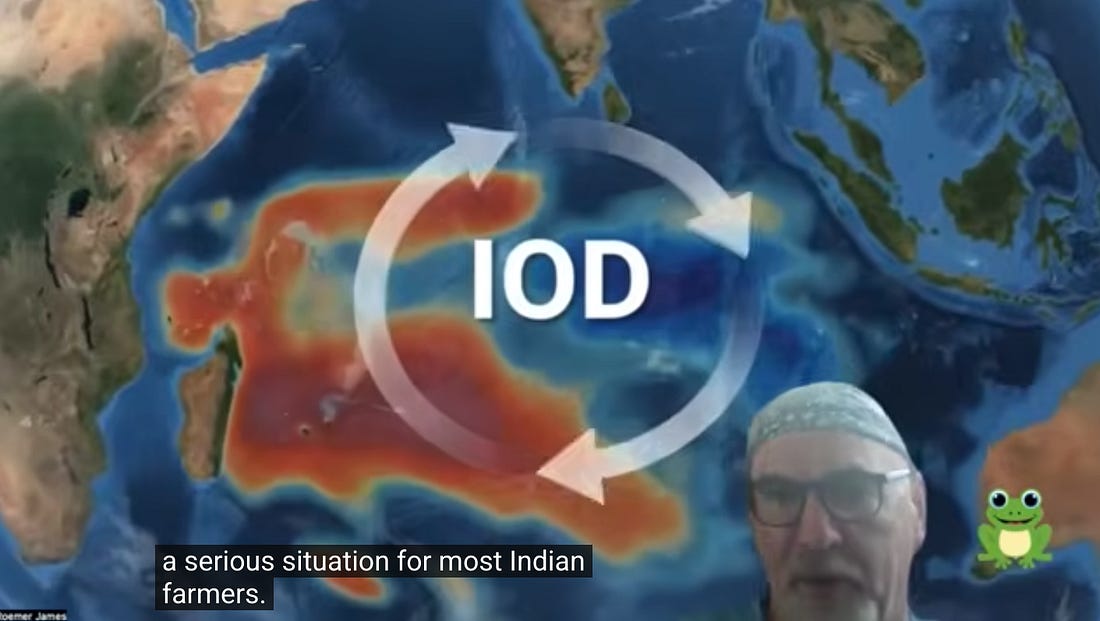
What happens when unusually warm Pacific Ocean waters associated with El Niño begin disrupting one of the world's most important weather systems—the Indian summer monsoon?
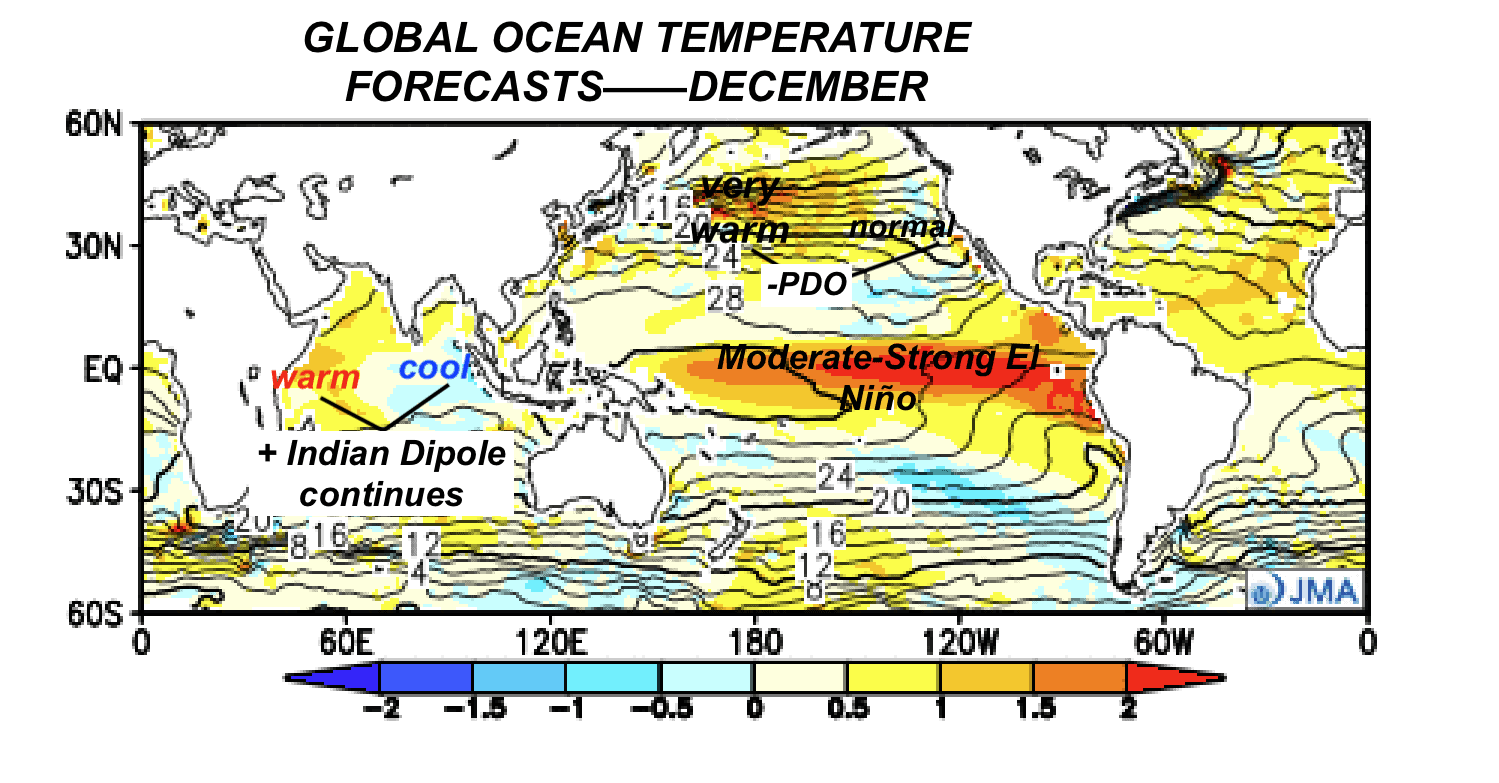
Normally, intense summer heating over India helps draw moisture-rich winds off the Indian Ocean, producing the June–September rains that are vital to agriculture and water supplies. But during many El Niño events, changes in tropical Pacific convection and the Walker Circulation can weaken or shift this atmospheric engine. The result can be a weaker, more erratic Indian monsoon, including longer breaks between major rain events.
The relationship isn't automatic. Some El Niño years still produce near-normal rainfall because the Indian Ocean Dipole (IOD), Madden-Julian Oscillation (MJO), monsoon depressions, and other ocean-atmosphere patterns can either reinforce or partially offset El Niño's influence.
In this video, meteorologist and commodity advisor Jim Roemer explains how El Niño can disrupt India's monsoon—and why that matters far beyond India.
🌾 Why should commodity traders care?
A weaker monsoon can threaten sugarcane, cotton, rice and other crops, potentially affecting global supplies and commodity prices. India's enormous agricultural economy means that changes in rainfall thousands of miles away in the Pacific can eventually ripple through markets around the world.
Pacific Ocean → El Niño → Atmospheric Circulation → Indian Monsoon → Crops → Global Commodity Markets
Welcome to the fascinating connection between climate, weather and markets.
____________________________________
Click here to view 3-minute video.
Read video transcript here.


Comments
Log in or sign up to join the conversation.