
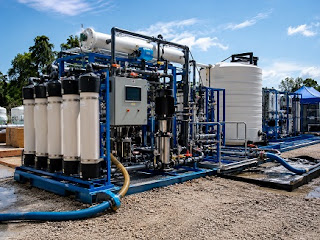
Construction sites, mining operations as well as municipal projects generate significant volumes of sediment-laden water daily. Suspended solids particles ranging from clay to fine sand create substantial operational headaches. Discharge of untreated water containing these particles violates environmental regulations as well as damages receiving water bodies. Industrial operations face mounting pressure to implement compliant water management solutions before releasing treated water back into natural systems or reusing it operationally.
Efficient Removal through Advanced Treatment
Modern water treatment addresses sediment challenges through scientifically-proven separation methodologies. Specialized equipment achieves rapid particle removal while maintaining operational continuity on-site. Treatment efficiency directly reduces disposal costs as well as enables water reuse possibilities. Advanced systems demonstrate removal rates exceeding 99% for target particle sizes, meeting stringent regulatory discharge standards consistently. Explore reliable solutions with our temporary water treatment plant-visit our website to learn more today!
Primary Separation Methods
Coagulation & flocculation represent foundational treatment steps in sediment removal processes. Chemical coagulants neutralize particle charges, enabling small particles to combine into larger, more settleable aggregates. Flocculation gently mixes water to encourage these particles bonding together into visible flocs. The resulting larger particles settle rapidly in dedicated settling tanks, removing approximately 70-80% of suspended solids through gravity alone.
Multi-stage settling tank designs optimize particle removal rates. Lamella or tube settler technology increases effective settling surface area within compact equipment footprints. This innovation reduces retention time requirements while dramatically improving particle separation efficiency compared to conventional settling tanks.
Advanced Treatment Approaches
High-rate clarification systems accelerate the natural settling process through specialized internal configurations. Sludge recirculation mechanisms enhance particle capture rates. Multimedia filtration stages capture remaining fine particles after initial settling as well as clarification. Sand, anthracite & activated carbon layers work sequentially to progressively polish water quality to required discharge standards.
Polymer injection systems optimize particle separation at specific treatment stages. Automated dosing mechanisms adjust chemical additions based on real-time water quality measurements. This dynamic approach maintains consistent treatment performance despite variations in incoming sediment concentrations or particle size distributions.
Deployment and Rapid Implementation
Portable water treatment equipment arrives on-site ready for expedited deployment. Unlike permanent treatment facilities requiring extensive site preparation & regulatory approval timelines, temporary systems establish operation within days. Modular design elements allow equipment connection without complex civil works or extensive plumbing installations. Site managers gain immediate water management capabilities without extended project delays.
Minimal infrastructure requirements simplify implementation logistics. Standard electrical connections power treatment systems. Operators pump sediment-laden water into treatment units & discharge polished water directly into designated discharge areas or recycling applications. This straightforward operational simplicity reduces training requirements along with enables rapid workforce adaptation.
Monitoring and Performance Optimization
Continuous quality monitoring through turbidity analyzers ensures consistent treatment performance. Real-time data enables immediate operator response to treatment effectiveness variations. Automated chemical dosing systems adjust coagulant & polymer additions continuously, optimizing treatment outcomes throughout operational periods. Treated water quality documentation demonstrates regulatory compliance throughout project duration.
Applications Across Multiple Industries
Construction as well as demolition operations employ temporary treatment for management of wash water, dewatering and storm water runoff. Mining & aggregate processing facilities treat process water containing fine mineral particles. Municipal departments utilize temporary systems during infrastructure maintenance and emergency response situations. Disaster recovery operations implement rapid treatment solutions in affected communities.
Getting Started With Effective Treatment
Site assessment determines sediment loading rates along with target discharge quality requirements. Treatment system capacity selection ensures adequate processing volume and removal performance alignment with project specifications. Equipment rental or acquisition decisions depend on project duration as well as operational frequency projections.
Implementing sediment removal solutions through temporary treatment infrastructure protects water resources while enabling project continuity. Science-based treatment methodologies consistently achieve regulatory compliance as well as enable responsible water management practices.
Author Bio:-
This article is written by Lee Wood. He has got into writing professionally and uploads regular informative articles. Pure water for a sustainable future: explore desalination water treatment solutions - visit this website now!
Comments
Log in or sign up to join the conversation.