

Economic stimulus generally refers to the use of monetary and fiscal policies implemented centrally by a government or government agencies to spur or “kick-start” economic growth in a struggling economy. Stimulus is usually called for following a period of inflationary growth that necessarily must come to an end.
The central bank, whose policies are partly founded on the economic doctrine that interest rates should be raised during good times and lowered during bad times, controls the monetary element of the “stimulus.” Furthermore, the thinking goes, money supply growth therefore needs to be slowed during good times and managed up during bad times. Why? Because lowering interest rates and increasing the money supply growth rate fuel demand and economic growth while rising interest rates and decreasing money supply growth achieve the opposite according to this line of thinking. Through manipulating the money supply and interest rates, a central bank is able to manipulate the economy and smooth out booms and busts. At least this is the claim made by central banks and the institutions and scholars that support such monetary policies and interventions. For example, the Federal Reserve explains on its website (emphasis added):
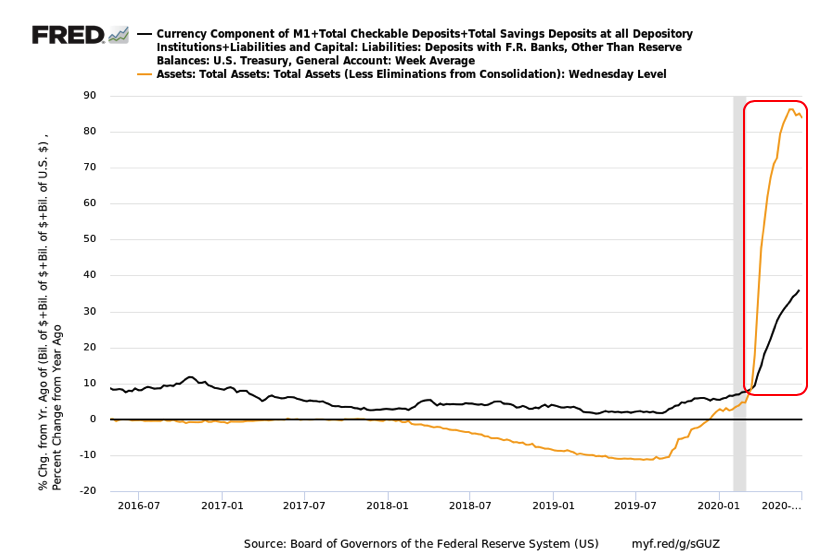
The Federal Reserve's approach to the implementation of monetary policy has evolved considerably since the financial crisis, and particularly so since late 2008 when the FOMC established a near-zero target range for the federal funds rate. Since the end of 2008, the Federal Reserve has greatly expanded its holding of longer-term securities through open market purchases with the goal of putting downward pressure on longer-term interest rates and thus supporting economic activity and job creation by making financial conditions more accommodative.
The view that lower interest rates will support economic activity is held by the majority, if not all, central banks around the world as they allegedly attempt to “combat” the lack of growth. For example, as of end 2016 most major central banks held a zero interest rate policy (ZIRP) including the U.S., the euro area, the UK, Japan and Canada. This line of thinking makes it sound like artificially lowering the interest rate, i.e. implementing policies that push interest rates lower than what the market would establish with no intervention, unleashes some sort of untapped economic potential.
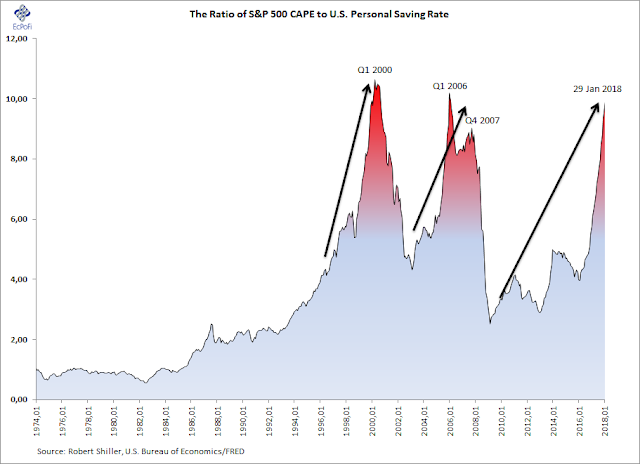
The economy is no horse however and should not be handled like one. While a lower interest rate brought about by increased voluntary saving certainly bodes well for future economic growth, an artificial lowering of the interest rates by central banks and commercial banks does not achieve the same feat. In this regard, it should be observed that it is not the lower interest rates per se resulting from increased saving that generate brighter economic prospects. Rather, it is everything that made the interest rate decrease in the first place that is the deciding factor, i.e. the increased amount of savings. It therefore does not help one iota to artificially decrease interest rates when it is not fuelled by increased savings. Therefore, instead of planting the seeds of economic progression, an artificial lowering of interest rates instead plants the seeds of economic regression.
A lower interest rate certainly lowers the borrowing costs for entrepreneurs seeking to expand production or invest in new facilities and lines of business. Likewise, people with floating interest debt payments and owners of a wide range of interest-sensitive securities gain with lower interest rates. But these gains need to be paid for by someone as they did not appear out of nothing. If there were no costs attached to an artificial lowering of interest rates, we could just abandon interest rates altogether and implement a permanent zero-interest rate policy and make everybody better off in economic terms as a result. Common sense tells us that interest rates would have been abandoned long ago if creating economic prosperity was that simple. Well, it is not that simple so someone needs to pay for these gains as no economic wealth whatsoever is created by the act of artificially lowering interest rates. And these gains for some are certainly not paid for by central- or commercial banks. First and foremost, it is people with savings accounts and people on fixed wages and salaries that foot the bill, i.e. the great majority of people in any economy. Secondly, as an artificial lowering of the interest rate is accomplished mainly through inflating the money supply, it is especially the late receivers of these new monies that lose as the purchasing power of money would have diminished by the time they get their hands on them. Thirdly, monetary expansion creates economic distortions that serve to reduce economic growth.
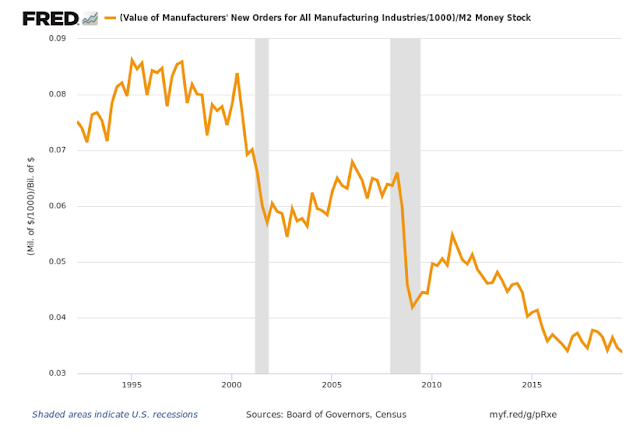
The stimulus button is hence nothing more than a way to increase spending and investment, whether through fiscal- or monetary policies, above and beyond what the market is willing and able to do given the current economic situation, including the level of interest rates and savings. “Economic stimulus” and the artificial lowering of interest rates is therefore not a source of untapped economic growth. It is a button however that can be used by central banks to not only stimulate, but also to actually create, increased demand and economic activity that further squanders means and misallocates capital. In essence, economic stimulus increases current economic activity at the expense of future economic growth. Additionally, and of the greatest importance for the central bank and the banking system, monetary stimulus is effective in inflating asset prices and the market values of the very collateral bank credit is secured by. Specifically, fractional reserve banks depend on continued inflation for their very existence. But for the real economy, it is increased savings that is really required, not increased demand which had already been artificially boosted and saturated during the previous boom. Consequently, economic growth likely slumps even lower when economic policies are implemented to stimulate further consumption.
Comments
Log in or sign up to join the conversation.