

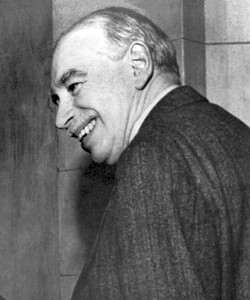
Image Source: WikimediaCommons
Summary: This paper revisits Keynes’s (1930) essay titled “The economic possibilities for our grandchildren.” We discuss the three broader trends identified by Keynes that he expected would come to characterize the socio-economic evolution of advanced countries under individualistic capitalism: first, continued technological progress and capital accumulation as the main drivers of exponential growth in economic possibilities; second, a gradual general rebalancing of life choices away from work; and third, a change in the code of morals in societies approaching an envisioned stationary state of zero net capital accumulation in which mankind has solved its economic problem and enjoys a lifestyle predominantly framed by leisure rather than disutility-yielding work. We assess actual outcomes by 2023 and attempt to peek into the future economic possibilities for this generation’s grandchildren.
The outstanding faults of the economic society in which we live are its failure to provide for full employment and its arbitrary and inequitable distribution of wealth and incomes. The bearing of the foregoing theory on the first of these is obvious.
(Keynes 1936)
In the long run we still can possibly all “live wisely and agreeably and well.”
(Keynes [1930b] 1972)
1. INTRODUCTION
Following the theme of the Lille 2023 Post-Keynesian conference, this paper revisits Keynes’s ([1930b] 1972) essay titled “The economic possibilities for our grandchildren.” Whilst being all too aware that making forecasts with any degree of confidence about the distant future economy and society of his generation’s grandchildren is hardly possible, Keynes identifies three broader trends he expected would come to characterize the socio-economic evolution of advanced countries under individualistic capitalism: first, continued technological progress and capital accumulation as the main drivers of exponential growth in economic possibilities; second, a gradual, general rebalancing of life choices away from work; and third, a change in the code of morals in societies approaching an envisioned stationary state of zero-net capital accumulation in which mankind has solved its economic problem and enjoys a lifestyle predominantly framed by leisure rather than disutility-yielding work. We discuss these three broader trends in turn before assessing actual outcomes by 2023 and finally also peeking into the future economic possibilities for this generation’s grandchildren as seen from today’s perspective.
The analysis proceeds as follows. Section 2 provides some context and background to position Keynes’s brief optimistic essay published in 1930, a tumultuous time of widespread despair. Section 3 focuses on Keynes’s analysis of the main drivers of economic growth, informing his optimistic outlook for mankind in solving its economic problem and the social evolution he considered likely for this case. Section 4 analyzes Keynes’s reflections regarding consumption needs and work-leisure choices going forward. Section 5 reflects on the conceived changes in the code of morals that Keynes believed might occur as society reaches “net zero capital” and the “money motive” propelling individualistic capitalism largely outlives its purpose. Section 6 discusses actual developments 90 plus years after Keynes’s reflections about the very long run in 1930, before Section 7 updates Keynes’s exercise in “taking wings into the future” of this generation’s grandchildren. Section 8 concludes.
2. THE 1930 ECONOMIC JUNCTURE: DISMAL SHORT RUN, POSSIBLY BRIGHT LONG RUN
“In the long run we are all dead,” may well be Keynes’s best-known witticism. By his critics, the bon mot is often deliberately misrepresented as revealing that Keynes did not care about “the long run,” the natural equilibrium position of the economy that economists, according to Keynes, were exclusively preoccupied with. (A particularly vicious critic even associated this presumed attitude of Keynes with his bisexuality and childlessness.) Keynes’s point was of course a very different one: democratically accountable politicians cannot safely ignore that the short run tends to matter a lot to the currently living electorate. “It’s the economy, stupid!” is the modern version of his message. Economists, in turn, cannot safely ignore this reality either, Keynes proclaimed. For having no advice on offer as to the design of economic policies for the living would leave economists rather useless in any liberal society and democratic civilization; far less practically useful than dentists who would surely not imagine telling their patients that acute pain will naturally go away by itself once an aching tooth has died and dropped out.
That said, taking best-possible care of current economic affairs (or toothaches for that matter) does not downgrade in any way the relevance of “the long run” in today’s decision making. Societies and their representatives must weigh their options in view of both short-run and longer-run consequences intelligently. But here arises another challenge, making the economist’s job much harder than the dentist’s: the further one tries to look into the future, the more shrouded the conceivable range of possibilities tends to become; the future is uncertain, to a good extent unknowable for the living.
Researching rational decision making under uncertainty was one of Keynes’s earliest academic endeavors. In the beginning, his studies were motivated by his training in mathematics and philosophy (see his Treatise on Probability, Keynes [1921]). Later on, in The General Theory, Keynes (1936) highlighted the importance of uncertainty in the context of capital investments and financial markets, emphasizing that aiming to beat the “dark forces of time and ignorance” would require special skills and effort and that ultimate decisions be affected by both confidence and animal spirits. In his response to Hayek’s (1944) Road to Serfdom, Keynes told his friend that while he found himself in agreement with the spirit of Hayek’s manuscript, he concluded from it that “planning”—including planning by the state and its institutions—would become more, rather than less, important in progressing and ever-more complex economies and societies (Keynes 1944).
In a fictitious never-changing economy, there would be no (Keynesian) uncertainty. But the reality of capitalism as we know it is that socio-economic evolution is of the essence. Keynes was a very attentive observer of changing times and circumstances. His works are instructed by historical analyses paired with vigilant observations about current arrangements and trends, informing any policy advice he had to offer on any particular occasion.
For instance, in Indian Currency and Finance, Keynes’s (1913) focus of analysis is on currency and banking arrangements in India before WWI—a British colony—which were partly administered at the time through the India Office in London (where Keynes had worked earlier). He assesses India’s gold-exchange currency standard as sound and suitable but finds her banking system susceptible to instability (essentially hampered in lacking a central bank). In The Economic Consequences of the Peace, Keynes (1919) analyzes the economic relations in Europe before WWI. He highlights the degree of economic integration and interconnectedness that had been reached since 1870—only to be severely disrupted by warfare. He fears that the Versailles Treaty would jeopardize any chances for a revival of lasting peace and prosperity. He also expresses doubts that Britain would be able to resume or repeat what he saw as the exceptional prosperity of the pre-1914 century.
In A Tract on Monetary Reform, Keynes (1923) highlighted that the organization of economies had become too complex an affair to be exposed to severe price-level instabilities as experienced in the context of WWI and its aftermath. In his view, the widespread ambition of returning to the gold standard was not a sound option at all. Instead, a “managed currency was inevitable,” Keynes declares—focused on providing a stable measuring rod (Bibow 2023). It is in Tract that Keynes makes the witty remark about ignoring widespread economic hardship “in the short run” not being politically feasible anymore. He also reiterates his earlier assessment that the Victorian boom of 19th century Britain may not be easily repeatable, especially in the case of a British return to gold—an event he severely critiqued when it later happened against his advice in 1925.1
In Britain’s case, the 1920s turned out to be an age of stagnation and persistently high unemployment. The decade saw Keynes getting seriously engaged in domestic politics, promoting Britain’s Liberal Party (Skidelsky 1994). Academically, following the publication of A Tract on Monetary Reform ([1923] 1971), Keynes spent much of the rest of the decade working on his “A Treatise on Money” ([1930a] 1971), an ambitious two-volume scholarly work intended to fill the gap that Keynes had diagnosed in his famous bon mot of the Tract—economists had too little of use to say about the causes of the business cycle and how monetary policy could be designed to smooth the cycle and stabilize prices.
It might come as quite a surprise, then, that when his Treatise on Money was approaching completion in October of 1930,2 and the deliberations of the “Macmillan Committee” on the monetary policy challenges of the time were still ongoing, Keynes would also publish a rather optimistic essay on “the [very, very] long run,” in which he pictures a bright future for the “progressive countries” (Europe and the United States). In his brief (12-page) essay titled “The Economic Possibilities for our Grandchildren” (henceforth “Economic Possibilities”3), Keynes considers it possible that, in a hundred years, mankind’s economic problem might be solved, paucity and the struggle for subsistence becoming challenges of the past. How did Keynes, the supposed doomsayer of capitalism, declare the prospect of the end of scarcity (and of the “dismal science”) at a time when ongoing events made his contemporaries nourish a rather dismal outlook?
3. THE DISMAL SCIENCE OF THE MALTHUSIAN TRAP VERSUS KEYNES AS A MODERN GROWTH THEORIST
In 1930, the theory of economic growth was not a well-developed field (Ohanian 2008). It would only become so after, and in reaction to, the publication of Keynes’s General Theory. Earlier economic thought only featured glimpses of the drivers of continually advancing prosperity.
Mercantilists associated prosperity with the amount of gold that any kingdom might accumulate. Keynes reinterpreted this central mercantilist idea in his Treatise on Money, where the arrival of American gold in Spain proved to be the driver of “profit inflation” (An echo hereof is found in “Economic Possibilities.”) From Adam Smith and David Ricardo, classical economics zoomed in on expanding market capitalism and rising productivity in manufacturing as the newfound source of wealth and prosperity, but with diminishing returns—especially in agriculture—owing to land as the fixed factor and marking the perceived limit to growth. These ideas were also central to Robert Malthus’s “theory of population [growth].” Mankind seemed to be stuck in a “Malthusian trap” of stagnation at mere subsistence levels of income, making economics the “dismal science.” Perhaps John Stuart Mill (1848) expressed the classical vision of a “stationary state” most clearly as a stationary state of population and capital and an endpoint of some kind in which evolution in the “art of living” would nonetheless progress.
Keynes was going to provide an elaboration on the classical stationary state vision—as the point where capital accumulation ceases (or “net zero capital”)—in Chapter 16 of The General Theory, followed in Chapter 17 by an exploration of the possibility that reaching this potential stationary state might be hindered by liquidity preference and too high a rate of money interest. This potential stagnation trap—featuring persistent involuntary unemployment—preventing the state of ultimate bliss from being reached was still absent in his Treatise on Money. While liquidity preference theory makes an elaborate appearance in the Treatise, the possibility of protracted stagnation is still being attributed to wage rigidities and monetary policy failures.
In “Economic possibilities,” Keynes ([1930b] 1972)—after briefly discussing the acute challenges experienced at the onset of what came to be known as the Great Depression (events that he followed very closely; see Bibow [2020]) in his introductory remarks—abstracts from what he describes as merely a “temporary phase of maladjustment,” and instead zooms in squarely on “growth theory,” on the factors that would largely determine the growth capabilities and economic welfare possibilities over the next 100 years, namely, technological progress, capital accumulation, and population growth. Regarding the past few centuries, he observes:
From the sixteenth century, with a cumulative crescendo after the eighteenth, the great age of science and technical inventions began, which since the beginning of the nineteenth century has been in full flood …. What is the result? In spite of an enormous growth in the population of the world, which it has been necessary to equip with houses and machines, the average standard of life in Europe and the United States has been raised, I think, about fourfold. The growth of capital has been on a scale which is far beyond a hundred-fold of what any previous age had known.” (Keynes [1930b] 1972, 324).
What appears to have most impressed Keynes (following events not only as an economist, but also as a financial investor, journalist, and much else), were the efficiency gains in manufacture and transportation experienced in America’s so-called “Roaring Twenties”: “[i]n the United States factory output per head was 40 percent greater in 1925 than in 1919” (325). And even in Europe, which was held back by “temporary obstacles”—obstacles that supposedly include all those factors analyzed in his works reaching from Economic Consequences of the Peace to “Economic consequences of Mr Churchill”—Keynes (325) considers it “safe to say that technical efficiency is increasing by more than 1 per cent per annum compound.” Regarding the future of technological progress, Keynes refers to “evidence that the revolutionary technical changes” would soon spread from industry to agriculture (325).
In addition to assuming a 1 percent annual growth contribution from technological progress, as a lower bound, Keynes refers to 2 percent annual growth in the capital stock in the past 100 years. Assuming a similar rate going forward, the question remains how much of it would account for equipping a growing population with capital and how much would properly constitute capital deepening; as a booster of per capita productivity and incomes. Keynes does not attempt to forecast the uncertain future with any measure of precision but expects population growth to be slower in the future, and then goes on to roughly “predict that the standard of life in progressive countries one hundred years hence will be between four and eight times as high as it is today. … [Keynes is going to use the factor 8 in his subsequent reflections, adding here:] It would not be foolish to contemplate the possibility of a far greater progress still” (326).
Toward the end of his brief essay, he lists the key underlying assumptions that would need to be met for his benign future outlook of exponential growth to emerge from the ashes of contemporary despair: “The pace at which we can reach our destination of economic bliss will be governed by four things – our power to control population, our determination to avoid wars and civil dissensions, our willingness to entrust to science the direction of those matters which are properly the concern of science, and the rate of accumulation as fixed by the margin between our production and our consumption; of which the last will easily look after itself, given the first three” (331).
A few remarks are in order regarding the outlook for reaching economic bliss in 100 years which was envisioned by Keynes in 1930.
First of all, it is fair to say that Keynes’s analysis squarely focuses on precisely those factors later identified as the main growth drivers by modern (post–General Theory) growth theory, and that his rough predictions for future fortunes in “progressive countries”—which would have seemed utterly optimistic for most of his contemporaries in these very countries at the time—turned out to be very much in the right ballpark (Maddison 2003). (Needless to say, WWII provided a massive disruption that proved an important setback for Britain but in many ways propelled the fortunes of the US).
Next, Keynes’s remark regarding his fourth assumption, the investment-saving balance that might “easily look after itself” (331) should neither be understood as implying steady-state growth forever (à la Solow-Swan growth model in which saving per definition transforms itself into capital investment) nor as a carte blanche in support of laissez-faire economics. Keynes’s investigations in the Tract ([1923] 1971) and especially in the Treatise ([1921] 1973) concerned the role of monetary policy in stabilizing the price level and smoothing the business cycle—in the Treatise framework, through balancing saving and investment using deliberate monetary policies. The General Theory then further underscored that there was a decisive role to play for the government in managing and stabilizing the economy. In his later monetary work, Keynes ([1936] 1973, 378) also refers to the need for a “somewhat comprehensive socialization of investment,” in addition to monetary policy, as a vital central control for macroeconomic management.4 In other words, he believed that macroeconomic management would be easier than controlling population, science, or war and civil dissentions (fears of “knife-edge” growth à la the Harrod-Domar growth model were still to be born).
Finally, while criticism may be leveled against Keynes’s “Economic Possibilities” for its unabashed euro-centric perspective on the matter, a more favorable reading is that he simply views the outlined possibilities in “progressive countries” as the “advance guard—those who are spying out the promised land for … [mankind] and pitching their camp there” ([1936] 1973, 328). In other words, not all of mankind may reach the state of bliss at the same pace and time— which is intimately related to distributional issues, more on which below.
4. HOW DO THE GRANDCHILDREN OF KEYNES’S GENERATION USE THEIR POSSIBILITIES?
In 2023, by extensive capital deepening and technological advances (and the power of compound interest), the “progressive countries” are genuinely on track to reach or exceed by 2030 the prophesied capacity to produce a vast multiple of what was possible in 1930.
In “Economic Possibilities,” Keynes also ventures some thoughts about how his generation’s (great-)grandchildren might make use of their exponentially expanding “economic possibilities” other than simply producing ever more and more. Specifically, he considers the option of working less and devoting more energies to non-economic purposes. Without being too precise in his short 1930 essay (“Economic possibilities”) Keynes sketches out some ideas about the new “age of leisure and abundance,” in which the economic problem is solved and the struggle for subsistence ceases to exist.
Economic logic provides his starting point: rising productivity means we can produce the same with fewer workers. If the discovery of new means of economizing the use of labor outruns the pace at which we can find new uses of labor, and there is no reason to expect that the two forces will balance at all times, this might lead, at times, to what Keynes labels “technological unemployment” (325; echo of Ricardo’s “machinery” chapter). However, in “Economic Possibilities,” Keynes neither specifically investigates human ingenuity in finding new uses of labor nor does the issue of deficient effective demand—highlighted in The General Theory as a potential cause of involuntary unemployment—play any role in his 1930 exercise of taking “wings into the future” ([1930b] 1972, 322).
Instead, his central concern is whether we would really want to continue principally focusing our lives on nothing but work, so as to continue producing and consuming ever more and more. And he clearly hopes that we won’t, but instead that we may attempt to live more wisely: “for the first time since his creation man will be faced with his real, his permanent problem – how to use his freedom from pressing economic cares, how to occupy the leisure, which science and compound interest will have won for him, to live wisely and agreeably and well” (328; emphasis added).
He believes that the time will come when most of us will choose more leisure over work because our needs are ultimately not insatiable, even if they may seem so:
Now it is true that the needs of human beings may seem to be insatiable. But they fall into two classes – those needs which are absolute in the sense that we feel them whatever the situation of our fellow human beings may be, and those which are relative in the sense that we feel them only if their satisfaction lifts us above, makes us feel superior to, our fellows. Needs of the second class, those which satisfy the desire for superiority, may indeed be insatiable; for the higher the general level, the higher still are they. But this is not so true of the absolute needs – a point may soon be reached, much sooner perhaps than we are all of us aware of, when these needs are satisfied in the sense that we prefer to devote our further energies to non-economic purposes. (326)
In other words, the pursual of more leisure options will derive from the general fulfillment of our basic needs while our desire for superiority (and uneasiness about falling behind our neighbors) may keep us slogging—perhaps forever, though surely dependent upon the social environment fostering or retarding any such impulses.
Keynes does not suggest here that, in a liberal society, everyone is going to make the same life choices. His envisioned future features diversity and evolution, and a learning experience that will come with some serious challenges: “[w]e have expressly evolved by nature—with all our impulses and deepest instincts—for the purpose of solving the economic problem. If the economic problem is solved, mankind will be deprived of its traditional purpose” (327). Some will find social evolution toward economic bliss (with all its heavenly singing) easier than others (namely those who already know “how to sing”). But Keynes is hopeful that we will eventually do better than what he observes among the contemporary rich (seeking more mundane pleasures than the Bloomsbury Group culture that he himself was indulging as his own personal ideal).
For many ages to come the old Adam will be so strong in us that everybody will need to do some work if he is to be contented. We shall do more things for ourselves than is usual with the rich today, only too glad to have small duties and tasks and routines. But beyond this, we shall endeavor to spread the bread thin on the butter – to make what work there is still to be done to be as widely shared as possible. Three-hour shifts or a fifteen-hour week may put off the problem for a great while. For three hours a day is quite enough to satisfy the old Adam in most of us! (328–9)
Now, “for many ages to come” does not suggest to me that Keynes believed the envisioned evolution might necessarily reach any kind of endpoint within a hundred years, or that a fifteenhour work week would be the general norm by 2030. Rather, he foresees a gradual process with “ever larger and larger classes and groups of people from whom problems of economic necessity have been practically removed” (331). Of course, depending on societal factors, relative needs may keep us pushing on and on. Also, there may still be “many people with intense, unsatisfied purposiveness who will blindly pursue wealth—unless they can find some plausible substitute” (329).
Now, “for many ages to come” does not suggest to me that Keynes believed the envisioned evolution might necessarily reach any kind of endpoint within a hundred years, or that a fifteenhour work week would be the general norm by 2030. Rather, he foresees a gradual process with “ever larger and larger classes and groups of people from whom problems of economic necessity have been practically removed” (331). Of course, depending on societal factors, relative needs may keep us pushing on and on. Also, there may still be “many people with intense, unsatisfied purposiveness who will blindly pursue wealth—unless they can find some plausible substitute” (329).
Additionally, some may keep on slogging longer than necessary not to satisfy their own Adam, but to support their neighbors. As marking a critical point in the evolution for mankind approaching the age of leisure and abundance—perhaps echoing Adam Smith of the Moral Sentiments or in having the support of his Bloomsbury friends as well as other cultural interests in mind—Keynes identifies the spread of altruism: “The critical difference will be realized when this condition has become so general that the nature of one’s duty to one’s neighbor is changed. For it will remain reasonable to be economically purposive for others after it has ceased to be reasonable for oneself” (331).
The most decisive turning point in the envisioned social evolution and its capitalistic economic foundation will be reached at the point when capital accumulation ceases. There appears an interesting arc here between the classical stationary state and Keynes’s analysis in Chapters 16 and 17 of The General Theory published six years later, where he highlights that money interest might come in the way of reaching capital satiation, absence of involuntary unemployment, and ultimate economic bliss.
Importantly, the conceptualized stationary state neither means that technical advances stop happening nor that consumers completely stop relishing their relative needs, it merely means that—assuming stable population—any ongoing investment is only replacing the depreciating existing capital stock, but not adding to it. Reaching this point, too, will be a gradual evolutionary process.
Interestingly, Keynes ventures that the deceleration and eventual culmination of (net) capital accumulation would come with a gradual shift in our moral code as well: “[w]hen the accumulation of wealth is no longer of high social importance, there will be great changes in the code of morals” (ibid., 329).
5. THE SOCIAL AND CULTURAL CONSEQUENCES OF LEISURE AND ABUNDANCE AS CAPITAL ACCUMULATION PEAKS
The gradual shift in the moral code of liberal society will happen as the money motive comes to outlive its purpose—that is, promoting capital accumulation. In Keynes’s view, this would mean liberation from “pseudo-moral principles which have hag-ridden us for two hundred years. […] All kinds of social customs and economic practices, affecting the distribution of wealth and of economic rewards and penalties, which we now maintain at all costs, however distasteful and unjust they may be in themselves, because they are tremendously useful in promoting the accumulation of capital, we shall then be free at last, to discard” ([1930b] 1972, 329).
These remarks draw an interesting connection between capitalism as a motor of both growth and inequality. They echo back to Keynes’s assessment of the pre-1914 European economy in Economic Consequences:
Europe was so organized socially and economically as to secure the maximum accumulation of capital. While there was some continuous improvement in the daily conditions of life of the mass of the population, Society was so framed as to throw a great part of the increased income into the control of the class least likely to consume it. The new rich of the nineteenth century were not brought up to large expenditures, and preferred the power which investment gave them to the pleasures of immediate consumption. In fact, it was precisely the inequality of the distribution of wealth which made possible those vast accumulations of fixed wealth and of capital improvements which distinguished that age from all others. Herein lay, in fact, the main justification of the Capitalist System. (Keynes [1919] 1971, 11)
And they reach forward to his summary of the advantages of individualism in The General Theory, published in the age of Hitler, Mussolini, and Stalin:
Let us stop for a moment to remind ourselves what these advantages are. They are partly advantages of efficiency—the advantages of decentralisation and of the play of selfinterest. The advantage to efficiency of the decentralisation of decisions and of individual responsibility is even greater, perhaps, than the nineteenth century supposed; and the reaction against the appeal to self-interest may have gone too far. But, above all, individualism, if it can be purged of its defects and its abuses, is the best safeguard of personal liberty in the sense that, compared with any other system, it greatly widens the field for the exercise of personal choice. It is also the best safeguard of the variety of life, which emerges precisely from this extended field of personal choice, and the loss of which is the greatest of all the losses of the homogeneous or totalitarian state. For this variety preserves the traditions which embody the most secure and successful choices of former generations; it colors the present with the diversification of its fancy; and, being the handmaid of experiment as well as of tradition and of fancy, it is the most powerful instrument to better the future. (Keynes [1936] 1973, 380)
Clearly Keynes views capitalism as a means to an end, and as a means with serious defects and abuses. (See also his essay “The end of laissez-faire” [(1926) 1972]) The General Theory focuses on one important defect—involuntary unemployment—which is also an important driver of “poverty in the midst of plenty,” that is, inequality. Keynes argues that deliberate management of the “central controls” of the economy would be essential both for avoiding unemployment and stagnation and for failing to, ultimately, reach the state of abundance and leisure in the very long run.
In 1930, in the “Treatise on Money,” focusing on the business cycle, Keynes is still convinced that crises are merely temporary setbacks and is not yet concerned that liquidity preference and money interest might get in the way of reaching the blissful stationary state. In “Economic possibilities,” looking into the distant future, he views consumption as still providing the sole end of all economic activity, but ventures that non-economic activities come to play an increasing role in our lives while the opposite will hold for the money motive. Keynes presents an optimistic vision of, what we may label, a “post-capitalistic” era of mankind:
I see us free […] to return to some of the most sure and certain principles of religion and traditional virtue—that avarice is a vice, that the exaction of usury is a misdemeanor, and the love of money is detestable, that those walk most truly in the paths of virtue and sane wisdom who take least thought for the morrow. We shall once more value ends above means and prefer the good to the useful. 5 (331)
The chosen label “post-capitalistic” is taking (net) capital accumulation and the money motive as the defining moments of capitalism. In the stationary state, the former would cease altogether while the latter would play only second fiddle rather than profoundly shaping society.
This would not imply that entrepreneurs altogether lose their functions in organizing the production of abundance and effecting the materialization of technological advances that is also a source of expanding leisure time. But entrepreneurs and their financiers would no longer be the masters of mankind.
Beyond that, Keynes does not spell out any specifics about the envisioned “liberalized” (from the money motive) post-capitalistic future of society. And how could he? Imagining the broad contours of an age of abundance and leisure is hard enough. Defining uncertainty in a 1937 essay, titled “The General Theoryof Employment,” he used the “position of private wealth owners in the social system of 1970” as an example.6 What seems clear enough is that Keynes, the liberal, did not wish for the end of liberal democracy when he took wings into the— conceivably post-capitalist—future of 2030 or beyond.
In Keynes’s thinking, the post-capitalistic liberal society is compatible with “many people with intense, unsatisfied purposiveness who will blindly pursue wealth” (329). But given fundamental changes in the code of morals and mindsets, in the era of leisure and abundance, “the rest of us will no longer be under any obligation to applaud and encourage them” (329). Aspiring toward wealth (money) for the purpose of what money can buy in terms of enjoyment, is fine. By contrast, Keynes does not hold back when it comes to the love of money as a possession, not as a means but as the end in and of itself: “a somewhat disgusting morbidity, one of those semicriminal, semi-pathological propensities which one hands over with a shudder to the specialists in mental disease” (329).
At the end of his exercise of taking wings into the future, Keynes concludes on a sobering note though: “But beware! The time for all this is not yet. For at least another hundred years we must pretend to ourselves and to everyone that fair is foul and foul is fair; for foul is useful and fair is not. Avarice and usury and precaution must be our gods for a little longer still. For only they can lead us out of the tunnel of economic necessity into daylight” (331).
6. WHERE ARE WE TODAY, IN 1923, AT THE PRE-DAWN OF KEYNES’S PROPHESY?
Today, over 90 years after Keynes published his brief optimistic essay, the short answer is that Keynes was both right and wrong. He was spot on regarding continued technological advances and productivity growth; the progressive countries are more than four to eight times richer today than they were in 1930 (in terms of real GDP per capita). This accurate prophesy also manifests that we still seem to crave for ever-more consumption rather than significantly more leisure and non-economic ends than he considered likely, while only glimpses of the changes in the code of morals Keynes envisioned in 1930 may be starting to become perceivable today.
If we take “progressive countries” to mean America and Western Europe, 7 technological leadership of these countries and continued capital deepening have duly delivered as the main drivers of sustained growth measured in terms of GDP per capita (Maddison 2003; Zilibotti 2008). These countries have also avoided major wars since WWII (at least at home) and may be said to have broadly kept their population growth in check—with an initial burst in the aftermath of WWII, followed by a gradual slowdown since the 1960s, and shrinking birthrates heralding (homegrown) population declines since the 1990s. Today, concerns in these countries focus on the prospect or actuality of a declining labor force.
The 1950s through the 60s is widely remembered as the “golden era” of strong and fairly equitable growth. A major disruption in macroeconomic management in the 1970s then saw a lasting decline in the rate of capital accumulation that may have been premature (considering the “Keynes-Ramsey rule” [Ramsey 1928]). The new era of neoliberalism has not so much yielded any marked revival of accumulation and growth but a surge in inequality instead. America has turned itself into an uber-financialized bubble economy while Western Europe, under the German-led euro regime, was trapped in a flawed and thrift-besotted macro regimen that undermines investment.
Where the work-and-consume versus leisure choice is concerned, the trend-decline in hours worked since the 19th century (of which Keynes was surely aware), has continued albeit at a slower speed.
Snags in measurement abound here, though. For instance, any proper measure of the decline in work needs to account for the fact that we generally enjoy longer vacations today and also spend far more years of our significantly longer lives in schooling/education and retirement. Without aiming at any precise comparison, overall, it nevertheless seems that today’s generation generally works significantly more than Keynes considered likely in 1930.8
The quantification of the work-to-consume versus leisure choice is also complicated by the fact that leisure itself has become an expansive, ever more weighty industry (Becchetti 2008), probably much more sprawling than Keynes considered likely in associating leisure with “noneconomic ends” (supposedly having in mind non-market activities such as the enjoyment of paintings, literature and conversations with his Bloomsbury friends, for instance). Arguably, with leisure being not so much a noncommercial alternative to consumption, but an add-on, the commercial leisure-entertainment industry has become a key driver of the “relative needs” category of consumption keeping us slugging along.
In any case, perhaps the most interesting fact is that distinct differences are observable in the deeply integrated trans-Atlantic economy today: Americans work significantly more than Europeans9 and the US is primarily a consumption-driven economy (with private consumption constituting around 70 percent of US GDP). Given similar productivity levels in the US and leading Western European countries, GDP per capita is correspondingly higher in the US—while “happiness” and “social progress” measures consistently show the US far behind especially the “most socialist” Nordic countries (Colston 2023; Helliwell et al. 2023; Social Progress Imperative, Economist 2023).
This begs the question as to why Americans continue working so hard when it does not seem to make them particularly happy. Before addressing this question, which will be central to our reflections on the economic possibilities of this generation’s grandchildren in the next section, three more issue—that have helped to mold the marked trans-Atlantic divergence in life choices visible today—need to be cleared up.
First, comparing the US economy and rich Western European economies, most of which are part of the European Union and the euro area today, two opposite economic models and macro-policy regimes are at play. A distinctive dynamic regarding the US economy is the global role of the US dollar, which—as the pinnacle of the powerful US economy—provides one column on which America’s global power rests (the others being technology and military). Especially in the neoliberal era, given increased vulnerability of the periphery owing to fickle capital flows, the USD’s global role has persistently undermined US competitiveness and thereby accelerated deindustrialization in the US As a result, there has been a tendency for easier money to stimulate sufficient US spending, primarily consumption spending (including residential housing). At times of crisis, more lenient US fiscal policy had to come to the rescue as well, flushing the world with the save asset (UST) it is longing for in the era of systemic precariousness (Tooze 2018; Bibow 2021, 2022). By contrast, laboring under the Germanized euro-joke featuring a fiscal straight-jacket, the region remains much more reliant on export-led growth even today (whilst talking about “strategic autonomy;” Bibow [2020b])
Second, while FDR’s New Deal legislation also created a prototype social safety net in America, European social welfare states, especially in the Nordics, are significantly more extensive and generous. They generally include free or significantly cheaper education (including tertiary education), a statutory retirement age, and more labor-protective institutions that yield less wage inequality compared to the US Substantial “liberalization” (deregulation) has occurred in Europe in the name of solving alleged “structural problems” since the 1970s, but inequality surged even more in the US in the neoliberal era (Piketty 2014; Cynamon and Fazzari 2016; Piketty, Saez, and Zucman 2016; Stiglitz 2019).
Third, apart from being fully financially integrated—a goal that the EU is still aiming for today—America has been a leader and Europe mostly a follower in financial deregulation and innovation. Today, America is the far more “financialized” economy and society and the financial industry and concentrated money power also have a greater influence in politics and culture (Epstein 2001; Palley 2007; Stockhammer 2010; Bibow 2010; Mazzucato 2018; Levy 2021).
These three factors are also singled out here to highlight the roles of evolution and path dependency. Venturing into the future from today’s perspective, “rolling over” Keynes’s “taking wings” exercise of 1930, must start with acknowledging a different 90-year evolution would have been possible. In the 1930s and the aftermath of WWII, the foundations were initially laid for a more stable and equitable prosperity. In the 1950s, unions commonly expected a marked decline in the work week going forward. The instability crisis of the 1970s and the peculiarly “liberating” political choices that shaped the neoliberal era of hyper-globalization then put mankind on a very different sort of path (Rodrik 2011)—our starting point for taking wings into the future today.
It is important to bear in mind here that Keynes was a liberal, too. He was, however, hardly naïve enough to believe that putting fewer and fewer restraints on the power of money wealth might safely lead mankind into the best of all possible worlds. For a moment, imagine the alternative scenario of a politically less well-connected fossil fuel industry and, thus, the world today being in a much better position with regard to the acute challenges posed by climate change.10 By analyzing the factors that have produced different life choice paths prevalent in America versus Western Europe today, we might also be able to better imagine the possibilities of our grandchildren and to better understand what is likely going to shape life choices going forward.
Framing my reflections in the next section in a “Keynesian spirit” (based on my own studies of Keynes) as best as I can, I will presume little more than Keynes’s ideals of a liberal society in which individuals are free to pursue living “wisely and agreeably and well” while government— pursuing the common good—is organized in ways that help rather than hinder them doing so.
I will also follow Keynes’s lead in avoiding too much specificity in my outlook. There were obvious reasons for Keynes’s chosen approach in 1930. To begin with, how specific can a writer be in a 12-page essay? More importantly, when Keynes in 1937 described the essence of Keynesian uncertainty (that is, a largely unknowable future about which applying standard probability calculus leads us nowhere) he chose the condition of the social system of 1970—33 years out from then—as an example. How, then, could he try to be more specific about the future 100 years out? Taking the role of uncertainty seriously means acknowledging evolution and path dependency. Much depends on political choices and investment decisions. Reasonably, drawing a rough picture based on conceivably broad trends will have to be good enough.
7. UPDATING KEYNES’S EXERCISE: VENTURING INTO THE ECONOMIC POSSIBILITIES FOR OUR GRANDCHILDREN
In 2023, looking back at the past few centuries, proclaiming that productivity growth will continue and expand our grandchildren’s economic possibilities might seem less outrageous than it did in 1930. Looking back today, one may be tempted to conclude that growth is unlimited, inequalities are persistent, and the phenomenon of specialization is growing and spreading relentlessly on a global scale. But is that really a reasonable expectation for the future? Are there really no limits to growth?
With 90-plus years of experience added since Keynes took wings into the future in his brief essay, it seems quite safe to assume that human ingenuity and scientific endeavors and successes will not come to an end any time soon, if ever. Whether the rate of technological progress might increase or decrease, is harder to tell. In the age of artificial intelligence (AI), warnings abound that machines might take over and one day come to control mankind, while the world’s richest man Elon Musk proclaims that AI will eventually render all jobs obsolete (Higgins 2023). But what kind of future for humanity would that entail?
Perhaps the most pertinent question going forward in this evolution is whether we can effectively constrain both private and state power in ways that prevent, or at least limit, the abuse of technology while prolonging the harvest of its manifold benefits. As rising inequality means further concentration of wealth and hence of money power, how can mankind share more equitably the fruits of technology and technological advancements?
Keynes’s 1930 focus on progressive countries as the advance guard toward the age of leisure and abundance was, of course, a simplification. As a thought experiment, an updated, similarly focused analysis remains a legitimate exercise. A more realistic analysis would have to start with acknowledging that the world as a whole has not kept population growth under control since 1930—global population has roughly quadrupled from 2 to 8 billion over this period. Notwithstanding the fact that global average income today is higher than average incomes in Britain and America at the time of Keynes’s writing, large sections of mankind still live under conditions that are a very far cry from resembling “leisure and abundance.” Today, there is at least the prospect that world population might stabilize around the year 2100 in the ballpark of 10 billion people (United Nations). Much of the population growth until then is projected to happen in the world’s poorest countries and, specifically, in Africa (Walsh 2023).
In today’s rich countries (Keynes’s progressive countries plus), any altruistic motivation for sharing the fruits of technology more fairly with poorer nations is not altogether unrelated to other challenges. For instance, mounting challenges posed by waves of migration from poor to rich countries routinely experienced and usually exacerbated by wars (including civil wars; Forero 2023), as another of Keynes’s assumptions has not been met since 1930. Going forward, further wars and civil wars will only add to the evidence—if any such evidence was ever needed—that warfare can only lead to more human misery and regress.
Continued global population growth has clearly also greatly disrupted any expectation for an end to capital accumulation—the envisioned “net zero capital” stationary state in which any capital investment (embodying latest technologies) only makes up for capital depreciation. Hardly based on liberated market forces alone, China has certainly proven that rapid catching up through highspeed capital deepening is possible. But the country now seems to be at a juncture where successfully managing the margin between production and consumption (i.e., the balance between saving and investment) is posing fresh challenges (Pettis 2023).
In a world of grave inequalities—where some regions are much closer to conceivably reaching the stationary state of net-zero capital accumulation than others—facilitating rapid capital accumulation where it is most needed while maintaining the appropriate balance between saving and investment by means of national macroeconomic policies, remains a paramount challenge. Unfettered and fickle global financial flows have once again proven to be disruptive and not necessarily successful at efficiently allocating capital at all. Excessive reliance on private rather than public capital flows is based on hopes and myths rather than theory and experience.11
Nowhere are our generation’s challenges more acute and pressing than with respect to the vast environmental and health threats posed by anthropogenic global warming, an ongoing climate crisis that is clearly pointing to the limits of sustainable economic growth on this planet, specifically when fired by fossil fuels. We know with a high degree of confidence that it will not be possible to sustain our current fossil-fuel-driven growth trajectory with a global population of 8 to 10 billion people without provoking human-made catastrophe.
For a majority of mankind living outside today’s rich countries, reaching today’s levels of rich country materialism—especially in the old (fossil-fuel-driven) ways but probably also in any other way—is unlikely to be an option. In principle, backwardness can be an advantage, in a sense, if technological leapfrogging were easily feasible. But even if it were (which largely depends on rich countries’ willingness to share), mankind’s “permanent [non-economic] problem” highlighted by Keynes in his 1930 essay would only be intensified. How do we share the shrinking amount of work needed to produce sustainable economic abundance while enjoying expanding leisure time (instead of experiencing unemployment and misery)?
As the distributional struggle is at the core of all this, notice that the issue would not be a matter of “technological unemployment,” strictly speaking, but of plentiful jobs that are never created in the first place due to leapfrogging. The greater the success at leapfrogging and realizing sustainable abundance—which needs to be shared somehow—more quickly, the greater the challenge of rapidly adjusting to the possibility for a leisurely life lived “wisely and agreeable and well.”
At this point in the analysis, then, it does make perfect sense to zoom in on developments in the rich countries to explore which factors are holding back today’s advance guard generation from a faster leisure trajectory, one that would be more in line with what Keynes envisioned in 1930, and to address the puzzling fact that especially Americans continue working hard, perhaps excessively, without achieving much happiness.
Among scholars concluding that Keynes was far off in his “prophesy” regarding standard work leisure choices by 2030, the following kinds of contentions may be distinguished: first, insatiable relative needs and ratchet effects (Frank 2008; Skidelsky 2009; Skidelsky and Skidelsky 2012; Leijonhufvud 2008); second, the modern working rich and the pleasures of working (Becchetti 2008; Becker and Rayo 2008; Freeman 2008; Phelps 2008); third, pervasive and growing inequality (Friedman 2008; Solow 2008; Stiglitz 2008); and fourth, the lasting benefits of capitalism and entrepreneurship (Fitoussi 2008; Phelps 2008).
Beginning with the first, as we seem to consume a lot more today than Keynes considered likely, what exactly was Keynes missing in his reflections? In my view, Keynes did not at all rule out that relative needs could conceivably inspire us to consume more and/or better “stuff” (proving quantitatively and/or qualitatively insatiable, in this sense). It also seems that interpreting the “seeking superiority” motivation narrowly (in a literal sense) is beside the point. For instance, not wishing to be left behind is simply the flipside of the motivation—that of seeking superiority—spelt out by Keynes.
A broader interpretation of Keynes’s point is warranted. Relative needs are a catch-all for anything other than the “basic needs” category. Basic needs capture our, supposedly, satiable needs, hence, providing the primary source for a lesser need to work as our economic possibilities continue expanding. While it is fair to say that ratchet effects are relevant even regarding basic needs, up to a point at least, the bigger and more general point is that the pace of the envisioned evolution toward more leisure over relentless toil will be shaped by the social environment. This includes factors such as the advertising industry (remember the TV series “Mad Men”?) and the political or ideological climate which keep us on track to want ever more and more. It is noteworthy here that “materialism” appears to be especially pronounced in America. Galbraith’s (1958) Affluent Society provides an early testimonial of excessive consumerism.
As to the second contention, it is a valid point that not all of today’s (super-)rich are as useless as the contemporary (landed aristocratic) leisure class that Keynes himself witnessed. Today, references to the “working rich” abound. The modern capitalist class includes some hardworking folks among the richest people (mostly men), Elon Musk being a case in point; while frivolously leisurely beneficiaries of vast inheritances and their conspicuous consumption— glorified by the leisure-entertainment industry as objects of public envy—are surely not extinct either.
The more general issue is that the classical conception of work as disutility may be increasingly out of date for a growing section of the population. Of course, this is not an altogether new phenomenon. I don’t think that Keynes himself felt much disutility from writing The General Theory (even if it was a laborious intellectual struggle for sure). If working primarily, or at least partially, means enjoying pleasure over experiencing disutility for a greater number of people, then continued “pleasure working” is actually just another expression of the trajectory toward the more leisurely pleasures Keynes envisioned. Alas, we would then be presented with another serious measurement issue (see also Ramey and Francis 2006; Stiglitz 2008).
Other related issues include the rise of the home office and enhanced work flexibility (more remote work and reduced commutes), especially since the COVID-19 pandemic triggered a general rethinking of work life (Cutter, Bindley, and Dill 2022). Again, the social environment seems crucial in shaping these developments and determining who benefits most from them— which brings us to the third contention to be discussed: distributional issues, including equality of opportunity. En passant, we note here that the mantra of America as “the land of opportunity and unlimited possibilities” has long since lost much of its former charm. Today, it appears that family background determines opportunity more, not less, in free America than in old Europe (Alesina and Glaeser 2004).
Inequalities—both within the progressive countries and the world at large—were vast at the time of Keynes’s writing. And no doubt Keynes was fully aware of them. He singled out inequality as one of the two key flaws of capitalism in The General Theory (the other being unemployment, the focus of the book). “Economic Possibilities” features a remark to that effect as well. His reflections in that essay as to the future of social evolution make it clear that Keynes thought a good future society would be less unequal and less unfair than the realities of 1930 he witnessed. 12
And in 2023, despite the attempts of the US Republican Party in the age of Donald Trump and MAGA lunacies to the opposite, it may still be fair to say that people in today’s progressive countries generally live in “a more open, tolerant, fair, and democratic society” (Friedman 2008) when compared with 1930. Income and wealth inequalities generally declined strongly in the first few decades following the Great Depression and WWII. They have been on the rise again in the neoliberal era, especially in America.
Technological progress and globalization—benefiting capital and skilled labor (featuring the working rich) over unskilled labor in rich countries—are widely seen as key drivers of resurging inequality. In my view, neoliberal (“market-liberating”) policymaking, together with an underdeveloped US social welfare system in a peculiar ideological climate have far greater explanatory power concerning widespread distributional trends, and why they seem to have been the worst in America. To what extent could Keynes foresee such factors and consider them as part of his 1930 reflections? Keynes was neither ignorant nor unfeeling about distribution issues. But he was aware how little could be said about them in a 100-year perspective, given how much they would depend on political choices. The same holds for the future. Mankind will have to choose one way or the other.
Distributional issues are also related to the fourth contention regarding the lasting benefits of capitalism and entrepreneurship. It is true that Keynes was less in awe with and laid less glorification upon entrepreneurs than his two great contemporary rivals—von Hayek and Schumpeter. That does not mean, however, that he failed to appreciate the crucial role of entrepreneurship in actualizing technological progress and of capitalism and markets in solving the economic problem. His 1930 essay would seem to only underscore that very point. But “Economic Possibilities” also makes it clear that he saw capitalism as a means to an end rather than as an end in itself. While entrepreneurship will likely be a lasting feature of any liberal society, Keynes was hopeful that, eventually, capitalism and its moral code would cease to be the primary shaper of society in the age of abundance and leisure. Keynes thought that getting there would be an evolutionary process that has its pace determined by multifarious economic and noneconomic factors.
We will look now at America and the forces that seem to be especially strong in keeping America working, perhaps excessively, while attaining unimpressive happiness. The short explanation appears to be that America’s capitalists have revealed a strong preference for conserving the status quo by all means possible, and without facing too much restraint in exercising their money powers.
Inequality is the essence of the game.
The first important choice facing young people in America is getting an expensive education or not. Non-college-educated American workers are mostly stuck in mediocre or low-paying precarious jobs; with only a soft and patchy social safety net providing cover. They are simply forced to work a lot to make (often fairly low) ends meet, and often not even that. Skilled workers might get lucky by either having rich parents or landing a high-paying job straight away. Otherwise, they start their work life with a ton of debt, leaving them with three post-education options: join the conventional struggle to work a lot, possibly a lot more than they might want to, move in with their parents (to save on basic needs), or join the growing army of the homeless. From the very start of a standard work life, loading up on debt in uber-financialized America is the engine that puts the pressure on workers to work a lot (as modern “debt slaves”).
Financialization has made borrowing ever easier. Consumerism and inequality entice and pressure to borrow ever more, and hence work more (than is good for happiness) to service ever more debt—or join the homeless.
Stark US inequalities entrench the power of highly concentrated wealth; vested interests are in control. Instigating a global race to the bottom in terms of the regulation and taxation of corporations and the rich, the “liberating” age of neoliberalism has been a great success in both politics and public education/(mis/dis)information.
Money power has always played a larger role in US politics compared with other democracies. The 2010 US Supreme Court ruling in Citizens United opened the flood gates for opaque political money (Mayer 2017). America’s billionaire class does not seem to shy away from buying its preferred kind of democracy (with complicit Supreme Court judges; see the extreme case of Clarence Thomas whose wife cheered on Donald Trump on January 6, 2021, in his attempted coup d’état [Barnes and Marimow 2023]). With too little restraint in place, tyranny over a loaded bank account may not so much be an alternative, but intimately tied to tyrannizing one’s fellow citizens.
Big money is also busy shaping public opinion. Liberating the media from any obligation to present news in at least somewhat neutral fashion under the Reagan presidency, Rupert Murdoch’s Fox “News” probably presents today’s gravest and starkest “free world” example of systematic mis/disinformation and mass-indoctrination masquerading as “journalism.” Communism had state-controlled indoctrination 24/7. With Fox “News,” America has the more glitzy-flashy capitalist version controlled by vested interest. Suffice it to mention that under the cover of free speech, America is doing little to “police” the spread of blatant lies and political sabotage—from both home sources and abroad—via social media.
Applying age-old divide-and-conquer principles, the effect has been to undermine social trust and hypercharge partisanship (Hacker and Pierson 2020). The US Democratic Party is (belatedly) distancing itself from Milton Friedman’s “shareholder capitalism” and “trickle-down economics.” Progressives are embracing “Environment, Social, Governance” (ESG) standards to turn corporations into “good citizens.” Consider, for instance, former President Barack Obama’s “remarks on expanding democracy through technology” (Obama Foundation 2023) calling on young leaders for a new “mindset” and renewal of “values” in turning away from blind GDP materialism. Meanwhile, the “anti-woke” push by the US Republican Party against anything ESG is just another attempt to distract the army of debt-burdened hard workers from awareness about their own economic interests—and preserving over-abundance and leisure (as a choice)— in addition to money power for the selected few. Becchetti (2008) reminds us that Keynes’s essay mentions “civil dissensions” together with war as detriments to growth, defying those who argue Keynes neglected distributional concerns.
A big part of the distributional struggle in America today is intergenerational. The (retiring) Baby Boomers have done well for themselves as a cohort. But working Americans are unhappier at work today than in pre-pandemic days (Fuhrmans and Ellis 2023). And it seems hardly surprising that in today’s America, especially younger generations like the “Zoomers” (i.e., Gen Z, born between 1996 and 2012), facing a wall of debt from the start, are aspiring to a better “work/life balance” (Kelly 2023).
Perhaps, then, Keynes was not quite so wrong—as widely held—in judging aspirations for a life “lived wisely, and agreeably and well,” as he was overly optimistic about resistance put up by vested interests.
America is the richest and most powerful country in the world. The mean wealth of American households today exceeds 1 million USD while median household wealth is around 200,000 USD (Federal Reserve 2023). Just as a thought experiment, consider the case of perfect equality here: at a 5 percent rate of return, per household non-labor income would amount to 50,000 USD a year, a kind of “(universal) basic income” which would probably go quite far in taking care of “basic needs.”
But the power of vested interests also includes the fact that, the larger the US GDP, the larger the US profits (in absolute terms), and hence the greater private US money power will tend to be— as a force that is projected globally through the mighty USD in unfettered global capital markets. In the age of neoliberalism, the US has privatized some of the ways in which it projects global power. Today, with the (old) Cold War and neoliberal hyper-globalization behind us, the US is in a race with communist China. And the vision of China’s Xi Jinping offers a particularly interesting perspective on the matter at hand here. The Financial Times reported (Nov 1, 2023) that:
In a speech on common prosperity at the party’s central committee for financial and economic affairs in August 2021, Xi expounded on the policy’s deeper aims. Cadres must “resolutely oppose the unlimited sprawl of capital” and “uphold the dominant role of the public sector,” he said, while also somehow mobilizing “the zeal of entrepreneurs.” Tellingly, this was not a call for a European-style social welfare state. The party was pursuing its long-term strategic objectives of building China “into a great modern socialist country,” he said, but it must not “fall into the trap of ‘welfarism’ that encourages laziness.” (Yu and Leahy 2023)
In short, global geo-strategic competition, too, may stand in the way of mankind to generally “live wisely and agreeable and well.” In a way, Keynes’s optimism of 1930 seems to confront here his optimism of 1936, expressed in his closing remarks in The General Theory: “I am sure that the power of vested interests is vastly exaggerated compared with the gradual encroachment of ideas. Not, indeed, immediately, but after a certain interval; ... But, soon or late, it is ideas, not vested interests, which are dangerous for good or evil” (Keynes [1936] 1973). The very long run will have to wait until after 2030.
8. CONCLUDING REMARKS
Published at a tumultuous time of widespread despair, Keynes’s optimistic essay of 1930, a 12- page exercise in taking “wings into the [very long run] future,” remains a source of inspiration today. “Economic Possibilities” highlights the power of human ingenuity, science and innovation, and compound interest—effectively propelled under individualistic capitalism for the past few centuries—in potentially bettering our material wellbeing (abundance) whilst unlocking expanded ways of enjoying more leisurely lives, apart from any disutility shrinking that work might continue to present to mankind.
Keynes’s optimism has proved correct regarding today’s material possibilities in rich countries as the “advanced guard” of mankind, which is certainly not the case for humanity as a whole. This is also because key assumptions behind Keynes’s “prophesy”—especially controlling population (growth)—have not been met.
The fact that, contrary to Keynes’s expectations and hopes, unchecked materialism continues to dominate most workers’ life “choices” even today should be seen in the context of pathdependent social evolution and political ideology. Even geopolitical factors seem to inspire the powerful vested interest of highly concentrated money power in maintaining the pressures to relentlessly toil along.
Financialization and debt loads provide one pressure tool. Constant bombardment with disinformation in the age of information provide another—following “divide and conquer” principles in fostering social polarization. For manifold reasons, these factors are most advanced and most conspicuous in America where the anti-slavery “Grand Old Party” of Abe Lincoln has turned itself into a science-denying, socially repressive, theocratic, fascist cult with an exclusive covert economic focus on preserving money power for the selected few at the expense of the distracted and poisonously entertained many.
Yet, even in today’s America, younger generations seem to find their footing in rebelling against the old model of unreasoning materialism, seeking a healthier life balance and sustainable growth in a less unequal society based on reformed values. Arguably, these may be seen as signs that the social evolutionary path envisioned by Keynes in 1930—that, in his view, would lead to a “post-capitalist” society living under a code of morals more in line with some core precapitalist ethical principles (of religion and traditional virtue)—is one conceivable possibility. Assuming a fairer sharing of the fruits of technology going forward, reaching a future for all of mankind to “live wisely and agreeably and well” is still possible. A future vastly dependent on political choices is unknowable.
------
For References: see here.
1 See “The Economic Consequences of Mr. Churchill” (Keynes 1925).
2 Keynes had presented earlier versions of the essay starting in 1928. See Skidelsky (1994, 664n53).
3 Page numbering refers to the version reprinted in Collected Writings of JMK vol.10.
4 In other works, Keynes also identifies other responsibilities of the government regarding, for instance, the size and health of the population and the support of education, arts, and science. For instance, his 1927 speech on “Liberalism and industry” Keynes (CW XIX, 638–48) shows his awareness of connections between, what we today call, “human capital” (featuring prominently in endogenous growth theory) and productivity and welfare. Toye (2000) argues that Keynes promoted the education of the working class, lamenting though that he differentiated between civilized nations and uncivilized ones and reflecting racist attitudes commonly prevalent at the time. See also O’Donnell (1989), Backhouse and Bateman (2009), Dow (2017), and Carabelli and Cedrini (2018) on Keynes’s political philosophy.
5 The preceding paragraph features a regrettable and flawed antisemitic remark that Keynes seems to have considered useful as preparation for what he had to say about the “most sure and certain principles of religion and traditional virtue.”
6 “By ‘uncertain’ knowledge, let me explain, I do not mean merely to distinguish what is known for certain from what is only probable. The game of roulette is not subject, in this sense, to uncertainty; nor is the prospect of a Victory bond being drawn. Or, again, the expectation of life is only slightly uncertain. Even the weather is only moderately uncertain. The sense in which I am using the term is that in which the prospect of a European war is uncertain, or the price of copper and the rate of interest twenty years hence, or the obsolescence of a new invention, or the position of private wealth owners in the social system in 1970. About these matters there is no scientific basis on which to form any calculable probability whatever. We simply do not know” (Keynes [1937] 1978, 113–14).
7 A broader group of similarly rich industrialized countries would also include, for instance, Australia, New Zealand, Canada, South Korea, Taiwan, and Japan. Furthermore, some oil-rich countries, tax havens, and city states provide special cases in terms of the main drivers of their growth to riches.
8 Huberman and Minns (2007) provide an example of the complexities in measuring long-run trends in hours worked. As a more recent illustration, even in the US expanded paid benefits (paid time off as a part of employee compensation for family leave, sick leave, vacation, etc.) need to be accounted for to derive an accurate and comparable measure of actual hours worked today as compared to times past. https://www.wsj.com/economy/jobs/workers-are-doing-less-work-for-the-same-pay-80284352?mod=djem10point
9 Prescott (2004) proposes a simple but uncompelling answer for this phenomenon: taxation. See also Alesina, Glaeser, and Sacerdote (2005) and Stiglitz (2008).
10 For the 2024 US presidential and congressional elections, the Republican Party is set to once again be the fossil fuel–sponsored party of climate change denialism (Williams 2023).
11 It does not help, of course, that mainstream economic theory continues to hang on to a flawed theory of interest, but that’s another story (Bibow 2009).
12 For my own part, I believe that there is social and psychological justification for significant inequalities of incomes and wealth, but not for such large disparities as exist to-day. There are valuable human activities which require the motive of money-making and the environment of private wealth-ownership for their full fruition. Moreover, dangerous human proclivities can be canalised into comparatively harmless channels by the existence of opportunities for money-making and private wealth, which, if they cannot be satisfied in this way, may find their outlet in cruelty, the reckless pursuit of personal power and authority, and other forms of self-aggrandisement. It is better that a man should tyrannise over his bank balance than over his fellow-citizens; and whilst the former is sometimes denounced as being but a means to the latter, sometimes at least it is an alternative. But it is not necessary for the stimulation of these activities and the satisfaction of these proclivities that the game should be played for such high stakes as at present. Much lower stakes will serve the purpose equally well, as soon as the players are accustomed to them. (Keynes 1936, 374) Nonetheless Solow (2008, 91) proclaims that, “Keynes’s utter lack of interest in distributional matters is a serious flaw.”
More By This Author:
The General Theory As “Depression Economics”?
Big Guns Shooting Holes In The Sky
On Mondern Monetary Theory And Some Odd Twists And Turns In The Evolution Of Macroeconomics

Comments
Log in or sign up to join the conversation.