

The Global E-Learning Virtual Reality Market is entering a transformative phase as educational institutions, enterprises, and training organizations increasingly embrace immersive technologies to enhance learning outcomes and workforce development. Virtual Reality (VR) has evolved from a niche innovation into a mainstream educational technology that delivers highly interactive, engaging, and realistic learning experiences. By enabling learners to visualize complex concepts, practice real-world scenarios, and interact with virtual environments, VR is fundamentally changing the future of education and professional training.
According to TechSci Research report, “E-Learning Virtual Reality Market Size- Global Industry Share, Trends, Competition Forecast & Opportunities, 2031F, The Global E-Learning Virtual Reality Market will grow from USD 275.66 Million in 2025 to USD 3934.98 Million by 2031 at a 55.75% CAGR.
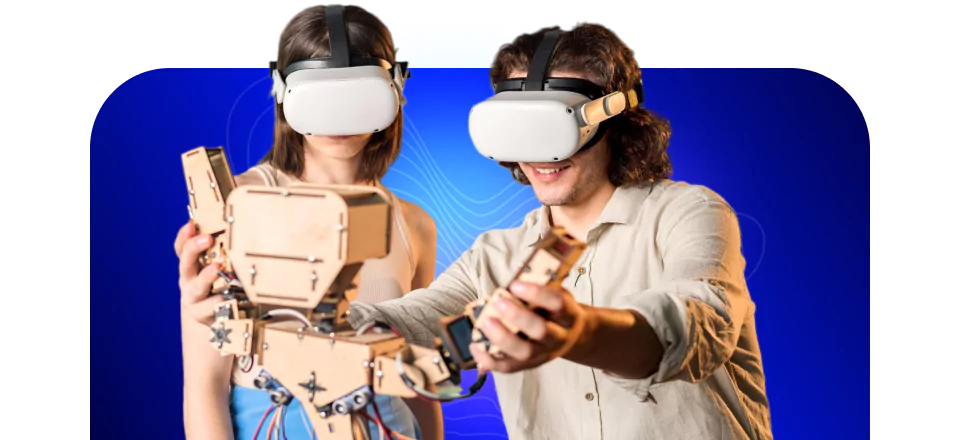
Traditional learning methods often struggle to provide practical exposure, especially in disciplines requiring hands-on experience. Virtual Reality bridges this gap by allowing students and professionals to interact with highly realistic digital environments where mistakes become learning opportunities without real-world consequences. Whether performing complex surgical procedures, operating industrial machinery, flying aircraft, conducting scientific experiments, or exploring historical civilizations, learners gain practical knowledge through immersive simulations that significantly improve understanding and retention.
The rapid digitalization of education, coupled with improvements in VR hardware affordability, cloud computing, artificial intelligence, and high-speed internet connectivity, continues to strengthen market growth worldwide. Educational institutions are increasingly incorporating immersive technologies into their curricula to improve engagement, encourage collaboration, and deliver personalized learning experiences that cater to diverse learning styles.
Corporate organizations are also leveraging VR-based learning to improve employee productivity, reduce training costs, standardize learning programs, and accelerate workforce readiness. These factors collectively position the E-Learning Virtual Reality Market as one of the fastest-growing segments within the global education technology industry.
Request For Sample Copy of Report For More Detailed Market insight: https://www.techsciresearch.com/sample-report.aspx?cid=26821#requestform
Industry Key Highlights
Market expected to grow from USD 275.66 Million in 2025 to USD 3,934.98 Million by 2031
Exceptional CAGR of 55.75% during the forecast period
Academic institutions remain the dominant application segment
Asia Pacific emerging as the fastest-growing regional market
Rising adoption of immersive learning across healthcare, engineering, aviation, and manufacturing
Growing integration of Artificial Intelligence and Virtual Reality platforms
Increasing popularity of gamified learning environments
Expanding investments in online and hybrid education ecosystems
Declining VR hardware costs improving accessibility
Growing enterprise demand for simulation-based workforce training
Global E-Learning Virtual Reality Market Overview
The education landscape has undergone unprecedented transformation over the past decade. Digital learning has evolved from supplementary educational content into comprehensive learning ecosystems capable of delivering personalized instruction across multiple devices and locations.
Virtual Reality has emerged as one of the most disruptive innovations within this transformation. Unlike conventional e-learning platforms that primarily rely on videos, presentations, and reading materials, VR creates fully immersive three-dimensional environments where learners actively participate rather than passively consume information.
Students can conduct laboratory experiments, engineers can assemble machinery, healthcare professionals can perform surgeries, and pilots can practice emergency procedures—all within safe virtual environments.
Educational institutions increasingly recognize that immersive experiences improve comprehension, knowledge retention, confidence, and practical skill development far more effectively than traditional classroom instruction.
As governments continue investing in digital education infrastructure and enterprises prioritize continuous workforce development, Virtual Reality is becoming a critical pillar of next-generation education.
Market Drivers
Rising Demand for Skill-Based Learning
One of the strongest drivers accelerating the E-Learning Virtual Reality Market is the growing emphasis on practical skill development.
Rapid technological advancements have transformed labor markets across virtually every industry. Organizations increasingly require employees capable of operating sophisticated technologies while adapting quickly to evolving business environments.
Traditional classroom instruction often lacks opportunities for experiential learning.
Virtual Reality addresses this limitation by providing realistic simulations where learners repeatedly practice tasks until proficiency is achieved.
Healthcare professionals can perform virtual surgeries.
Industrial workers can learn hazardous equipment operation.
Firefighters can train for emergency response.
Engineers can assemble complex machinery.
Such immersive experiences improve competence while minimizing operational risks.
Increasing Workforce Reskilling Initiatives
Automation, artificial intelligence, robotics, and digital transformation continue reshaping global employment.
Organizations increasingly invest in employee reskilling programs to maintain competitiveness.
Virtual Reality significantly reduces training costs while improving learning outcomes by allowing standardized instruction regardless of geographic location.
Companies can deliver consistent training experiences to thousands of employees simultaneously.
Employees receive practical exposure without interrupting production operations.
These advantages continue driving enterprise investments in VR-enabled learning solutions.
Expansion of Digital Education
Educational institutions worldwide continue transitioning toward digital learning ecosystems.
Universities increasingly combine traditional classroom instruction with virtual laboratories, immersive classrooms, and interactive simulations.
Virtual Reality enables students to understand abstract scientific concepts through visual exploration rather than theoretical explanations alone.
Subjects such as biology, chemistry, engineering, astronomy, architecture, and medicine particularly benefit from immersive educational environments.
Growing government investments in digital education infrastructure continue supporting widespread adoption.
Advancements in VR Hardware
Technological improvements have made VR devices significantly more affordable, lightweight, and user-friendly.
Modern headsets provide higher display resolutions, wider viewing angles, improved motion tracking, wireless connectivity, and enhanced user comfort.
Lower hardware costs allow schools, universities, and enterprises to deploy VR learning solutions at greater scale.
Cloud-based VR platforms further reduce infrastructure costs while improving accessibility.
Growing Corporate Training Requirements
Corporate organizations increasingly recognize Virtual Reality as an effective workforce development tool.
Industries including healthcare, aviation, automotive, manufacturing, energy, mining, defense, logistics, and construction increasingly utilize immersive simulations.
Employees gain practical experience without exposing themselves or expensive equipment to operational risks.
Organizations benefit from reduced accidents, improved compliance, faster onboarding, and greater productivity.
Key market players in the E-Learning Virtual Reality Market are: -
Microsoft Corporation
Sony Corporation
HTC Corporation
Google LLC
Samsung Electronics Co., Ltd.
Magic Leap, Inc.
PICO Immersive Pte. Ltd.
EON Reality, Inc.
Vuzix Corporation
eXp World Technologies, LLC
Customers can also request for 10% free customization on this report.
Emerging Trends
Artificial Intelligence Integrated Learning
Artificial Intelligence is transforming Virtual Reality education by enabling adaptive learning experiences.
AI continuously analyzes learner performance, identifies knowledge gaps, adjusts content difficulty, and recommends personalized learning pathways.
Intelligent tutoring systems provide real-time feedback that enhances learner engagement and improves educational outcomes.
The combination of AI and VR creates highly individualized educational experiences.
Gamification Revolution
Gamification has emerged as one of the most influential trends within immersive education.
Educational content increasingly incorporates points, rewards, badges, leaderboards, competitions, and achievement systems.
These features significantly improve learner motivation while encouraging continuous participation.
Students remain engaged for longer periods while developing critical thinking, teamwork, creativity, and problem-solving skills.
Gamified Virtual Reality environments transform education into enjoyable and memorable experiences.
Growth of Virtual Laboratories
Science, engineering, and healthcare education increasingly utilize virtual laboratories.
Students conduct experiments repeatedly without consuming expensive materials or exposing themselves to hazardous environments.
Virtual laboratories improve accessibility for institutions with limited physical infrastructure while ensuring standardized educational quality.
Collaborative Virtual Classrooms
Multi-user VR environments enable geographically dispersed students to learn together.
Virtual classrooms support group discussions, collaborative projects, instructor demonstrations, and peer interaction.
This collaborative approach enhances communication skills while creating highly engaging educational experiences.
Remote education becomes significantly more interactive compared to traditional video conferencing.
Metaverse-Based Education
Educational institutions increasingly explore metaverse technologies.
Persistent virtual campuses allow students to attend lectures, participate in seminars, collaborate on projects, and interact socially within immersive digital environments.
Metaverse education represents the future evolution of distance learning by creating realistic campus experiences regardless of physical location.
Healthcare Simulation Expansion
Medical education remains among the largest adopters of Virtual Reality.
Medical students practice surgeries, emergency response procedures, anatomy exploration, patient diagnosis, and clinical decision-making through immersive simulations.
Healthcare organizations increasingly recognize VR as an effective method for improving patient safety and professional competence.
Market Challenges
Despite remarkable growth prospects, several challenges continue influencing market expansion.
High implementation costs remain a concern for smaller educational institutions.
Hardware procurement, software development, instructor training, and infrastructure deployment require considerable financial investment.
Technical limitations including motion sickness, device compatibility, and network latency continue affecting user experiences.
Content development also presents challenges since high-quality immersive educational modules require specialized expertise.
Data privacy, cybersecurity, and intellectual property protection remain important considerations as educational ecosystems become increasingly digital.
Additionally, unequal internet accessibility across developing economies may temporarily limit widespread adoption.
Nevertheless, continuous technological advancements and declining hardware costs are expected to gradually address these challenges while expanding market accessibility.
Contact US:
Techsci Research LLC
420 Lexington Avenue, Suite 300,
New York, United States- 10170
Tel: +13322586602
Email: [email protected]
Web: https://www.techsciresearch.com/
Comments
Log in or sign up to join the conversation.