

According to TechSci Research report, “E-Fuel Market Size– Global Industry Share, Trends, Competition Forecast & Opportunities, 2030F”, The Global E-Fuel Market will grow from USD 10.92 Billion in 2024 to USD 31.17 Billion by 2030 at a 19.10% CAGR
The Global E-Fuel Market is rapidly emerging as one of the most transformative segments within the global energy and transportation ecosystem. As industries and governments worldwide intensify efforts to reduce greenhouse gas emissions and transition toward carbon-neutral economies, e-fuels are gaining substantial attention as a sustainable alternative to conventional fossil fuels. E-fuels, also known as electrofuels or synthetic fuels, are produced using renewable electricity, green hydrogen, and captured carbon dioxide, offering a cleaner pathway for decarbonizing hard-to-abate sectors such as aviation, shipping, heavy transportation, and industrial manufacturing.
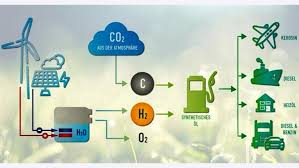
The increasing urgency surrounding climate change, energy security, and carbon neutrality commitments is fundamentally reshaping the global energy landscape. Nations across Europe, North America, Asia-Pacific, and the Middle East are implementing aggressive emission reduction targets and investing heavily in renewable energy infrastructure. In this evolving environment, e-fuels are emerging as a highly strategic solution capable of supporting existing combustion-based infrastructure while significantly lowering carbon emissions.
Unlike conventional fossil fuels, e-fuels can often be integrated into existing engines, pipelines, fueling stations, and transportation systems with minimal modifications. This compatibility offers a major advantage for industries where full electrification remains technologically or economically challenging. Aviation, maritime transport, long-haul trucking, industrial heating, and heavy machinery are among the sectors increasingly exploring e-fuel adoption to achieve sustainability goals while maintaining operational continuity.
The market is experiencing accelerated momentum due to advancements in renewable energy generation, electrolysis technologies, carbon capture systems, and hydrogen production infrastructure. Governments, automotive manufacturers, airlines, shipping companies, and energy providers are increasingly collaborating to scale commercial e-fuel production and establish global supply chains.
Request For Sample Copy of Report For More Detailed Market insight: https://www.techsciresearch.com/sample-report.aspx?cid=23370#requestform
Key industry highlights include:
Rising global focus on carbon neutrality and net-zero targets
Increasing investments in green hydrogen infrastructure
Strong growth in sustainable aviation fuel initiatives
Expansion of renewable energy integration for fuel production
Rising adoption of e-fuels in maritime transportation
Growing government support for synthetic fuel technologies
Increasing advancements in electrolysis and carbon capture systems
Expansion of power-to-liquid and power-to-gas technologies
Rising collaboration between energy companies and automotive manufacturers
Growing demand for low-carbon transportation fuels
The market is evolving into a strategic solution for decarbonizing sectors where direct electrification remains difficult.
Major Growth Drivers of the Global E-Fuel Market
1. Stringent Environmental Regulations and Net-Zero Goals
One of the strongest growth drivers for the Global E-Fuel Market is the increasing implementation of strict environmental regulations aimed at reducing greenhouse gas emissions.
Governments and regulatory agencies worldwide are introducing:
Carbon reduction mandates
Fuel emission standards
Renewable energy targets
Sustainable aviation fuel requirements
Carbon taxation frameworks
2. Expansion of Renewable Energy Infrastructure
The rapid expansion of renewable energy generation globally is significantly contributing to market growth.
Renewable sources such as:
Solar energy
Wind power
Hydroelectricity
3. Decarbonization of Hard-to-Abate Sectors
Certain industries remain extremely difficult to electrify due to operational and technological limitations.
These sectors include:
Aviation
Maritime shipping
Heavy trucking
Industrial manufacturing
Long-distance transportation
4. Rising Investments in Green Hydrogen
Green hydrogen is becoming a foundational component of global e-fuel ecosystems.
Governments and private companies are investing heavily in:
Electrolysis infrastructure
Hydrogen transportation systems
Hydrogen storage technologies
Integrated hydrogen hubs
The expansion of green hydrogen production capacity directly supports the scalability of e-fuel manufacturing.
The emergence of hydrogen economies across Europe, Asia-Pacific, and the Middle East is expected to accelerate long-term e-fuel market growth.
5. Growing Energy Security Concerns
Global geopolitical uncertainties and energy supply disruptions are increasing focus on energy independence and diversified fuel sources.
E-fuels can help reduce dependence on imported fossil fuels by enabling domestic production using renewable resources.
Countries seeking to improve long-term energy resilience are increasingly investing in synthetic fuel technologies as part of broader energy security strategies.
Emerging Trends in the Global E-Fuel Market
1. Growth of Sustainable Aviation Fuel (SAF) Projects
One of the most important trends shaping the e-fuel market is the rapid expansion of sustainable aviation fuel initiatives.
2. Integration of Carbon Capture Technologies
Carbon capture and utilization technologies are becoming increasingly integrated into e-fuel production ecosystems.
Captured carbon dioxide from industrial facilities and atmospheric capture systems is being utilized as a key feedstock for synthetic fuel synthesis.
This integration enhances the sustainability profile of e-fuels while supporting circular carbon economy models.
3. Rise of Power-to-Liquid and Power-to-Gas Technologies
Advanced conversion technologies are playing a central role in market expansion.
Key technologies include:
Power-to-liquid
Power-to-gas
Fischer-Tropsch synthesis
Methanol synthesis
These systems enable renewable electricity to be converted into transportable liquid and gaseous fuels.
Technological advancements are improving conversion efficiency and reducing production costs.
4. Increasing Public-Private Partnerships
Governments, energy companies, automotive manufacturers, airlines, and technology providers are increasingly collaborating to accelerate e-fuel commercialization.
These partnerships support:
Research and development
Infrastructure deployment
Pilot projects
Commercial scaling
Technology innovation
Collaborative ecosystems are becoming essential for accelerating global market maturity.
Competitive Analysis:
Dr. Ing. h.c. F. Porsche AG.
Siemens Energy AG
Sunfire GmbH
Norsk E-fuel AS
Gevo Inc.
Eneos Holdings Inc
JX Nippon Oil & Gas Exploration Corporation
China Petrochemical Corporation
China Shenhua Energy Company Limited
Boeing Company
1. Investment in Green Hydrogen Projects
Companies are investing heavily in hydrogen infrastructure to strengthen e-fuel production capabilities.
2. Strategic Partnerships
Collaborations between energy providers, airlines, automotive manufacturers, and governments are accelerating commercialization.
3. Technology Innovation
Firms are focusing on improving electrolysis efficiency, carbon capture integration, and synthetic fuel production processes.
4. Expansion of Sustainable Aviation Fuel Initiatives
Aviation-focused partnerships are becoming a major competitive growth strategy.
Challenges in the Global E-Fuel Market
Despite strong growth potential, the market faces several challenges.
1. High Production Costs
E-fuel production remains highly energy-intensive and capital-intensive compared to conventional fossil fuels.
2. Infrastructure Limitations
Large-scale hydrogen transportation, storage, and fueling infrastructure remain underdeveloped in many regions.
3. Renewable Energy Dependency
The sustainability of e-fuels depends heavily on the availability of renewable electricity.
4. Competition from Alternative Technologies
Battery-electric systems, advanced biofuels, and direct hydrogen solutions present competitive challenges for e-fuels.
5. Regulatory Uncertainty
Global regulatory frameworks surrounding synthetic fuels and carbon accounting standards continue evolving.
Future Outlook
The future of the Global E-Fuel Market appears highly promising as governments and industries intensify decarbonization initiatives and renewable energy investments.
Key future developments expected in the market include:
Expansion of global green hydrogen ecosystems
Rapid growth in sustainable aviation fuel production
Increased deployment of power-to-liquid technologies
Greater integration of carbon capture systems
Rising investments in renewable-powered fuel production
Expansion of low-carbon maritime fuel solutions
Increased industrial decarbonization initiatives
Growing commercialization of synthetic fuel infrastructure
Strong government incentives for clean fuel adoption
Increased collaboration between automotive, aviation, and energy sectors
E-fuels are expected to become a critical component of the global clean energy transition strategy over the coming decades.
10 Benefits of the Research Report
Provides comprehensive analysis of the Global E-Fuel Market
Offers insights into emerging clean fuel technologies
Identifies major growth drivers and opportunities
Helps businesses understand competitive market dynamics
Provides regional and segment-level market intelligence
Supports strategic investment planning and expansion decisions
Offers insights into renewable energy integration trends
Identifies operational challenges and market risks
Enables informed decision-making for stakeholders
Provides long-term forecasting and future market growth analysis
Contact US:
Techsci Research LLC
420 Lexington Avenue, Suite 300,
New York, United States- 10170
Tel: +13322586602
Email: [email protected]
Web: https://www.techsciresearch.com/
E-Fuel Market 2030 Industry Statistics, Size & Share Report
Comments
Log in or sign up to join the conversation.