

Signal vs Noise in B2B Marketing: Identify Real Buyer Intent
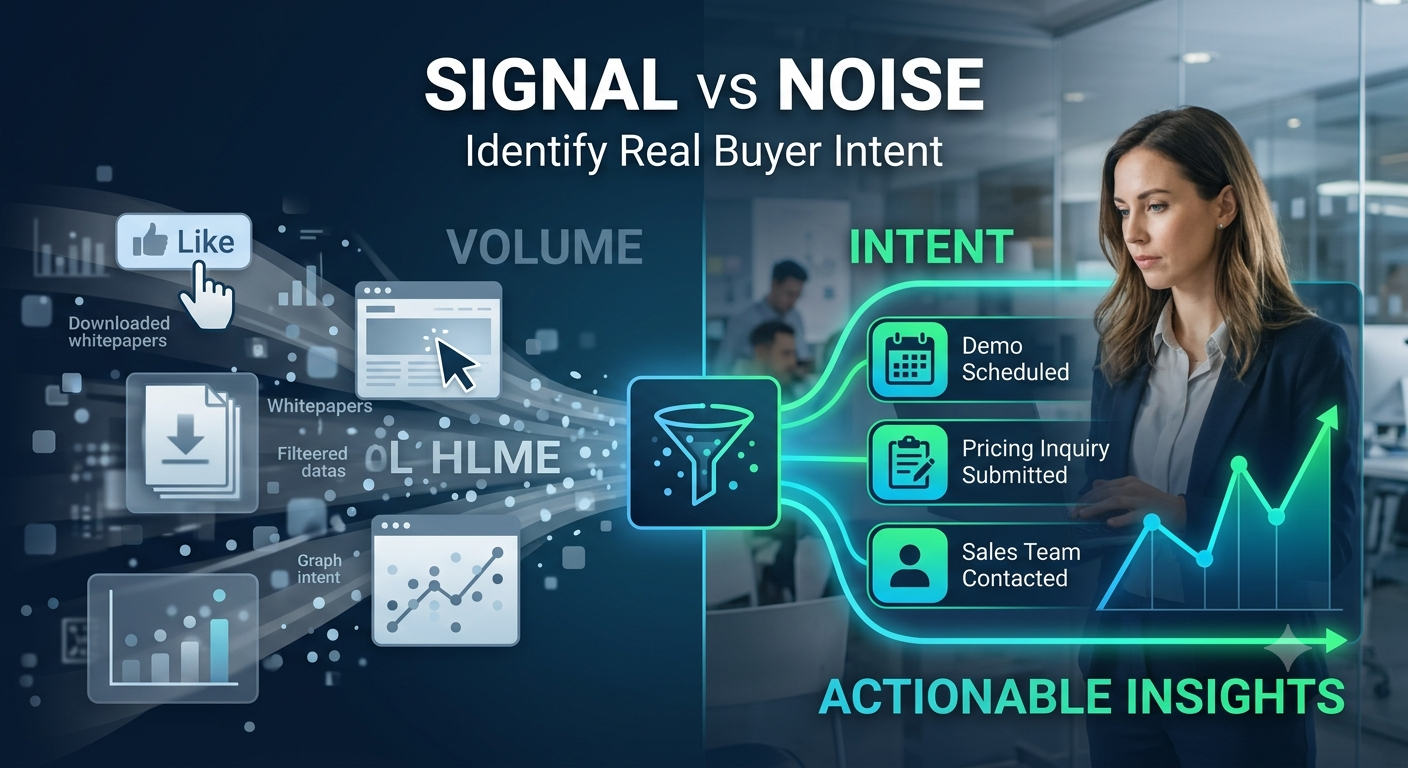
Modern B2B marketers have access to more customer data than ever before. Website visits, email opens, b2b content syndication, webinar registrations, and social interactions all provide valuable insights. However, not every action indicates genuine buying interest. Distinguishing meaningful buying signals from routine engagement is essential for improving lead quality and marketing effectiveness.
Organizations that identify real buyer intent can prioritize high-value opportunities, personalize outreach, and build stronger sales pipelines.
Understanding Signals and Noise
A signal is a meaningful action that suggests a prospect is actively evaluating a solution or preparing for a purchasing decision. Examples include repeated visits to solution pages, downloading multiple resources, attending webinars, or requesting product information.
Noise, on the other hand, consists of interactions that show general interest but may not indicate immediate buying intent. Single page visits, accidental clicks, or one-time content downloads often provide limited insight into purchase readiness.
Focus on Meaningful Engagement
Rather than evaluating isolated actions, businesses should analyze engagement patterns over time. Prospects who consistently interact with educational content, revisit key website pages, or engage across multiple channels often demonstrate stronger buying intent.
Tracking these behaviors provides a more complete understanding of customer interest and helps improve lead qualification.
Use First-Party Data for Better Insights
First-party data offers one of the most reliable ways to identify meaningful buying signals. Information collected through website activity, email engagement, webinars, CRM systems, and customer interactions reflects direct audience behavior and supports more accurate targeting.
Reliable first-party data enables marketers to make informed decisions while maintaining compliance with evolving privacy regulations.
Align Sales and Marketing Around Buyer Intent
When marketing teams share verified engagement insights with sales, outreach becomes more relevant and timely. Instead of pursuing every lead equally, sales representatives can focus on prospects showing genuine interest and stronger purchase potential.
This alignment improves productivity, enhances the buyer experience, and increases conversion opportunities.
Continuously Refine Your Strategy
Buyer behavior changes over time, making continuous analysis essential. Organizations should regularly evaluate engagement data, validate intent signals, and adjust targeting strategies based on campaign performance and customer feedback.
An ongoing optimization process ensures marketing efforts remain focused on qualified opportunities.
Turning Signals into Business Growth
Identifying real buyer intent is essential for effective B2B demand generation. By separating valuable signals from marketing noise, businesses can improve lead quality, strengthen sales and marketing alignment, and deliver more personalized customer experiences.
A data-driven approach centered on meaningful engagement enables organizations to make smarter marketing decisions, generate higher-quality pipelines, and achieve sustainable business growth.
Comments
Log in or sign up to join the conversation.