
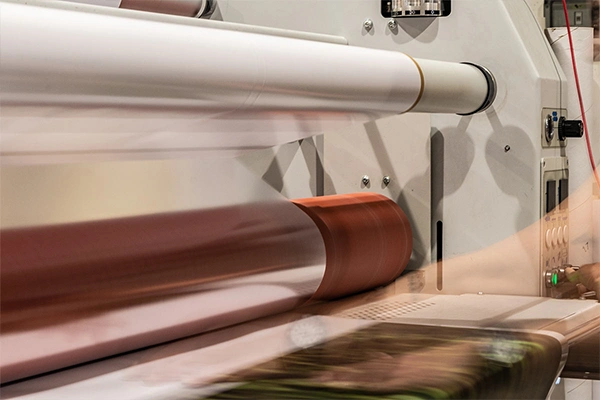
In today’s competitive printing and packaging industry, businesses require durable, attractive, and high-quality finishing solutions that can protect products while enhancing their appearance. One of the most widely used technologies for this purpose is dry film lamination.
Dry film lamination has become an essential process in commercial printing, packaging, advertising, publishing, and industrial manufacturing. It provides a protective layer over printed or non-printed surfaces, improving durability, resistance, and visual appeal.
As industries continue to demand better finishing quality and long-lasting materials, dry film lamination plays a major role in modern production systems.
What is Dry Film Lamination?
Dry film lamination is a process in which a pre-coated plastic film is applied to the surface of paper, cardboard, plastic sheets, or other materials using heat and pressure. Unlike wet lamination methods that require liquid adhesives, dry film lamination uses films that already contain adhesive layers.
The process creates a smooth, durable, and attractive finish while protecting the surface from moisture, scratches, dust, and wear.
Dry film lamination is widely preferred because it offers clean processing, fast production, and consistent quality.
Importance of Dry Film Lamination in Modern Industry
In modern industrial production, appearance and protection are equally important. Dry film lamination helps industries achieve both objectives efficiently.
Key importance factors include:
· Improved product durability
· Enhanced visual appearance
· Protection against moisture and scratches
· Better print preservation
· Fast and clean production process
· Cost-effective finishing solution
These advantages make it a highly valuable technology across various industries.
Working Process of Dry Film Lamination
The dry film lamination process involves controlled heat, pressure, and precision alignment systems.
Material Preparation
Printed or base materials are prepared and aligned before entering the machine.
Film Feeding
The dry adhesive-coated film is loaded into the laminating machine.
Heat Activation
The machine applies controlled heat to activate the adhesive layer on the film.
Pressure Bonding
Pressure rollers bond the film smoothly onto the material surface.
Cooling Process
The laminated material is cooled to stabilize the bond and improve finish quality.
Final Output
The finished laminated sheets or rolls are collected for cutting, packaging, or further processing.
This process ensures smooth and professional-quality results.
Types of Dry Film Lamination
Different types of dry film lamination are used depending on application requirements.
Gloss Lamination
Provides a shiny and vibrant surface finish.
Matte Lamination
Creates a smooth and elegant non-reflective appearance.
Thermal Dry Film Lamination
Uses heat-activated adhesive films for strong bonding.
Soft-Touch Lamination
Provides a premium velvet-like surface texture.
Anti-Scratch Lamination
Offers extra protection against scratches and surface damage.
Each type is designed for specific industrial and commercial applications.
Key Features of Dry Film Lamination
Modern dry film lamination systems are equipped with advanced features for improved performance.
Clean Processing Technology
No liquid adhesive handling is required.
Fast Production Speed
Suitable for high-volume industrial operations.
High-Quality Surface Finish
Provides smooth and professional results.
Strong Surface Protection
Protects against wear, moisture, and environmental damage.
User-Friendly Operation
Easy machine setup and operation.
Consistent Bonding Quality
Ensures uniform adhesion across all materials.
Applications of Dry Film Lamination
Dry film lamination is widely used in multiple industries.
Printing Industry
Used for brochures, magazines, catalogs, and book covers.
Packaging Industry
Used for food boxes, cosmetic packaging, and retail packaging.
Advertising Industry
Used for posters, banners, and promotional materials.
Publishing Industry
Used for book covers, educational materials, and reports.
Industrial Applications
Used for labels, identification cards, and protective sheets.
Its wide application range makes it an important finishing technology.
Advantages of Dry Film Lamination
Businesses benefit greatly from using dry film lamination.
Enhanced Product Appearance
Improves color vibrancy and surface quality.
Long-Term Protection
Protects printed materials from damage and fading.
Faster Production Process
Supports continuous industrial workflows.
Cost Efficiency
Reduces adhesive waste and operational costs.
Eco-Friendly Operation
Produces less mess compared to wet lamination methods.
Durable Surface Finish
Increases product lifespan and reliability.
Technological Advancements in Dry Film Lamination
Modern dry film lamination systems include advanced technologies for higher efficiency and quality.
Key innovations include:
· PLC-based automation systems
· Smart temperature control technology
· Servo motor-driven rollers
· Automatic tension adjustment systems
· High-speed laminating mechanisms
· Real-time quality monitoring
These technologies improve production precision and consistency.
Role in Modern Packaging and Printing Industry
Dry film lamination plays an important role in enhancing the value and durability of printed and packaged products.
It helps industries achieve:
· Better product presentation
· Improved brand image
· Higher durability standards
· Enhanced customer satisfaction
This makes it an essential process in modern commercial production.
Environmental Benefits of Dry Film Lamination
Modern industries are focusing on sustainable production methods, and dry film lamination offers several environmental advantages.
Environmental benefits include:
· Reduced chemical usage
· Lower adhesive waste
· Cleaner production process
· Energy-efficient machine operation
· Support for recyclable film materials
These benefits help industries meet environmental regulations and sustainability goals.
Challenges of Dry Film Lamination
Despite its many benefits, there are some challenges:
· Higher film material costs
· Limited compatibility with certain substrates
· Need for precise temperature control
· Requirement for quality laminating equipment
However, technological improvements continue to minimize these limitations.
Future of Dry Film Lamination
The future of dry film lamination is focused on sustainability, automation, and smart manufacturing.
Future developments may include:
· Eco-friendly biodegradable films
· AI-based quality control systems
· Fully automated laminating lines
· Smart factory integration
· Advanced anti-bacterial and functional films
These innovations will further improve industrial efficiency and product quality.
Conclusion
Dry film lamination is a highly effective finishing technology that provides durability, protection, and premium appearance for printed and packaged products. Its clean processing method, strong bonding performance, and wide industrial applications make it an essential solution in modern manufacturing.
With continuous advancements in automation and sustainable materials, dry film lamination will continue to play a major role in the future of the printing and packaging industry.
Comments
Log in or sign up to join the conversation.