

This week is one of those stock market weeks where forecasts are about as useful as weather forecasts for a wandering hurricane. Tomorrow, Wednesday, after the market closes, Nvidia (NVDA) will report its quarterly earnings. On Friday, Jackson Hole follows, where Fed Chair Kevin Warsh will deliver what is likely to be his most important speech since taking office. Two events, two potential price fireworks.

That’s why we’re sparing ourselves the effort today of trying to assess the markets for the coming days. The sidelines are our preferred spot. Nvidia could once again give the AI euphoria rocket-fueled momentum—or explain to the market that even trees don’t grow to the sky with GPUs. And with Warsh, every word is likely to be dissected anyway. This is especially true because he hasn’t yet managed to convince the market when it comes to communication.
We’d rather use this waiting period to focus on Scott Bessent and the U.S. Treasury Department. Because while all eyes are on the Fed, a remarkable shift is taking place in the background.
The trigger is the Treasury Department’s decision to significantly expand its repurchases of long-term Treasury bonds. For certain maturities, the maximum volume per repurchase is increasing from $2 billion to at least $4 billion. The term ‘Bessent Put’ quickly began circulating online: the Treasury is propping up the bond market and essentially engaging in quantitative easing through the back door.
It sounds spectacular. But it’s only partially true.
First misconception: The Treasury is buying back old, low-interest bonds and replacing them with new, much more expensive debt. That sounds like someone canceling a 1.5 percent mortgage to take out a new one at 4 percent. However, this overlooks the fact that many old bonds are trading well below par. The Treasury therefore pays significantly less than the original face value when repurchasing them. Higher interest costs can thus be partially offset by a lower principal amount.
Second misconception: The buybacks are an American version of Japan’s yield curve control (YCC). With QE or YCC, the central bank buys bonds using newly created reserves—that is, with newly created dollars. With the Treasury, however, things work differently. It repurchases old debt and ultimately finances this through revenue or new issuances. The Fed is not involved, and no additional bank reserves are created.
So why is Bessent doing this?
Because the U.S. bond market is littered with old bonds that are about as popular today as a fax machine at an AI conference. Bonds with yields below two percent are currently trading at significant discounts and are, in some cases, illiquid.
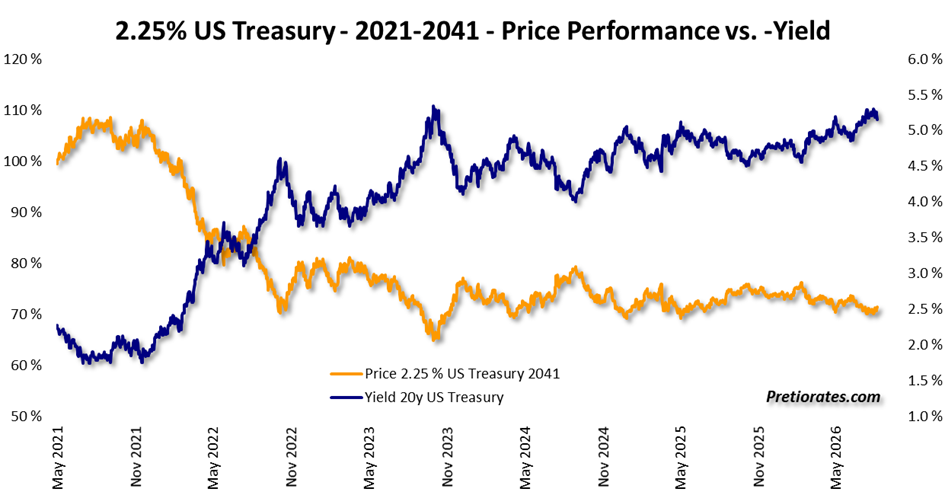
The Treasury replaces old, hard-to-trade securities with fresh ones. This improves liquidity and can reduce pressure on long-term bond prices. This is the core of the ‘Bessent Put’—less a secret money-printing machine than active market-making. It actually injects liquidity into the illiquid market for long-term bonds.
Things get really interesting with the latest idea, which brings the Treasury General Account (TGA) into play. Put simply, the TGA is something like the U.S. government’s checking account—its current account at the Fed: taxes go in, government spending goes out.
Recently, headlines have been circulating that Bessent could mobilize nearly one trillion dollars from the TGA to finance buybacks. In fact, the TGA is currently quite well-funded at around $950 billion, and according to the budget, it’s expected to grow further to about $1,050 billion by the end of October. In recent months, it has fluctuated between $800 billion and $1,000 billion.
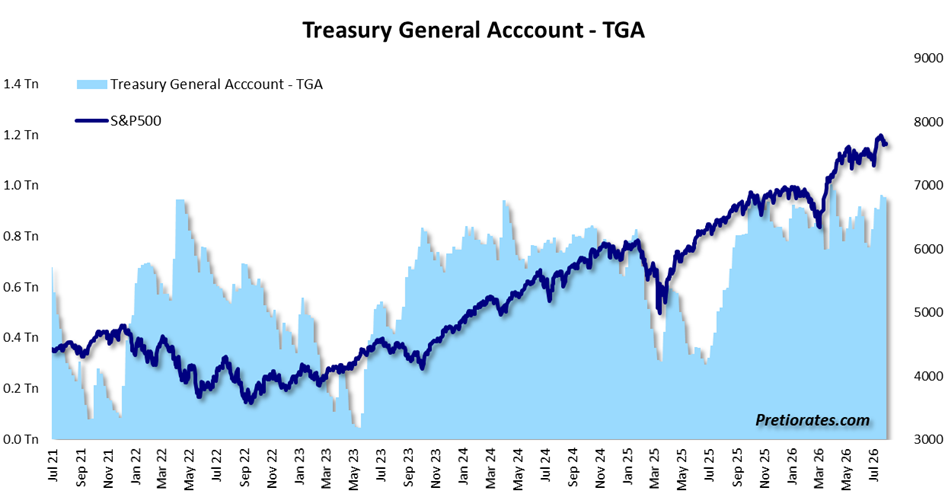
That sounds like a bazooka. Technically, it’s about as surprising as the news that you’re paying the restaurant bill from your own bank account. Every dollar the Treasury spends goes through the TGA—including, of course, a buyback. So what matters isn’t whether the Treasury uses the account, but whether it deliberately reduces the balance more aggressively, thereby postponing the timing of new bond issuances.
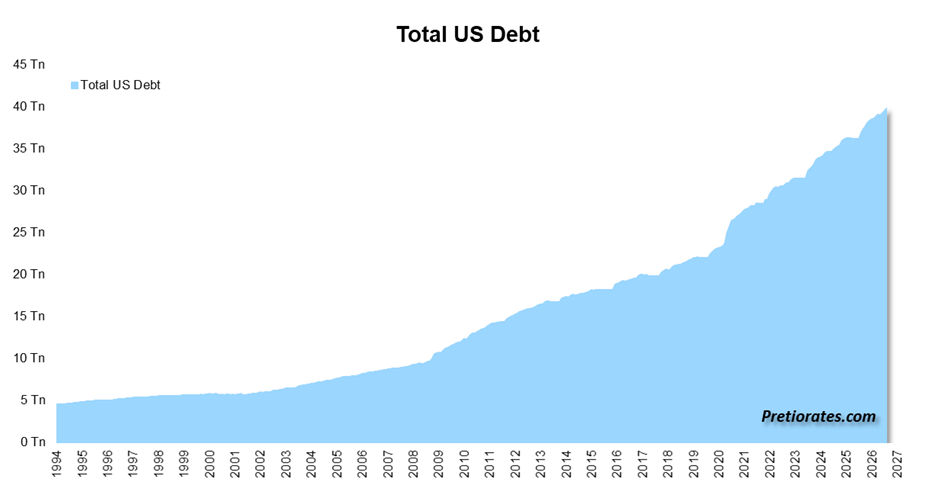
That’s exactly where things get interesting for the markets. Reducing the TGA balance can inject liquidity back into the financial system in the short term. But the fundamental problem remains: the U.S. continues to run enormous deficits. Repurchased debt therefore doesn’t magically vanish into the mountain air of Wyoming. Sooner or later, new debt will be needed. Bessent can postpone the timing and change the structure—but he cannot change the math. This simply means that the liquidity currently used for redemptions from the TGA will have to be replenished at a later date through the issuance of new Treasuries.
There is, however, one problem that should not be underestimated: The government will reach the $41.1 trillion debt ceiling by the end of this year or early next year. Unless Congress raises the debt ceiling in time, the government will have to draw on the TGA to finance its ongoing deficits. If Congress fails to raise the debt ceiling for an extended period, the Treasury Department will have to exhaust the TGA down to the last available dollar. However, if the Treasury uses a significant portion of the TGA as early as September and October to finance buybacks, it will have less cash later on to bridge the debt ceiling debate—and correspondingly less time before funds actually run short.
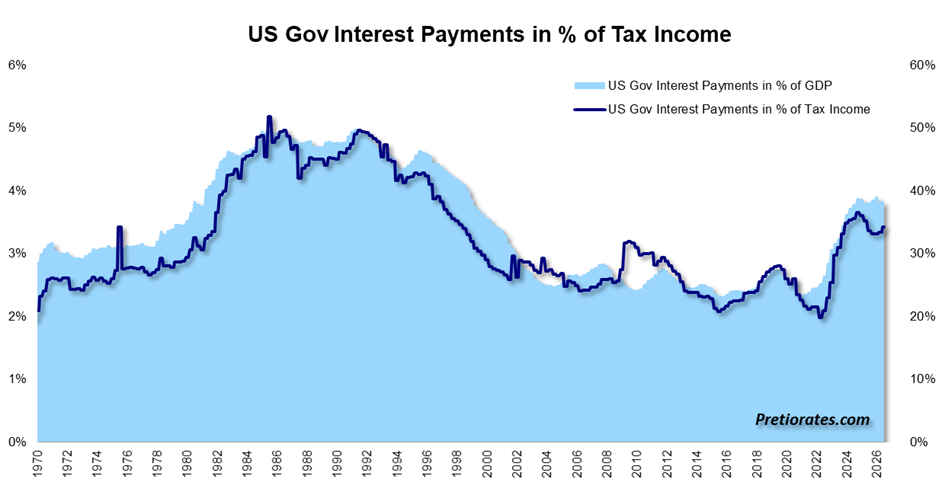
Furthermore, this strategy has an interesting side effect. If long-term debt is increasingly replaced by shorter-term debt, debt service becomes more sensitive to short-term interest rates. The old bonds with interest rates below 2 percent are simply cheaper than new, shorter-term bonds with interest rates of 4 percent or higher. Paradoxically, this increases pressure on the Fed to keep these interest rates low. The Treasury and the Fed are thus increasingly in the same boat.
And with that, back to Jackson Hole, Wyoming. On Friday, Warsh will speak about inflation and monetary policy—at 10:00 a.m. EST or 4:00 p.m. CET, and this can be followed live here. It will be at least as interesting to see how he reacts to a Treasury Department that is acting ever more aggressively on the Fed’s turf. Warsh wants to fight inflation and keep interest rates high accordingly. But Bessent is interfering more and more in the Fed’s territory—and the Treasury has a very strong interest in lower interest rates.
Perhaps the old adage still holds true: “Don’t fight the Fed.” But some market participants are already rephrasing that old mantra: “Don’t fight the Treasury.”
By next Monday, we’ll likely know who actually had the bigger bazooka this week. Precious metals and cryptocurrencies have apparently already made their decision: in any case, they’ve been behaving in recent days as if the U.S. financial market were facing lower interest rates.



Comments
Log in or sign up to join the conversation.