
A Great Way to Invest until Disaster Strikes
An economy is like an ecosystem. It is not the result of central planning; it evolves in ways the planners cannot even imagine.
What central planner would have imagined Instagram, Snapchat or Uber? And what planner would have put an exotic pink bird in the middle of a moon-like landscape… with only a strange tiny bug for food? (See below for more on that.)
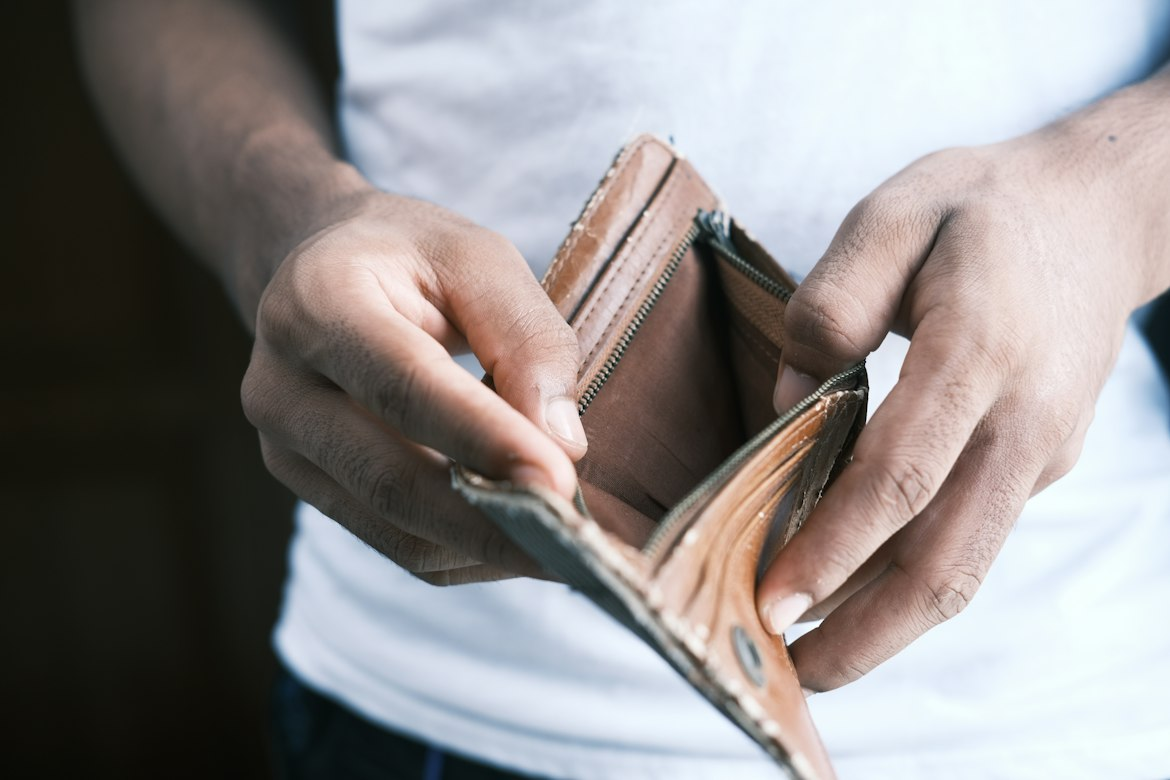
“Buying the dip” has been a very good investment approach for a very long time. It will continue to be a great way to invest, we predict, until it is a disaster. When that will be … we can’t say.

Image Credit: Tashatuvango
How to Grow Rich
In the meantime, we note that the US economy is still struggling. Never in the last 60 years have we had such a weak run of GDP figures. And it looks like this funk is here to stay. The US economy depends on consumer spending. And consumers ain’t spending.
Here’s Bloomberg:
“A booming job market and cheaper fill-ups at the gas pump should be giving millions of Americans more reasons to spend. Instead, they’re salting away the extra savings.
The saving rate jumped in February to 5.8%, the highest since December 2012 and up from 4.4% just three months earlier, government data showed Monday.”
The rest of the Bloomberg report repeats the usual nonsense. Spending growth is “woefully weak as disposable incomes rise.” Woefully?
You know better, dear reader: There’s nothing woeful about saving money. Spending doesn’t make you wealthier. Saving and investing do. Spending is not woefully weak; saving is gloriously, wonderfully, happily strong. Americans are saving more – despite the authorities’ efforts to stop them.
The Fed evaporates interest payments on savings. It threatens higher levels of inflation. It offers the cheapest credit in history. And still consumers resist. Why?
They know that solvency matters. Household finance is not just a matter of liquidity. Besides, they also know that the economy is not nearly as strong as the feds say it is.
The first quarter, for example, showed the worst retail sales and corporate profits since 2009. Wall Street may be on a tear. But most people are struggling to make any forward progress at all.
They sense, correctly, that they will need more than just the feds’ easy credit in the coming months; they will need real savings.

US personal savings rate, via Saint Louis Federal Reserve Research
Stuck in the Sand
More about our trip to la puna – the high-altitude zone of northern Argentina near the border with Chile. Even with four-wheel drive, it is easy to get stuck in the sand. The wheels turn. You go lower until the body carriage rests on the sand and the tires spin.

Photo credit: fmh
No signs of life anywhere high in the Andes
We carry a shovel in the back of the truck; you never know when you might need it. When the truck sank into a soft spot on Saturday, we thought we might have to spend a long time digging it out. Luckily, we were close enough to hard ground that we were able to get out fairly quickly and get back under way.
Then we drove around on the valley floor admiring the many strange and striking things nature had prepared.
A natural forest of stone pillars
There was no plant life, except in a few spots where it looked as though water had collected, perhaps temporarily. There were a few clumps of grass – like the pampas grasses you find at lower altitudes – mostly dried and yellowed.

Photo credit: Bill Bonner
Poisonous Waters
After lunch, we drove up toward the mountains. The landscape changed quickly. First, we passed over hills covered with small stones and a dried-out bush that looked as though it might come to life only once every few years after a freak rainstorm.
Some of these bushes were black; others were white – about the size and shape of small rhododendrons but without leaves. Higher up, there were valleys with a tiny bit of yellow grass and herds of vicuña.
These animals are a protected species in Argentina. They are the size of a small deer with long, narrow necks and small heads. Like guanaco and llamas, they are members of the camel family, with gaits more like camels than deer.
“They have two layers of wool,” our guide, Luis, explained.
“The inner layer is very fine. It keeps them warm. It gets down to minus 20 or minus 30 degrees Celsius here. The outer layer of hair protects the inner layer.”
We kept going up, over rocky trails, for about two hours. Then we came to a series of lakes. The wind blew hard. There was not a blade of grass anywhere. Mountain peaks, some snow-covered, surrounded the lakes. Astonishingly, for the place was so inhospitable to life, the lakes were home to thousands of pink flamingos, standing in the shallow water.

Flamingos in their communal dining space …
Photo via 4ever.eu
“Don’t touch the water,” Luis warned. “It has high levels of arsenic. The arsenic doesn’t bother the birds. They must be adapted to it.”
What are they doing here? What do they eat? Why are they standing in this freezing, poisonous puddle hundreds of miles from anything that seems remotely appealing? we wondered.
“This just goes to show what a remarkable level of adaptation and specialization natural selection can achieve,” Luis replied, sounding like a professor of natural history.
“There is only one animal in the lake – a tiny form of algae. The flamingos have evolved to come here, wade in the water and eat it.
“When they get enough strength and fat on their bodies, they fly away for the winter. They go down to Córdoba in central Argentina. The old ones, though, can’t make the flight. They stay all year round.”

Hi! Which one of you is Carlos?
Photo credit: Pedro Szekely

Comments
Log in or sign up to join the conversation.