

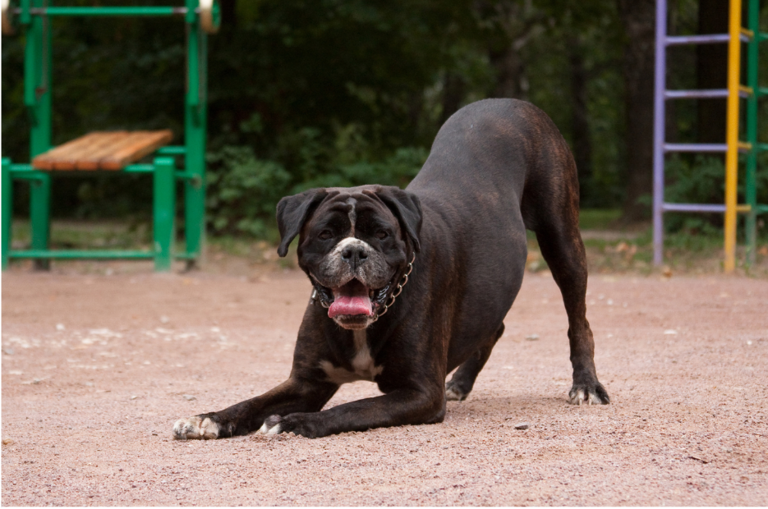
Chewing is a natural instinct for dogs and an important enrichment and calming activity. But when you have a large breed dog who approaches every toy like a personal challenge, you can go through dog toys quickly.
Often, large breed aggressive chewers make short work of traditional chew toys, leaving them seeking something to sink their teeth into and owners wondering how to stretch their pet-product budgets.
Understanding how to purchase high-quality toys that hold up to large jaws and powerful chewing can help you save money while providing safe, helpful activities for your pup.
Why Is Chewing Important for Dogs?
Chewing is a natural part of a dog’s behavior and an evolutionary mechanism leftover from life in the wild. While pet owners may find persistent chewing annoying, especially when a pup turns their teeth to table legs or people’s shoes, safe and appropriate chewing offers numerous benefits.
Research published in Frontiers in Veterinary Science describes chewing as essential to a dog’s physical and psychological health at every stage of life.
Specifically, chewing can help with:
Dental health. Chewing creates shearing forces that disrupt plaque and calculus buildup, reducing the risk of periodontal disease in dogs. Studies cited in the Frontiers review found that regular chewing may reduce calculus coverage by nearly 90% over two weeks.
Stress relief. Chewing reduces activity in the brain’s stress-response systems, lowering cortisol levels. This makes it a natural self-soothing tool for anxious or overstimulated dogs.
Cognitive function. Research links regular chewing to memory consolidation and protection against cognitive decline, particularly as dogs age.
Behavioral regulation. Dogs denied appropriate chewing outlets are more likely to redirect their chewing instinct to furniture, shoes or other household items.
Factors in Choosing the Best Dog Toys for Your Large Breed Aggressive Chewer
Understanding the type of bite force a large breed dog can bring to chewing and other factors unique to bigger pets can help you select dog toys that work well for your companion.
Bite Force Considerations
Not all dogs chew with the same intensity, and size is one of the biggest predictors of bite force. A 2020 study published in the Journal of Experimental Biology modeled bite force across various breeds and found that larger dogs generate significantly more force on average.
A secondary factor in bite force is skull shape. Breeds with broader, shorter snouts, like Rottweilers, bulldogs and Cane Corsos, tend to produce even higher bite force relative to their size than dogs with longer snouts. Researchers attributed this difference partly to breeding histories; dogs historically bred for protection were selectively bred over generations for gripping and biting ability.
For today’s pet owners, these findings mean large breed power chewers need especially durable chew toys that can hold up under impressive bite forces. But the size of your dog isn’t the only factor; a toy that holds up to a Greyhound’s chew sessions may not survive an afternoon with a Rottweiler, even if the two dogs weigh the same.
Safety Considerations
A primary concern for many dog owners shopping for toys is that products won’t immediately fracture under a strong bite. Pet owners also want chew toys that aren’t likely to wear out quickly or break into small parts that could create choking hazards.
Durability is important, but toys that are too hard can pose risks to your dog’s dental health. Keep the following in mind when selecting toys:
Tooth fractures are common in large breed dogs. Veterinary dentists estimate that between 40% and 60% of large breed dogs have crown fractures, due in part to the fact that pet owners are more likely to give large dogs hard things to chew.
Dog enamel is thin. Dog enamel ranges between 0.1 mm and 0.6 mm thick, compared to 2 mm to 4 mm for humans. This can make canine teeth more vulnerable to fractures from chewing on hard toys than owners realize.
The thumbnail test can help. If you can’t make a small indentation in a toy with your thumbnail, it’s likely too hard for safe chewing, even for the biggest of dogs.
A Need for Novelty
Dogs have a natural tendency toward neophilia, which is a preference for novel items over familiar ones. The Frontiers article notes that this novelty-seeking behavior extends to chew toys; dogs may lose interest in or ignore familiar toys after a period of time. When that happens, if a new toy doesn’t catch their interest, they may direct their chewing instinct toward less appropriate targets.
Rotating toys regularly helps maintain engagement. A subscription service, like BULLYMAKE, makes it easy for pet owners to regularly introduce new, durable toys designed for large breed power chewers.
Types of Dog Toys for Large Breed Power Chewers
Large breed power chewers need toys built to withstand serious jaw pressure while still offering enough give to protect dental health. The right toy also depends on how your dog chews. A methodical gnawer has different needs than a dog that shreds or tears, so it’s worth considering your pup’s chewing personality when shopping.
Rubber toys. Dense, heavy-duty rubber toys, like The Keg by BULLYMAKE, are a good choice for many large breed power chewers. They absorb the shock of strong bites and hold up under sustained chewing. Some, like the KONG Extreme, can be stuffed with treats to extend engagement.
Nylon toys. Hard-molded nylon toys are extremely durable and often textured to support dental health. Look for options sized appropriately for large breeds, as undersized nylon toys can become choking hazards under powerful bites. For example, BULLYMAKE’s Bacon Horseshoe nylon chew is designed for dogs up to 180 pounds.
Ballistic toys. Reinforced with layered fabric and industrial-strength stitching, ballistic toys are a good option for large breed dogs that like to shred or tear. Many incorporate crinkle sounds or other sensory elements that maintain engagement.
Cotton tug ropes. Tightly twisted rope toys encourage interactive play and help clean teeth through natural fiber friction. Look for ropes sized for large breeds, as smaller rope toys can be torn apart quickly by powerful chewers.
Whichever products you choose, supervise your dog’s first interactions with any new toy and inspect toys regularly for signs of wear. Even toys designed for powerful chewers have a lifespan, and replacing them before they break down into small pieces helps keep your large breed power chewer safe.
Originally published at https://www.msn.com on March 23, 2026.
Comments
Log in or sign up to join the conversation.