

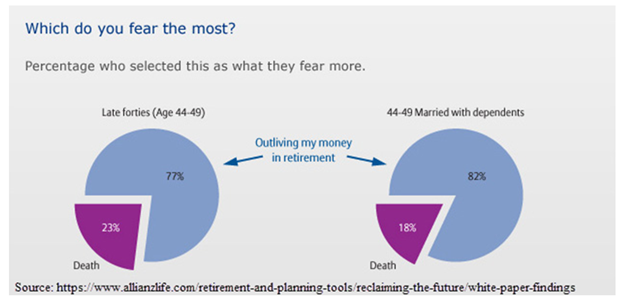
Most people fear running out of money in retirement. In fact, it’s a very serious fear as seen in the chart below.
It’s a pretty simple formula: If you retirement expenses are greater than your after-tax retirement income, your investments will begin to dwindle as you use the principal to pay for expenses. Even if you have saved $2 million for retirement, if your expenses are large enough, you can see your principal decline to the point where you might run out of money.
Why Is It So Difficult?
One major problem, of course, is that interest rates are still so low by historical standards.
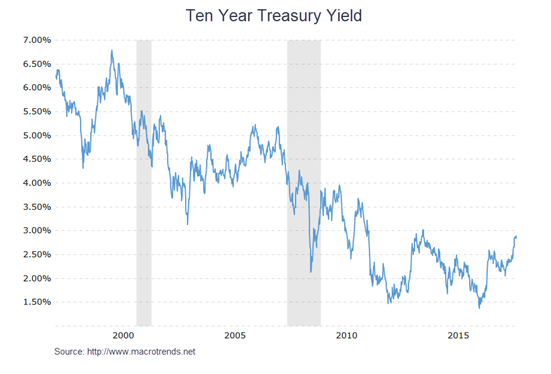
If interest rates just move back to where they were nine years ago, it would be so much easier to live off of the bond income. But the drop in interest rates since then means a drop over $500,000 for a $1 million bond portfolio over a 15 year period. Treasuries will no longer work for most retirees unless they have a large pension to supplement their retirement income.
Dividend Income Can Save A Retirement Plan
Did you know that dividend income has accounted for more than 30% of the stock market’s overall return in nearly every decade over the past 80 years?
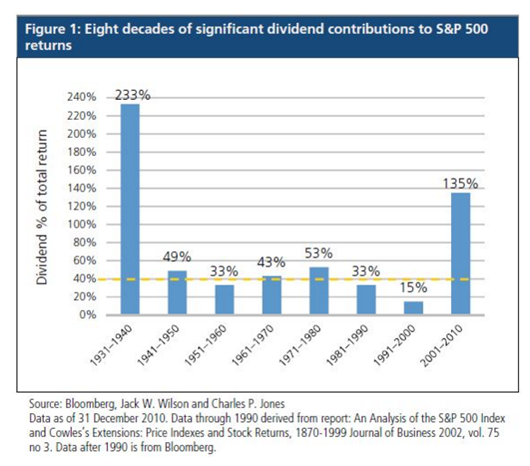
With the stock market doing so well over the past nine years, it’s easy to forget that dividends are such an important factor.
A Case Study
Let’s take a look at just how important dividends can be to a retirement portfolio using the WealthTrace Retirement Planner. I used a case study of a 52-year-old couple that has saved $500,000. They think they can stuff it all into treasuries when they retire at age 65. But this is wishful thinking. In the chart below I show how they will be short in retirement every year if their expenses are $50,000 per year.
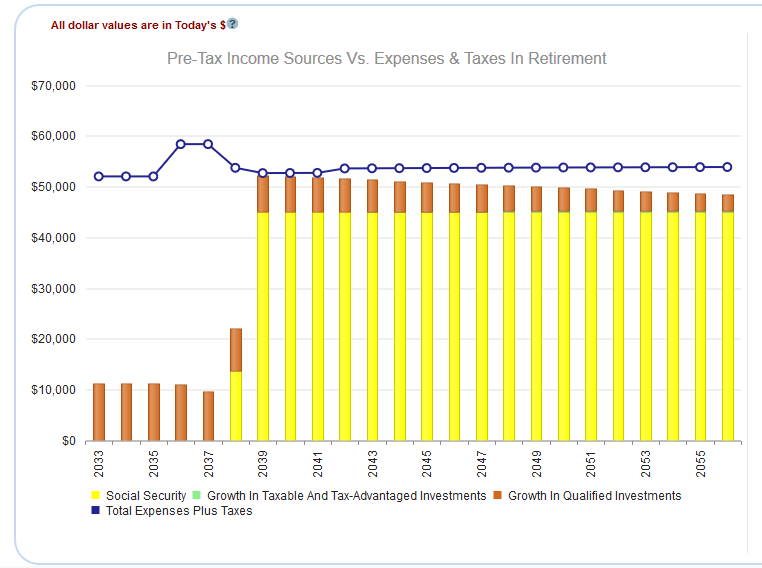
The gap grows worse over time, which is no surprise since their treasury income barely covers inflation. So what happens if we move half of their money into the dividend payers that have a long history of never cutting their dividends? I’m talking about companies such as Procter & Gamble (PG), Exxon (XOM), and Johnson & Johnson (JNJ).
I moved half of their money into a portfolio of our favorite dividend payers and found the following:
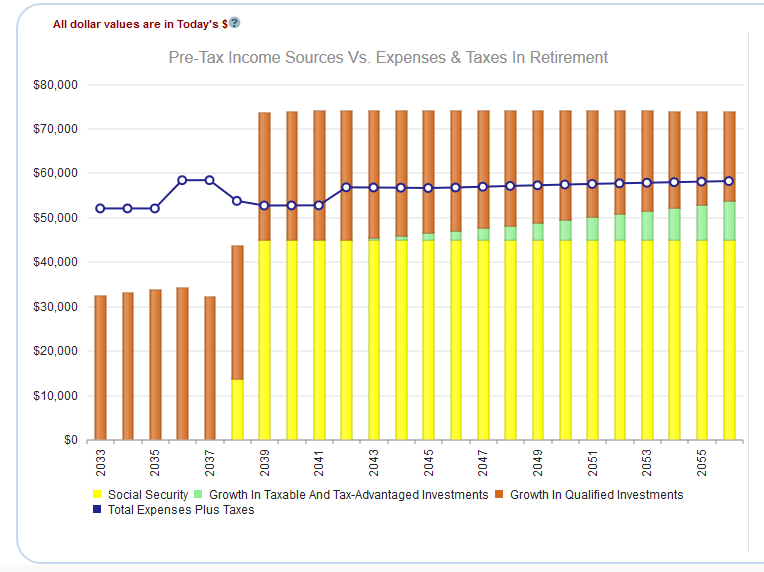
Once Social Security starts for this couple, retirement income now covers expenses in every single year. This means no dipping into investment principal, and therefore no chance of running out of money in retirement.
The Risks
Of course, investing in more stocks can be riskier than being solely invested in treasury bonds. But the real risk for most people is running out of money in retirement due to no having enough after-tax income. Also, because of the dividend payments and growth of these dividends over time, the stock price of the best dividend payers becomes less and less important over time as dividends begin to become the majority of their total return.
This is an important point because as long as these companies do not cut their dividends (and hopefully keep increasing them) the stock price becomes nearly irrelevant. This too will help retirees sleep better at night knowing that the income from their dividend payers is all they need.


Comments
Log in or sign up to join the conversation.