

The US Fed is supposed to manage its monetary policy so that the economy will achieve both full employment and stable prices, thought to be consistent with a 2% annual rate of price increase.
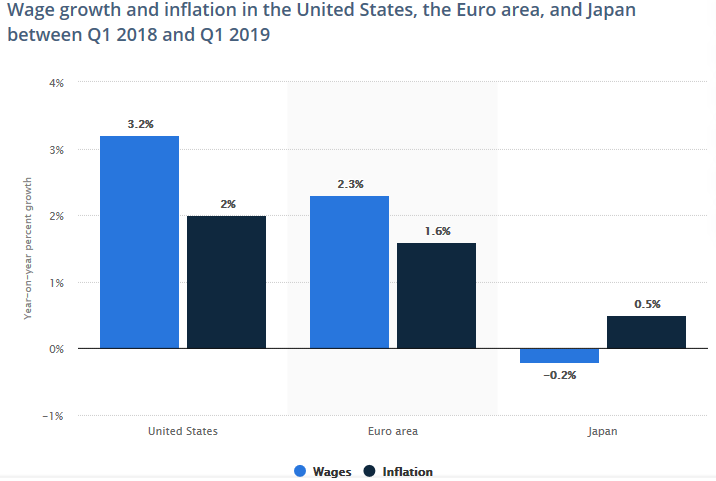
The US job market is currently extremely strong, with the recent unemployment rate as low as 3.5% in September. Nonetheless, wage settlements in the US continue to be weak and price increases are certainly below the Fed’s 2% target.
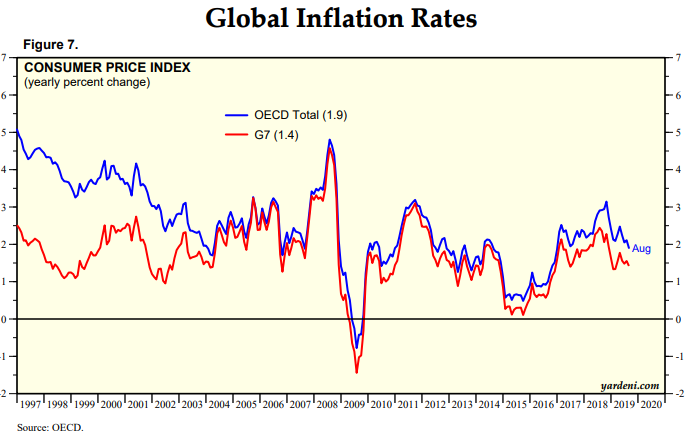
In the US some Fed officials have expressed the concern that persistently low inflation may be becoming a more permanent phenomenon, which in effect could hamstring the Fed’s room to cut interest rates next time the American economy enters a recession.
Indeed, the inflation conundrum is fueling what seems to be an intellectual rift at the interest rate-setting Federal Open Market Committee.
The Fed’s chairman, Jerome H. Powell, has dismissed the weakness in price increases, recently attributing it to “transient” factors that would probably not last. Nonetheless, in a recent shift from this earlier observation, Fed Chairman Powell indicated that too-low inflation could persist for a while — and undercut the U.S. economy. Powell's low inflation concern is a key reason why the Fed has up until recently been so aggressive in cutting short-term interest rates.
The Chairman's newly expressed worries about chronically low inflation reflect another sea change at the Fed: Powell as other officials seem to have also jettisoned a long-standing economic rule of thumb that a long streak of low unemployment will inevitably raise inflation too high.
(Click on image to enlarge)
(Click on image to enlarge)


Comments
Log in or sign up to join the conversation.