

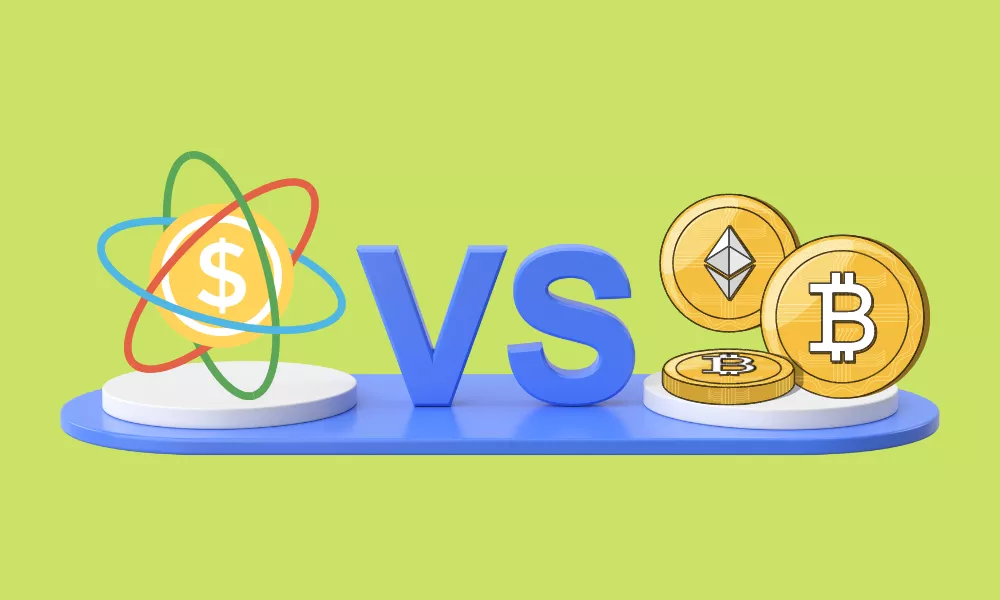
Globally, digital transformation is transforming traditional wallets into digital wallets. A digital wallet contains both digital currency and cryptocurrency utilizing blockchain technology. Digital currency and cryptocurrency may be confusing to newcomers.
In a digital wallet, these two currencies are different. Digital currency is an electronic version of currency bills and coins stored in a digital wallet. Digital currency can be converted to cash at any ATM or bank.
Intangible cash with open-source contactless transactions. Cryptocurrency is a volatile, encrypted digital currency. The firms that introduced cryptocurrency called Bitcoin, Ethereum, Dogecoin, and others. Its blockchain technology ensures smooth transactions.
Define Digital Currency
According to Wikipedia, a digital currency (also known as digital money, electronic money, or electronic currency) is a balance or record recorded in a distributed database on the Internet, an electronic computer database, digital files, or a stored-value card. Cryptocurrencies, virtual currencies, central bank digital currencies, and e-cash are digital currencies.
Digital currencies have comparable qualities as regular currencies but no physical presence. Because they're digital, they allow instant transactions. Virtual currencies, generally not issued by a government, are not legal cash and allow ownership transfer across borders.
The European Central Bank's 2015 paper "Virtual currency schemes - a further analysis" defines virtual currency as a digital representation of value not issued by a central bank, credit institution, or e-money institution. In some cases, it can replace the money. Digital currencies are used to buy products and services online.
Digital money is digital; it has no physical counterpart. It works like traditional fiat money. You can receive, transmit, and swap digital currency for another currency. It can be used to buy things and services online and has no territorial or governmental boundaries.
As we move toward a paperless society, some suggest internet banking and retail money should be considered digital currency.
Defined Cryptocurrencies
Wikipedia lists these cryptocurrencies: A cryptocurrency is a digital asset meant to function as a means of exchange. Individual coin ownership records are held in a computerized database ledger that uses strong encryption to secure transaction records, regulate the creation of further coins, and verify coin ownership transfers. It's not issued by a central authority and has no physical form.
Cryptocurrencies are decentralized, unlike centralized digital currencies and major banks. When minted, generated before issuance, or issued by a single issuer, a cryptocurrency is centralized. When decentralized control is employed, each cryptocurrency uses blockchain technology. Blockchain is a financial transaction database.
Bitcoin, the first decentralized cryptocurrency, was released as open-source software in 2009. Since bitcoin, several cryptocurrencies have emerged.
Cryptocurrencies are algorithm-driven currencies used as tokens in specific online communities and backed by particular technology, assets, or projects. Most often, they're used to pay someone directly, but they're also used to buy goods and services.
Encryption makes cryptocurrency secure, reliable, and trustworthy. Cryptography is decoding codes. Math is at the core of this blend of fields.Cryptocurrencies rely on blockchain and a decentralized ledger, meaning no single person or authority controls network operations. Pure decentralization!
Digital vs. cryptocurrency currency
Like digital currency, cryptocurrency is two-fold:
Cryptocurrency is a fully digital currency with no tangible assets stored in a blockchain database. This is the standard definition of cryptocurrency. Bitcoin fits.
Cryptocurrency is a virtual currency with no established cryptographic asset. This isn't normal usage.
Second, any digital security can be a cryptocurrency. This isn't how most people use the term.
Cryptocurrency can be any currency under this definition. Just because your bank utilizes encryption to secure your assets doesn't constitute cryptocurrency.
Digital currencies vs. cryptocurrencies main reason:
Encryption A digital currency differs from cryptocurrency in a digital wallet. Digital currency isn't encrypted, but cryptocurrency is. To utilize digital currency, you must open an unsecured account; your cash can be stolen at any time. To safeguard Bitcoins and Dogecoins from hacks, open an account in a cryptocurrency forum with a cybersecurity system.
Current Rate
The current rate of digital currency is stable and easy to handle. Before starting a business, do some research. Cryptocurrency markets are turbulent. It comprises dangers that haven't been carefully evaluated before any major investment or contract. During a transaction, the price of cryptocurrency may fluctuate.
Transparency
There is some transparency with digital currency. Digital currency receivers and senders only get transaction details like amount, bank, time, and date. Transparency is cryptocurrency's most crucial attribute. Blockchain technology allows parties to discuss past and present transactions. No one can hear dealers' private conversations.
Authority
In digital currency, the Reserve Bank regulates various countries' financial systems. Banks may monitor all wallet transactions, whether digital or traditional. In cryptocurrency, there's no third-party authority over investors.
Fees
Digital currency transactions incur high costs. Cryptocurrencies don't have transaction fees. Blockchain technology reduces expenses and removes third-party fees. Cryptocurrency helps investors with significant asset deals.
Digital currency and cryptocurrency may seem interchangeable. Not true. Digital currency is internet currency.
Cryptocurrency is currency kept as a blockchain database record. This distinction has tax implications.
IRS taxes digital currency as money and income. IRS taxes cryptocurrency and other digital assets as property.
Comments
Log in or sign up to join the conversation.