

Introduction
The rapid transformation of global supply chains, rising sustainability expectations, and increasing regulatory pressure for product transparency are accelerating the adoption of digital product passport (DPP) software solutions worldwide. Businesses across industries are increasingly seeking advanced technologies that enable complete visibility into a product’s lifecycle, from raw material sourcing and manufacturing to distribution, usage, recycling, and disposal.
According to TechSci Research report, “Digital Product Passport Software Market Size - Industry Share, Trends, Competition Forecast & Opportunities, 2021-2031F”. The Global Digital Product Passport Software Market will grow from USD 601.75 Million in 2025 to USD 1822.12 Million by 2031 at a 20.28% CAGR.
Digital Product Passport software acts as a centralized digital identity for products, containing critical information related to materials, environmental impact, ownership history, certifications, and lifecycle performance. As industries move toward circular economy models, these solutions are becoming essential tools for improving transparency, reducing waste, combating counterfeiting, and enhancing consumer trust.
The integration of advanced technologies such as blockchain, artificial intelligence (AI), Internet of Things (IoT), and cloud computing is further strengthening the capabilities of digital product passport platforms, enabling real-time tracking, secure data sharing, and intelligent lifecycle management.
Industry Key Highlights
The Global Digital Product Passport Software Market is expected to grow from USD 601.75 million in 2025 to USD 1,822.12 million by 2031, achieving a 20.28% CAGR.
Increasing sustainability regulations and demand for transparent supply chains are major factors accelerating market expansion.
Blockchain technology is emerging as a key enabler by improving data security, authenticity, and product traceability.
The on-premises deployment segment currently dominates the market due to strong demand for enhanced data control, customization, and compliance.
The Asia Pacific region is witnessing the fastest growth due to expanding manufacturing activities, digital transformation initiatives, and sustainability-focused regulations.
Industries including automotive, electronics, healthcare, chemicals, logistics, and retail are increasingly adopting DPP solutions.
Integration of AI and IoT technologies is enhancing real-time monitoring, predictive analytics, and automated decision-making capabilities.
Digital product passports are becoming increasingly important for supporting circular economy initiatives and responsible consumption models.
Request For Sample Copy of Report For More Detailed Market insight: https://www.techsciresearch.com/sample-report.aspx?cid=24259#requestform
Market Overview
The Digital Product Passport Software Market is evolving as organizations worldwide prioritize transparency, sustainability, and responsible resource management. A digital product passport provides detailed information about a product’s complete lifecycle, allowing manufacturers, regulators, suppliers, retailers, and consumers to access verified product data.
Growing concerns regarding environmental impact, ethical sourcing, and resource efficiency are encouraging companies to adopt digital solutions that provide greater visibility across complex global supply chains. Industries with highly regulated environments, such as pharmaceuticals, healthcare, automotive, and electronics, are among the early adopters of digital product passport technologies.
The increasing complexity of international supply networks has created challenges related to product authentication, compliance management, and sustainability reporting. Digital product passport software addresses these challenges by creating a trusted digital record that tracks product information throughout its lifecycle.
Blockchain technology has emerged as one of the most influential developments within this market. Unlike traditional centralized databases, blockchain provides a decentralized and tamper-resistant system where every product-related transaction or modification can be securely recorded and verified.
This capability helps organizations prevent data manipulation, improve trust among supply chain partners, and provide consumers with reliable information about product origin, materials, and sustainability performance.
Furthermore, governments and regulatory organizations are increasingly introducing policies requiring businesses to improve product traceability and environmental accountability. These initiatives are expected to create strong growth opportunities for digital product passport software providers over the coming years.
Key Drivers
Rising Demand for Supply Chain Transparency
Modern supply chains involve multiple stakeholders across different regions, making it challenging to maintain accurate product information. Businesses are adopting digital product passport software to improve visibility across sourcing, manufacturing, logistics, and distribution processes.
By maintaining a complete digital record of products, organizations can quickly identify inefficiencies, verify authenticity, and improve supply chain decision-making.
Growing Sustainability and Circular Economy Initiatives
Environmental sustainability has become a strategic priority for companies across industries. Consumers and regulatory bodies increasingly demand information about product materials, carbon footprint, recyclability, and ethical sourcing practices.
Digital product passports enable companies to provide measurable sustainability data, supporting circular economy models where products can be reused, refurbished, recycled, or responsibly disposed of.
Increasing Regulatory Requirements
Governments worldwide are introducing stricter regulations related to environmental responsibility, product safety, and supply chain accountability. Companies are required to maintain accurate product documentation and demonstrate compliance with sustainability standards.
Digital product passport software helps organizations meet these requirements by automating data collection, reporting, and verification processes.
Adoption of Blockchain Technology
Blockchain is becoming a major growth driver due to its ability to provide secure, transparent, and immutable product records. Every stage of a product’s lifecycle can be documented and verified through blockchain networks, reducing fraud risks and improving trust.
Industries such as luxury goods, pharmaceuticals, and electronics benefit significantly from blockchain-based digital passports because they require strong authentication and anti-counterfeiting mechanisms.
Integration of AI and IoT Technologies
The combination of digital product passports with AI and IoT technologies is creating new opportunities for intelligent product management. IoT sensors can collect real-time information about product conditions, while AI algorithms analyze this data to generate valuable insights.
This integration enables predictive maintenance, improved inventory management, and better lifecycle optimization.
Emerging Trends
Blockchain-Powered Product Authentication
Blockchain adoption is one of the most important trends shaping the future of digital product passport solutions. Companies are increasingly using blockchain networks to ensure that product information remains accurate, secure, and traceable.
Smart contracts are also gaining attention because they can automate business processes such as payments, compliance verification, and supply chain transactions without requiring intermediaries.
Growing Role of Artificial Intelligence
AI-powered analytics are enhancing digital product passport platforms by transforming large amounts of lifecycle data into actionable insights. AI can identify patterns, predict product performance, optimize supply chains, and support sustainability reporting.
Expansion of IoT-Based Tracking
IoT-enabled digital product passports allow organizations to monitor products in real time. Sensors embedded within products can collect information regarding location, usage conditions, temperature, and maintenance requirements.
This trend is particularly valuable for industries such as healthcare, automotive, logistics, and industrial equipment.
Development of Global Interoperability Standards
As digital product passports become more widely adopted, companies are focusing on developing common standards that allow seamless data exchange between different platforms, industries, and regions.
Interoperability will play a crucial role in enabling global supply chain transparency.
Increasing Consumer Participation
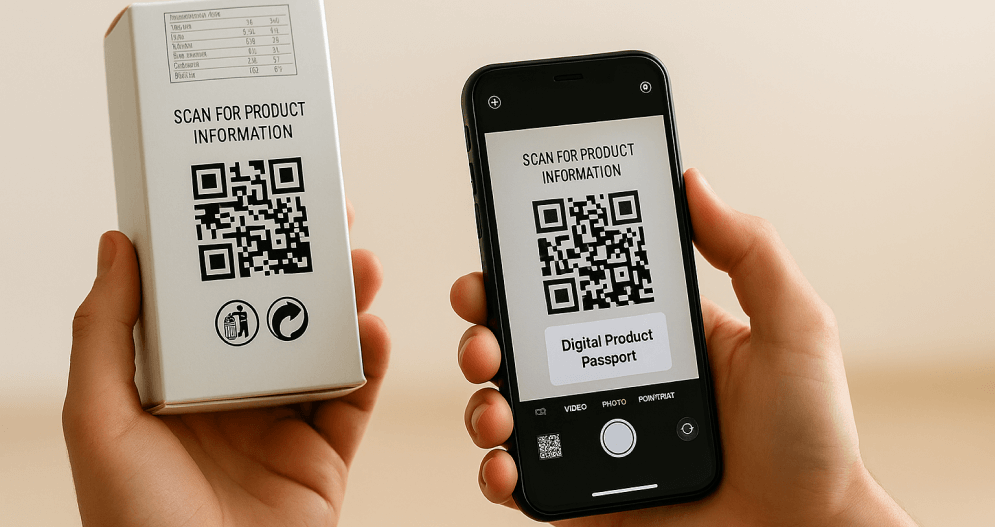
Consumers are becoming more interested in understanding the origin and environmental impact of the products they purchase. Digital product passports allow customers to access verified information through digital interfaces, QR codes, and mobile applications.
Real-World Use Cases
Automotive Industry
Automotive manufacturers are using digital product passports to track vehicle components, battery materials, and sustainability performance. These solutions help companies manage recycling processes, monitor carbon emissions, and comply with environmental regulations.
Electronics Sector
Electronics companies are adopting DPP solutions to improve transparency around raw materials such as metals and minerals. Digital passports help verify responsible sourcing practices and support electronic waste management.
Healthcare and Pharmaceuticals
In healthcare, digital product passports improve product authenticity, safety monitoring, and regulatory compliance. Pharmaceutical companies can track medicines throughout distribution channels, reducing counterfeit risks.
Luxury Goods Market
Luxury brands use digital product passports to verify product authenticity and provide customers with information about craftsmanship, materials, and ownership history.
Logistics and Supply Chain Management
Logistics providers benefit from digital product passports by improving shipment visibility, reducing documentation errors, and enabling better coordination between supply chain partners.
Competitive Analysis
Billion Group Limited
DNV AS
iPoint-systems GmbH
LyondellBasell Industries N.V.
Kezzler AS.
Narravero GmbH
Qliktag Software Inc.
Spherity GmbH
Scantrust S.A.
Optel Group
Customers can also request for 10% free customization on this report.
Future Outlook
The future of the Digital Product Passport Software Market appears highly promising as businesses continue transitioning toward transparent, sustainable, and digitally connected supply chains.
The increasing adoption of sustainability frameworks, environmental regulations, and circular economy practices will continue driving demand for digital product passport solutions. Organizations are expected to increasingly rely on these platforms to demonstrate environmental responsibility, improve operational efficiency, and strengthen customer confidence.
Asia Pacific is expected to remain one of the fastest-growing markets due to its expanding manufacturing ecosystem, rapid digital transformation, and increasing government initiatives focused on sustainability. Countries such as China, Japan, and India are actively adopting technologies that enable better lifecycle tracking and supply chain visibility.
Future growth opportunities will emerge from combining digital product passports with blockchain, AI, IoT, and advanced analytics. Companies that successfully develop scalable, interoperable, and secure solutions will gain significant advantages in this evolving market.
10 Benefits of This Research Report
Provides detailed insights into the current and future growth potential of the Digital Product Passport Software Market.
Helps businesses understand key market drivers, challenges, opportunities, and emerging trends.
Provides accurate market size forecasts, including growth from USD 601.75 million in 2025 to USD 1,822.12 million by 2031.
Offers comprehensive analysis of deployment models, including cloud-based and on-premises solutions.
Helps investors identify promising growth opportunities across industries and regions.
Provides insights into competitive strategies adopted by leading market players.
Supports decision-making through detailed industry segmentation analysis.
Highlights the impact of emerging technologies such as blockchain, AI, and IoT.
Enables companies to understand changing regulatory requirements related to sustainability and traceability.
Assists businesses in developing effective market entry, expansion, and investment strategies.
Conclusion
The Global Digital Product Passport Software Market is entering a period of accelerated growth as industries worldwide embrace transparency, sustainability, and digital transformation. With the market projected to reach USD 1,822.12 million by 2031, digital product passports are becoming essential tools for managing product lifecycle information and building trusted supply chains.
Blockchain technology, AI, IoT integration, and regulatory developments are reshaping the way organizations track, verify, and communicate product information. Businesses across automotive, electronics, healthcare, retail, and logistics sectors are leveraging these solutions to improve efficiency, strengthen compliance, and meet growing sustainability expectations.
As global industries continue moving toward circular economy models, digital product passport software will play a crucial role in creating more responsible, transparent, and digitally connected product ecosystems. Companies investing in innovative and interoperable solutions will be well-positioned to capture emerging opportunities in this rapidly expanding market.
Contact US:
Techsci Research LLC
420 Lexington Avenue, Suite 300,
New York, United States- 10170
Tel: +13322586602
Email: [email protected]
Web: https://www.techsciresearch.com/
Comments
Log in or sign up to join the conversation.