

Populist anger has reached a fever pitch around the globe. The U.K.'s decision to leave the EU and the U.S. election of Donald Trump were in my opinion, votes against the establishment and policies set by President Obama, Angela Merkel, global central bankers, et al. President Obama's recent endorsement of former Italian Prime Minister Matteo Renzi practically sealed the "No" vote against his proposed structural reforms.
The Situation
Central bankers around the world have spent trillions in a bond buying binge to lower interest rates. The logic went that if trillions of monetary stimulus actually spurred global economies then they would have been deemed geniuses. If not, then they had cover; since all central bankers and world leaders were engaging in QE then the populace couldn't blame any one person. Meanwhile, the inflated asset prices driven by quantitative easing ("QE") inured to the benefit the investor class that represented a small segment of society.
The majority of those who didn't benefit bristled. The sentiment made sense to anyone who could think critically. However, the mainstream dismissed any criticism of the establishment as "populism."
President Obama Exhorted Britain To Remain In the EU
The UK's decision to have a June vote on whether to stay in the EU was emblematic of populist angst. In April President Obama made a direct plea to Britain to remain in the EU:
President Barack Obama made a bold intervention into the politics of Washington's closest ally on Friday, exhorting Britons to stay in the EU and warning that if they left they would be at "the back of the queue" for a U.S. trade deal.
Obama's plea to British voters ahead of a June referendum on membership of the European Union was welcomed by Prime Minister David Cameron and other supporters of the EU, but denounced by those campaigning to leave as meddling in British affairs ...
Rebutting criticism that he was interfering, Obama invoked the cherished "special relationship" between Washington and London.
Leaders of the "leave" movement were dismissive of President Obama. The British people were even more dismissive. They voted to leave the EU, shocking the world and global markets. British Prime Minister David Cameron stepped down. So-called "Brexit" left pundits wondering, "Who will be next to leave the EU?"
President Obama Seal Renzi's Fate
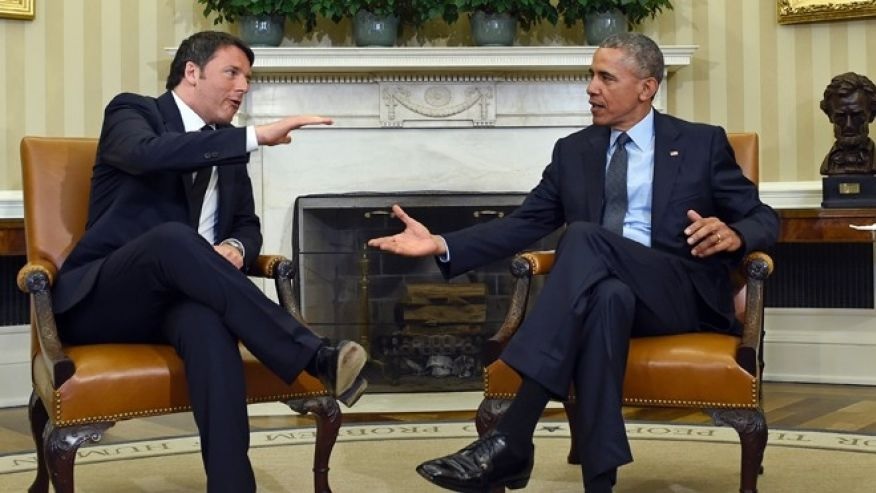
Brexit was a vote again David Cameron, Angela Merkel, Mario Draghi and their ilk. In resigning from office David Cameron connoted, "I get it ... the people don't want me." However, President Obama was still in denial. Just two months before a vote on Renzi's proposed changes to the constitution that could have reduced the size and power of the Italian Senate ("Renzi Referendum"), President Obama invited Renzi to the White House for a state dinner. Like Cameron before him, Renzi vowed to resign if the referendum was not passed.
At the state dinner President Obama praised Renzi and his policies, all but sealing Renzi's fate:
Both Renzi and Obama were keen to affirm the importance of the relationship between their countries before Obama leaves the White House for good, with both men expressing approval of their counterpart's policies during meetings on Tuesday.
"I think Matteo embodies a new generation of leadership, not just for Italy but also for Europe," said Obama.
Last week Italy voted "No" to the Renzi Referendum. In some respects the "No" vote could have been seen as a vote against the euro. The Renzi Referendum also wanted a restructuring of Italian banks which are reeling from non-performing loans. Many retail investors own shares and bonds of stocks in the Italian banking sector. A restructuring would have wiped out these individual investors, many of which voted on the Renzi Referendum.
Investors' preferred path would be a bailout of the banks, including Monte Paschi (BMDPY), which is highly-troubled; 21.5% of its loan portfolio is considered non-performing exposures ("NPE"). Such bailout(s) could put Italy at odds with the EU's anti-bailout rule requiring investors in troubled banks to eat losses before taxpayers do.
With Renzi gone Italy's main political parties are now in the process of forming a new government. The next elections are not scheduled to take place until 2018. In the meantime, the new government must rescue Monte Paschi -- and potentially other failing banks -- and beat back the Five Star Movement, an opposition party that wants immediate elections and an exit from the euro. As Brexit caused turbulence in the financial markets, the goings on in Italy could be the next black swan.



Comments
Log in or sign up to join the conversation.