

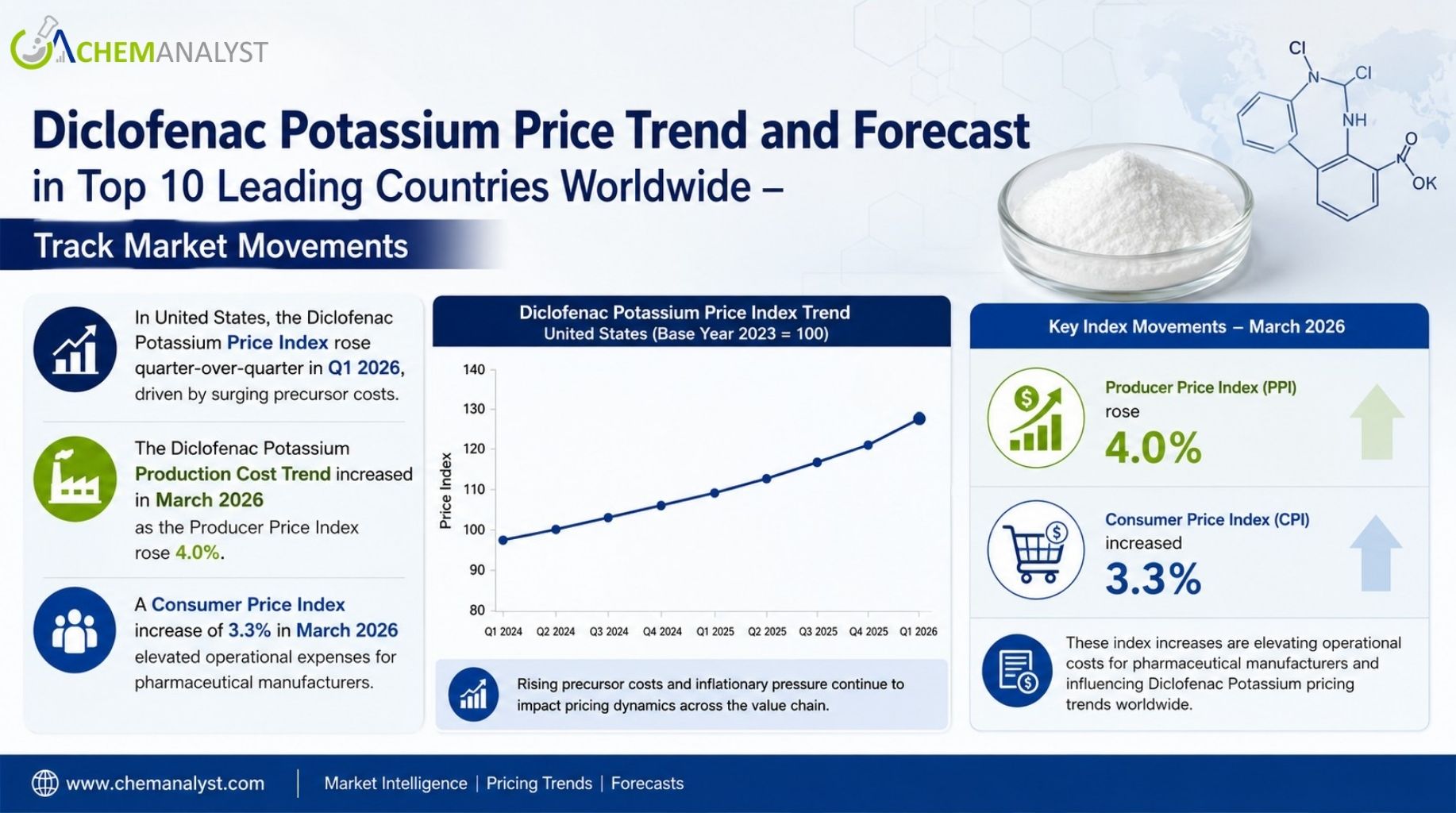
The global Diclofenac Potassium Price trend in Q1 2026 reflected mixed regional dynamics as rising production costs, inflationary pressures, and shifting pharmaceutical demand patterns influenced market behavior across North America, Europe, and Asia-Pacific. While the United States and China recorded quarter-over-quarter price increases due to surging feedstock and precursor costs, Germany witnessed declining prices amid weak pharmaceutical consumption and lower producer prices.
According to ChemAnalyst Diclofenac Potassium Price: - https://www.chemanalyst.com/Pricing-data/diclofenac-potassium-2293
Diclofenac Potassium, widely used as a nonsteroidal anti-inflammatory drug (NSAID), remains a critical pharmaceutical ingredient for pain management and anti-inflammatory formulations. As healthcare demand continues to evolve globally, manufacturers and procurement teams are closely monitoring the Diclofenac Potassium Price Forecast to manage supply chain risks and optimize sourcing strategies.
North America Diclofenac Potassium Price Trend
United States Market Analysis
In the United States, the Diclofenac Potassium Price Index increased quarter-over-quarter during Q1 2026. The market experienced upward momentum primarily because of rising precursor and raw material costs, which elevated overall manufacturing expenses for pharmaceutical producers.
The Diclofenac Potassium Production Cost Trend strengthened significantly in March 2026 as the Producer Price Index (PPI) rose by 4.0%. This sharp increase in industrial input costs impacted chemical intermediates, solvents, packaging materials, and transportation expenses associated with pharmaceutical manufacturing.
Additionally, the Consumer Price Index (CPI) increased by 3.3% in March 2026, adding further operational pressure on pharmaceutical companies. Rising labor expenses, energy costs, warehousing fees, and logistics expenditures collectively contributed to higher Diclofenac Potassium pricing across the U.S. market.
Key Drivers Behind U.S. Price Growth
Several factors contributed to the upward Diclofenac Potassium Price Trend in North America:
Rising precursor chemical costs
Elevated transportation and freight expenses
Inflation-driven operational cost increases
Strong pharmaceutical procurement activity
Increased manufacturing overheads
Market participants also observed tightening supply conditions for pharmaceutical-grade intermediates, which further supported bullish pricing sentiment during the quarter.
U.S. Pharmaceutical Demand Outlook
Demand for Diclofenac Potassium remained stable in the United States due to consistent prescription requirements in pain management therapies and anti-inflammatory medications. The growing aging population and rising cases of chronic musculoskeletal disorders supported pharmaceutical consumption throughout Q1 2026.
Hospitals, healthcare distributors, and pharmaceutical formulators continued maintaining moderate procurement volumes to secure supply amid rising inflation and uncertain raw material availability.
Europe Diclofenac Potassium Price Analysis
Germany Market Overview
Unlike the U.S. market, Germany experienced a decline in the Diclofenac Potassium Price Index during Q1 2026. Weak pharmaceutical demand and softer industrial activity created downward pricing pressure across the European pharmaceutical ingredients market.
The Diclofenac Potassium Production Cost Trend declined in Germany as producer prices fell by 0.2% in March 2026. Lower industrial manufacturing costs reduced pricing support for pharmaceutical ingredient suppliers and increased competitive pressure among regional manufacturers.
Despite the reduction in producer prices, inflation in Germany rose by 2.7% during March 2026. Higher inflation levels negatively impacted consumer purchasing power and healthcare spending patterns, ultimately weakening the Diclofenac Potassium Demand Outlook in the region.
Read the LinkedIn Article: - https://www.linkedin.com/pulse/diclofenac-potassium-market-price-trends-2026-supply-chain-singh-aazzc/
Factors Affecting Germany’s Diclofenac Potassium Market
The decline in Diclofenac Potassium prices in Germany was influenced by several market conditions:
Weak pharmaceutical demand
Reduced industrial producer prices
Slower healthcare procurement activity
Inflationary pressure on consumers
Inventory adjustments among distributors
European pharmaceutical companies also adopted cautious procurement strategies during the quarter due to uncertain economic conditions and fluctuating healthcare budgets.
European Market Sentiment
The broader European market reflected relatively subdued sentiment in Q1 2026. Pharmaceutical distributors prioritized inventory optimization and cost management amid weakening downstream demand. Competitive pricing among suppliers intensified as manufacturers sought to maintain market share in a softer demand environment.
Additionally, slower economic activity across several European economies reduced industrial consumption and delayed procurement cycles, contributing to bearish market conditions for Diclofenac Potassium.
APAC Diclofenac Potassium Price Trend
China Market Analysis
China witnessed a quarter-over-quarter increase in the Diclofenac Potassium Price Index during Q1 2026, supported by higher upstream feedstock costs and increasing manufacturing expenses.
The Diclofenac Potassium Production Cost Trend rose as producer prices increased by 0.5% year-over-year in March 2026. Although the increase was moderate compared to North America, it still created upward pressure on pharmaceutical manufacturing costs across China’s chemical and pharmaceutical sectors.
Consumer inflation in China rose by 1.0% year-over-year in March 2026, while retail sales growth slowed to 1.7% year-over-year. The slower pace of retail growth indicated cautious consumer spending patterns, yet pharmaceutical demand remained relatively resilient due to ongoing healthcare requirements.
Key Drivers in China’s Market
Several factors supported higher Diclofenac Potassium prices in China:
Rising upstream feedstock costs
Increased energy and manufacturing expenses
Stable pharmaceutical export demand
Moderate producer price growth
Supply chain cost inflation
China’s role as a major pharmaceutical ingredient producer continued to influence global Diclofenac Potassium supply dynamics. Export-oriented manufacturers maintained steady production activity despite softer domestic retail growth.
APAC Pharmaceutical Industry Trends
The Asia-Pacific pharmaceutical market continued expanding due to growing healthcare infrastructure investments, increasing generic drug production, and rising demand for anti-inflammatory medications. China remained one of the largest suppliers of pharmaceutical intermediates globally, reinforcing its strategic importance in the Diclofenac Potassium supply chain.
Manufacturers across APAC also faced increasing scrutiny regarding production efficiency, sustainability initiatives, and raw material sourcing diversification.
Global Diclofenac Potassium Production Cost Trend
The global Diclofenac Potassium Production Cost Trend in Q1 2026 reflected significant regional disparities shaped by inflation, energy costs, labor expenses, and industrial pricing patterns.
Major Cost Components Affecting Diclofenac Potassium Prices
Feedstock and Precursor Costs
Rising costs of chemical intermediates and pharmaceutical-grade precursors remained one of the primary drivers influencing Diclofenac Potassium prices globally.
Energy and Utility Expenses
Manufacturing facilities experienced elevated electricity, natural gas, and fuel costs, particularly in North America and parts of Asia.
Logistics and Transportation
Global freight volatility and higher shipping expenses continued affecting pharmaceutical ingredient trade flows.
Labor and Operational Costs
Inflationary wage pressures increased manufacturing overheads across multiple regions.
Regulatory Compliance Costs
Pharmaceutical manufacturers continued investing in compliance, quality assurance, and environmental standards, adding to operational expenditures.
Diclofenac Potassium Demand Outlook in 2026
The global Diclofenac Potassium Demand Outlook remains moderately positive for 2026 despite economic uncertainties and regional demand variations.
Several factors are expected to support long-term pharmaceutical demand:
Increasing prevalence of arthritis and chronic pain conditions
Growing aging population worldwide
Expansion of generic pharmaceutical manufacturing
Rising healthcare spending in emerging economies
Stable demand for anti-inflammatory medications
However, inflationary pressures, healthcare budget constraints, and fluctuating raw material prices may continue creating procurement challenges for pharmaceutical companies.
Diclofenac Potassium Price Forecast
Industry analysts expect the Diclofenac Potassium Price Forecast for the remainder of 2026 to remain influenced by feedstock cost volatility, inflation trends, and pharmaceutical demand recovery patterns.
Expected Market Trends
North America
Prices may remain elevated if precursor costs and inflationary pressures continue rising. Stable healthcare demand is likely to support procurement activity throughout the year.
Europe
European prices could stabilize if pharmaceutical demand improves and inflationary conditions moderate. However, weaker industrial activity may continue limiting substantial price growth.
Asia-Pacific
China and broader APAC markets may witness moderate price increases due to feedstock inflation and expanding pharmaceutical production capacity.
Supply Chain Challenges Impacting Diclofenac Potassium Prices
Global pharmaceutical supply chains continue facing multiple operational risks that influence Diclofenac Potassium pricing:
Raw material supply disruptions
Shipping delays and freight cost volatility
Geopolitical trade uncertainties
Energy market fluctuations
Currency exchange rate instability
Pharmaceutical companies are increasingly diversifying sourcing strategies and investing in regional manufacturing capabilities to reduce dependency on single-source suppliers.
Market Opportunities for Pharmaceutical Manufacturers
Despite pricing volatility, the Diclofenac Potassium market presents several growth opportunities:
Expansion of Generic Drug Manufacturing
Rising generic drug demand across emerging economies supports long-term pharmaceutical ingredient consumption.
Increased Healthcare Investments
Governments worldwide continue expanding healthcare infrastructure and pharmaceutical accessibility programs.
Export Opportunities
Asia-Pacific manufacturers, particularly in China and India, may benefit from growing global pharmaceutical export demand.
Technological Advancements
Process optimization and manufacturing efficiency improvements can help reduce production costs and improve profitability.
Conclusion
The Diclofenac Potassium Price trend in Q1 2026 demonstrated clear regional contrasts shaped by inflation, feedstock costs, production economics, and pharmaceutical demand conditions.
The United States experienced price increases driven by rising precursor costs and inflationary operational pressures. Germany recorded declining prices amid weak pharmaceutical demand and softer producer pricing, while China saw moderate gains supported by higher feedstock expenses and stable pharmaceutical manufacturing activity.
Looking ahead, the Diclofenac Potassium Price Forecast will remain heavily dependent on global inflation trends, raw material availability, healthcare demand growth, and supply chain stability. Pharmaceutical manufacturers, distributors, and procurement professionals will continue monitoring these market indicators closely to navigate pricing volatility and secure competitive sourcing opportunities throughout 2026.
Contact US:
Email-Id: - [email protected]
Contact No: - +1 (332) 258-6602
Address: - 420 Lexington Avenue, Suite 300
New York, NY
United States, 10170
Comments
Log in or sign up to join the conversation.