

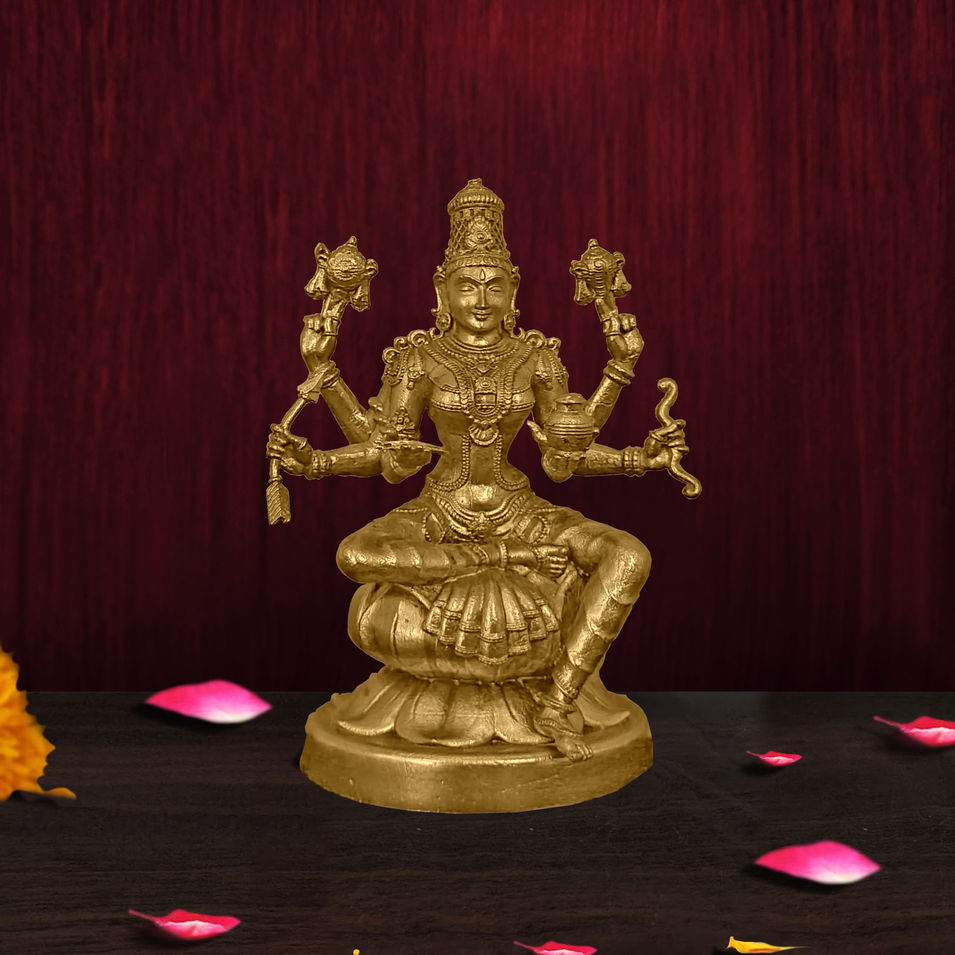
Dhana Lakshmi, a radiant brass idol collection favourite among devotees seeking prosperity, is one of the eight sacred forms of Goddess Lakshmi that together make up the Ashta Lakshmi - the eightfold embodiment of abundance in Hindu tradition. Where the goddess Lakshmi as a whole represents fortune in its many dimensions, Dhana Lakshmi is her form devoted specifically to monetary wealth and material prosperity, making her one of the most invoked deities during festivals of wealth and new beginnings.
Worshipped in homes, businesses and temples across India, Dhana Lakshmi is believed to bring financial stability, protect against poverty, and reward honest effort with lasting abundance. Her presence, whether in a temple shrine or a home pooja room, is considered an invitation for prosperity to enter and remain. Idol Brass brings this same devotional spirit into finely handcrafted brass sculptures, made to bring her blessing into everyday worship.
Who Is Dhana Lakshmi?
One of the Ashta Lakshmi
Dhana Lakshmi belongs to the Ashta Lakshmi, the group of eight forms through which Goddess Lakshmi expresses different kinds of abundance - including Dhanya Lakshmi (grain), Gaja Lakshmi (livestock and royal power), Santana Lakshmi (progeny), Vidya Lakshmi (knowledge), and others. Among these, Dhana Lakshmi is specifically associated with money, gold and material riches, making her the form most frequently invoked by households and business owners alike.
Consort of Vishnu, Part of the Tridevi
As with all her forms, Dhana Lakshmi is ultimately an aspect of Mahalakshmi, the divine consort of Lord Vishnu and one of the three great goddesses of the Tridevi, alongside Saraswati and Parvati. While Saraswati governs knowledge and Parvati governs power and devotion, Lakshmi - through forms like Dhana Lakshmi - governs the prosperity that sustains worldly life alongside spiritual pursuit.
Iconography and Symbolism of Dhana Lakshmi
The Four Arms and Their Meaning
Dhana Lakshmi is typically depicted with four arms, each carrying deep symbolic weight. Her upper two hands hold lotus flowers, representing purity and her divine, untouched origin. Her lower right hand is often shown in Abhaya Mudra, the gesture of protection and fearlessness, while her lower left hand holds a pot brimming with gold coins - the unmistakable emblem of the wealth she showers upon her devotees.
The Pot of Endless Gold
The overflowing pot, or Nidhi Kumbha, is the defining symbol of Dhana Lakshmi's iconography. Coins are often shown spilling continuously from the vessel, a visual reminder that true prosperity, once earned through righteous means, is meant to flow outward rather than be hoarded — supporting family, community and generosity alongside personal wealth.
Seated on the Sacred Lotus
Like most forms of Lakshmi, Dhana Lakshmi is portrayed seated or standing upon a fully bloomed lotus, a flower that rises untouched from muddy waters. This motif reflects the idea that true abundance, like the lotus, should remain untainted by greed even as it grows from the material world.
The Legend of Dhana Lakshmi and the Ashta Lakshmi
Born from the Churning of the Ocean
Dhana Lakshmi's origin, like that of Mahalakshmi herself, is tied to the great legend of the Samudra Manthan - the churning of the cosmic ocean by the Devas and Asuras in their shared quest for the nectar of immortality. As the ocean was churned, it yielded a series of treasures and divine beings, among them Goddess Lakshmi, seated on a lotus, radiant and resplendent.
The Eightfold Blessing Unfolds
As devotion to Lakshmi deepened over centuries, her single form came to be understood as containing multitudes - the Ashta Lakshmi concept emerged to honour the many ways her blessings touch human life. Dhana Lakshmi took shape as the aspect entrusted with material wealth, standing alongside her seven sisters, each addressing a different form of prosperity a devotee might seek.
A Goddess for Every Kind of Abundance
Together, the eight Lakshmis are invoked in the Ashtalakshmi Stotram, a hymn reciting each form's name and blessing in turn. This staged unfolding - from cosmic origin to eightfold expression - reflects a broader truth in Hindu thought: that prosperity is never one-dimensional, and Dhana Lakshmi's wealth is only complete alongside her sisters' gifts of knowledge, courage, and progeny.
Ashta Lakshmi Shrines and Temple Worship
Dedicated Ashta Lakshmi temples, where all eight forms including Dhana Lakshmi are enshrined together, can be found across India — most famously the Ashtalakshmi Temple in Chennai and similar shrines in Mumbai and Goa. In these temples, devotees move from shrine to shrine, offering prayers to each form in sequence, with Dhana Lakshmi's shrine typically drawing particular attention from those seeking financial relief or business success. Beyond dedicated Ashta Lakshmi temples, she is also invoked within larger Lakshmi and Vishnu temple complexes across South India.
Spiritual Significance of Dhana Lakshmi
Financial stability: Dhana Lakshmi is invoked to protect against poverty and financial hardship, and to bring steady, honest income.
Ethical prosperity: Her worship emphasizes wealth gained through righteous means, discouraging greed or dishonest accumulation.
Business and trade blessings: She is especially popular among traders, shopkeepers and business owners seeking growth and stability.
Festive worship: Dhana Lakshmi is central to Dhanteras and Diwali celebrations, and is invoked during Varalakshmi Vratham alongside her seven sister forms.
Why Is Dhana Lakshmi Different from Other Lakshmi Forms?
While all eight forms of Ashta Lakshmi flow from the same divine source, each addresses a distinct need:
Dhana Lakshmi vs. Dhanya Lakshmi: Dhana Lakshmi governs monetary and material wealth, while Dhanya Lakshmi presides over grain, harvest and agricultural abundance.
Dhana Lakshmi vs. Gaja Lakshmi: Gaja Lakshmi, flanked by elephants, symbolizes royal power and status, whereas Dhana Lakshmi's blessing is felt more directly in everyday financial life.
Dhana Lakshmi vs. Vidya Lakshmi: Vidya Lakshmi grants wisdom and learning, a form of abundance many traditions consider even more foundational than material riches, since knowledge often precedes prosperity.
A focused, everyday invocation: Unlike broader forms of Mahalakshmi worshipped for general fortune, Dhana Lakshmi is invoked with a specific, practical intention - steady income and freedom from financial want.
Conclusion
Dhana Lakshmi stands as one of Hindu tradition's clearest expressions of prosperity rightly earned and generously shared. From her origins in the churning of the cosmic ocean to her place among the eight Ashta Lakshmi forms, she embodies the belief that wealth, when pursued with honesty and devotion, is not merely a material gain but a spiritual blessing. Her pot of overflowing gold remains a timeless reminder that true abundance is meant to flow outward, nourishing not just the one who receives it, but all who share in its blessings.
Comments
Log in or sign up to join the conversation.