

Cloud-native delivery has moved into normal production work. The CNCF Annual Cloud Native Survey reported in January 2026 that 98% of surveyed groups had adopted cloud-native methods. It also found that 82% of container users ran Kubernetes in production, up from 66% in 2023. A DevOps model built for a smaller estate now needs a fresh review.
The old model still has value. Source control, automated builds, repeatable releases, and shared ownership remain sound practices. The change is the size of the system teams must manage. More services, cloud resources, policy checks, and AI-assisted code now pass through the release process.
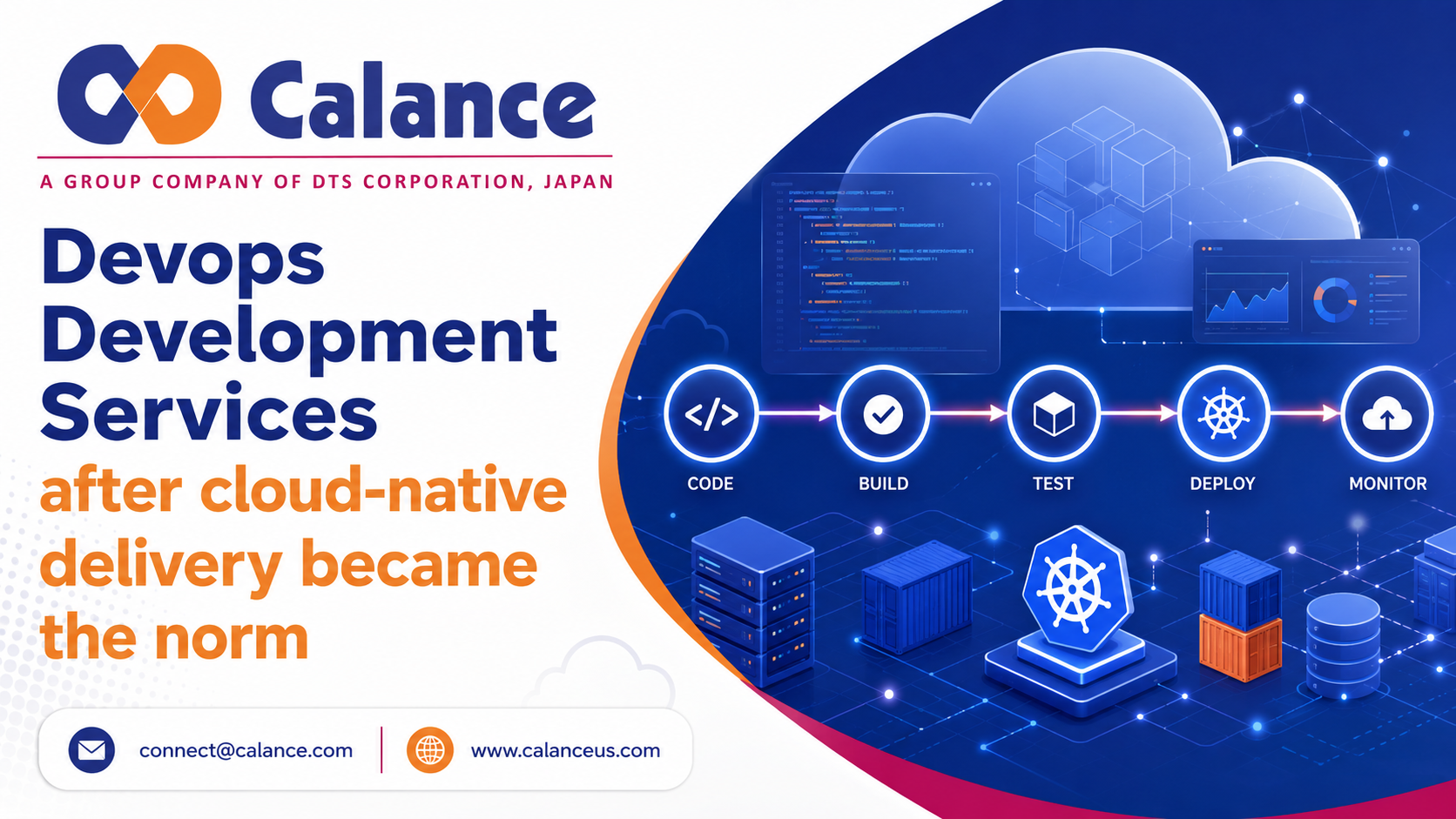
The earlier DevOps model centered on the delivery pipeline
Earlier DevOps work often began with 1 clear aim: reduce manual handoffs between development and operations. CI/CD made builds and releases repeatable. Infrastructure scripts also cut many setup errors. Yet the pipeline often had a narrow scope.
That scope can leave security gaps. The NIST Secure Software Development Framework says many software life cycle models don't cover software security in enough detail. NIST published SSDF Version 1.1 in February 2022 to help teams add secure practices to an existing life cycle. Pipeline automation, by itself, doesn't cover that work.
The system around the pipeline now matters just as much as the pipeline. Teams that connect releases with IT infrastructure and operations services can plan compute, networks, monitoring, and recovery with the release. This helps reduce gaps between what developers ship and what operations must run.
Cloud-native systems increased the operating load
Cloud-native use changed the amount of work around each release. The same CNCF survey found that 59% of groups said much or nearly all of their development and deployment was cloud native. A release can now change app code, container images, cloud settings, access rules, and service settings in 1 work cycle. That gives teams more places to test and observe.
AI adds another source of change. DORA's 2026 analysis of AI use in the software life cycle says 90% of technology professionals use AI at work and more than 80% believe it has raised their productivity. DORA also found that higher AI use was associated with higher delivery throughput and higher delivery instability. That is a link in the data, not proof that AI caused either result. It does show why output volume alone can't define success.
The new model changes ownership, cost, and risk
The current DevOps model puts more work around every release. Earlier teams often focused on app code, release scripts, and a defined CI/CD path. Today, the same release may also affect containers, cloud settings, security checks, access rules, and AI-assisted code. Responsibility has widened as well. Developers and operations teams still play key roles, but platform and security teams now have a larger part in release control. This changes how teams plan cost because cloud use, review effort, platform work, and incident response all affect the real expense of delivery.
The way teams measure success has changed with this wider scope. Deployment speed alone can't show whether the process is working well. Teams also need to track lead time, failed changes, recovery time, rework, and the effect on users. Risk has also moved beyond release errors and outages. Weak access controls, supply chain issues, incorrect cloud settings, and poor review of AI-assisted code can affect production. The new model therefore asks teams to judge delivery by both how quickly changes move and how well the service performs after release.
The new model puts more checks around a change. Some cost moves from emergency response into testing, review, platform work, and monitoring. Leaders should judge total delivery cost against service results. Tool spend alone gives a weak picture.
DevOps services need a stronger control loop
The new model should start with the current state. Devops Development Services should map pipelines, cloud setup, security checks, ownership, and service measures before new tools are added. Calance describes its DevOps Infinite work through assess, define, implement, and evolve stages. That order gives teams a clear path from current gaps to a planned target.
A Devops Services Company should also define who owns each control after release. This includes pipeline failures, cloud changes, access rules, alerts, and recovery actions. Clear ownership helps stop automation from becoming a chain of scripts that no team fully understands.
Small changes remain useful because they are easier to test and review. AI can increase code output, but DORA found that review work can rise with it. Teams should set change-size limits and require test evidence. Rework should also be tracked so faster code creation doesn't hide slower delivery.
Security now sits inside the delivery decision
Security should enter before production. CISA's guidance on choosing secure and verifiable technologies asks buyers and software makers to consider secure-by-design practices when they select and build technology. For DevOps teams, that pushes security checks into normal delivery work. It also gives buyers a reason to ask how those checks are proved.
Delivery work can then connect with Calance cybersecurity services where added security support is needed. Code review, vulnerability tests, access controls, logging, and incident response should have clear links to release work. The aim is to make security evidence visible before a change reaches users.
Measurement must balance flow with stability
A faster pipeline can still fail users if bad changes, rework, or recovery time rise. Teams should track lead time and deployment rate beside change failure rate, recovery time, production incidents, and rework. AI can also raise code volume without proving better delivery. Lines of code and accepted suggestions are weak outcome measures on their own.
User impact closes the loop. A release process should show whether a change improves service health, response time, defect rates, or task completion. This keeps DevOps tied to product results. It also gives leaders a reason to change the process when internal speed rises but user results do not.
Keep the foundations, change the controls, watch the evidence
Teams should keep version control, automated builds, small changes, and clear ownership because these practices still support reliable delivery. The controls around them must now cover cloud resources, security evidence, platform rules, AI-assisted work, and user impact. Teams should watch whether throughput rises with instability, rework, recovery time, or user harm. That check separates faster activity from better software delivery.
Frequently asked questions
What changed as cloud-native delivery became common?
DevOps now covers more than a basic build and release pipeline. Teams often manage containers, cloud resources, policy checks, and runtime signals in the same system. The core DevOps ideas remain useful, but their scope has grown.
Does every DevOps team need Kubernetes?
No. Kubernetes fits many container-based systems, but it adds operating work. Teams should choose it when workload needs and staffing support that choice. A simpler platform may suit a smaller app.
How should teams judge DevOps cost?
Teams should look at total delivery cost, not license cost alone. Cloud use, engineering time, review effort, outages, and recovery work can change the result. Cost should be read beside delivery speed and service quality.
Where should security enter the DevOps process?
Security should enter during design and remain present through release and operation. Teams need checks that produce evidence before production. They also need monitoring after release so new risks can be found.
Which metrics show whether DevOps is improving?
Use measures that cover flow and service health together. Lead time, deployment rate, change failure rate, recovery time, rework, and user impact can expose tradeoffs. The right set depends on the service and its business goal.
For more info Contact us or send mail at [email protected] to get a quote
Comments
Log in or sign up to join the conversation.