

Master CNC turning across various materials. Discover how to choose the right Deskar insert geometries, grades, and coatings for steel and aluminium.
Choosing the Right Deskar Inserts for CNC Turning Applications
Introduction
CNC turning operations really need precision, steadiness, and cutting tools with high performance so they can reach those accurate machining results. One of the big things that affects machining quality is the selection of inserts. Picking the right inserts can actually lift surface finish, lower downtime, extend tool life, and in general boost productivity. So it’s not surprising that quite a few manufacturers choose deskar inserts for industrial CNC machining uses.
Deskar inserts are common in modern production mainly because they bring durability, cutting efficiency, and dependable machining behavior. They work well for several turning tasks, and they also support high speed machining in areas like automotive, aerospace, precision engineering, and metal fabrication.
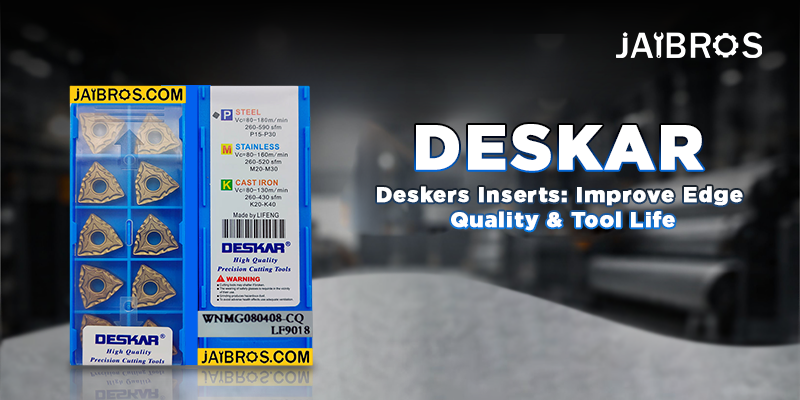
When machinists understand how to choose the right insert for CNC turning, they can fine-tune machining conditions better, and also improve overall production efficiency.
Why Insert Selection Matters in CNC Turning
The selection directly affects:
Cutting performance
Surface finish
Tool life
Chip control
Machining accuracy
Production speed
Using the wrong insert can lead to excessive wear, poor dimensional accuracy, machine vibration, and increased operational cost.
A properly selected deskar inserts solution helps manufacturers maintain consistent machining quality while improving productivity.
Understand the Workpiece Material
The first step in selecting inserts is identifying the material being machined.
Different materials require different insert grades and geometries.
Steel Machining
Steel machining generally requires inserts with strong wear resistance and good heat stability.
Stainless Steel Machining
Stainless steel generates higher heat and cutting pressure. Inserts designed for stainless applications provide better chip control and edge strength.
Cast Iron Machining
Cast iron requires inserts capable of handling abrasive cutting conditions.
Aluminum Machining
Aluminium machining requires sharper cutting edges for smoother finishing and reduced built-up edge formation.
Selecting suitable deskar inserts according to the material improves machining efficiency and tool life.
Choose the Correct Insert Geometry
Insert geometry plays a major role in cutting performance.
Positive Geometry Inserts
Positive geometry inserts reduce cutting force and are suitable for lighter machining operations.
Advantages include:
Better surface finish
Reduced cutting pressure
Lower machine load
Negative Geometry Inserts
Negative geometry inserts provide stronger cutting edges for heavy-duty machining.
These inserts are ideal for:
Rough turning
Interrupted cuts
High-feed machining
Proper insert geometry helps improve machining stability and cutting consistency.
Select the Right Insert Coating
Insert coatings improve wear resistance and thermal stability.
Common coating benefits include:
Reduced friction
Better heat resistance
Improved cutting speed capability
Longer operational life
A quality deskar insert option with advanced coating technology can significantly improve machining productivity.
Consider Cutting Speed and Feed Rate
Machining parameters greatly influence insert performance.
High-Speed Machining
High-speed turning requires inserts with excellent heat resistance and cutting stability.
Heavy Feed Operations
Heavy feed machining requires a strong insert geometry capable of handling high cutting pressure.
Improper feed rates and cutting speeds may cause:
Excessive wear
Edge chipping
Tool breakage
Poor surface finish
Optimized machining conditions improve insert life and production efficiency.
Importance of Chip Control
Chip control is essential in CNC turning operations.
Poor chip evacuation can cause:
Surface damage
Machine stoppage
Tool breakage
Increased heat generation
Modern deskar inserts are designed with advanced chip breaker geometries that improve chip flow and cutting stability during machining operations.
Types of Deskar Inserts for CNC Turning
Different insert types are available for specific machining applications.
Deskar Turning Inserts
These inserts are specially designed for external and internal turning operations.
They provide:
Better cutting precision
Improved surface finish
Excellent wear resistance
High-quality deskar turning inserts support efficient machining across multiple industrial applications.
Deskar Threading Inserts
Threading operations require inserts capable of maintaining dimensional accuracy and thread consistency.
Deskar threading inserts are commonly used for:
Metric threading
UNC threading
Internal threading
External threading
These inserts improve threading quality while reducing tool wear.
Deskar Milling Inserts
Although mainly used in milling applications, milling inserts are important in complete CNC machining operations.
Deskar milling inserts help manufacturers achieve:
Faster material removal
Better machining stability
Improved cutting efficiency
These inserts are widely used in industrial machining environments.
Deskar CNC Inserts
Modern deskar cnc inserts are designed for high-speed CNC machining and automated production systems.
Benefits include:
Better cutting consistency
Longer tool life
Higher production efficiency
Reduced downtime
These inserts support precision machining in demanding industrial environments.
Importance of CNC Tool Compatibility
Insert compatibility with the machine and holder is critical for stable machining.
The selected cnc tool setup should provide:
Proper insert positioning
Strong clamping stability
Reduced vibration
Accurate cutting alignment
Proper tooling setup improves machining precision and insert performance.
Tips for Maximizing Insert Life
To improve insert life and machining efficiency:
Use Proper Cutting Parameters
Correct speed and feed settings reduce excessive wear.
Maintain Coolant Flow
Coolant helps reduce cutting temperature and friction.
Replace Worn Inserts Early
Using excessively worn inserts may damage workpieces and machines.
Select Correct Insert Grade
Matching insert grade to workpiece material improves cutting stability.
A properly selected deskar inserts solution can significantly improve CNC turning productivity and operational performance.
Applications Across Industries
Deskar inserts are widely used in multiple industries.
Automotive Industry
Used for machining:
Shafts
Brake components
Engine parts
Aerospace Industry
Supports machining of:
Titanium alloys
Structural components
Precision parts
Oil and Gas Industry
Used for machining hard metals and drilling components.
Precision Engineering
Supports high-accuracy machining operations for industrial manufacturing.
Conclusion
Selecting the right inserts for CNC turning is essential for improving machining quality, reducing downtime, and increasing operational productivity. Factors such as workpiece material, insert geometry, coating, chip control, and machining parameters all influence insert performance. High-quality inserts provide better wear resistance, improved surface finish, and longer tool life in demanding machining environments.
Jaibros is a trusted supplier of CNC cutting tools and industrial machining solutions. The company offers premium inserts, tooling accessories, and precision machining products designed to support modern manufacturing industries with reliable quality and performance.
FAQs
1. Why is insert selection important in CNC turning?
Insert selection affects tool life, surface finish, cutting efficiency, and machining productivity.
2. What are deskar turning inserts used for?
Deskar turning inserts are used for external and internal turning operations in CNC machining.
3. How do insert coatings improve machining performance?
Insert coatings reduce friction, improve heat resistance, and increase wear resistance during cutting operations.
4. What industries use deskar cnc inserts?
Automotive, aerospace, oil and gas, and precision engineering industries commonly use deskar cnc inserts.
5. How can insert life be improved?
Insert life can be improved by using proper cutting parameters, maintaining coolant flow, and selecting the correct insert grade.
Comments
Log in or sign up to join the conversation.