

Introduction
According to TechSci Research report, “Global Delivery Robots Market – Industry Size, Share, Trends, Opportunity, and Forecast, 2021-2031F” The Global Delivery Robots Market will grow from USD 497.11 Million in 2025 to USD 2463.28 Million by 2031 at a 30.57% CAGR The remarkable growth reflects increasing investments in autonomous mobility, AI-powered logistics, and next-generation delivery infrastructure.
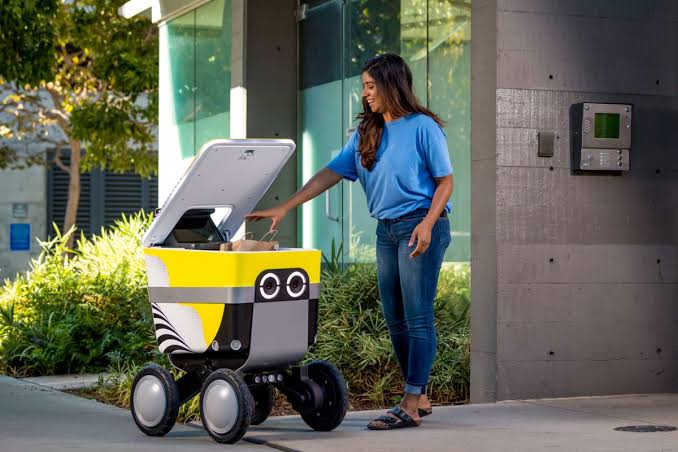
The global logistics industry is undergoing a major technological transformation as autonomous delivery robots redefine how goods are transported from warehouses and retail outlets to customers. Driven by advances in artificial intelligence (AI), robotics, cloud computing, computer vision, and autonomous navigation, delivery robots are becoming an integral part of modern supply chains. Businesses across e-commerce, food delivery, healthcare, retail, and logistics are increasingly deploying autonomous robots to improve delivery efficiency, reduce operational costs, and address the growing demand for fast, contactless delivery services.
Unlike conventional delivery methods, autonomous delivery robots can navigate sidewalks, campuses, warehouses, hospitals, and urban environments with minimal human intervention. Equipped with advanced sensors, cameras, LiDAR, GPS, and AI-powered navigation systems, these robots can safely avoid obstacles, identify optimal routes, and continuously adapt to changing surroundings. Their ability to operate around the clock makes them an attractive solution for organizations seeking greater operational efficiency while overcoming labor shortages and rising delivery costs.
The rapid growth of e-commerce has significantly accelerated market expansion, as consumers increasingly expect same-day and even same-hour deliveries. Retailers and logistics providers are investing heavily in autonomous delivery technologies to improve customer satisfaction and optimize last-mile delivery operations. In parallel, aerial delivery drones are opening new possibilities for transporting urgent supplies to remote locations, disaster zones, and healthcare facilities where traditional transportation methods may be inefficient.
Request For Sample Copy of Report For More Detailed Market insight: https://www.techsciresearch.com/sample-report.aspx?cid=3895#requestform
Industry Key Highlights
Global Delivery Robots Market valued at USD 497.11 Million in 2025.
Expected to reach USD 2,463.28 Million by 2031.
Forecast to grow at a CAGR of 30.57%.
The 10–50 kg load-carrying capacity segment dominates the market.
North America remains the leading regional market.
AI, computer vision, and machine learning are enhancing autonomous navigation.
E-commerce growth continues to drive last-mile delivery automation.
Healthcare organizations are increasingly adopting autonomous delivery solutions.
Robotics and cloud connectivity are improving fleet management capabilities.
Demand for contactless and sustainable delivery continues to accelerate.
Market Overview
Delivery robots have emerged as one of the fastest-growing segments within the autonomous mobility industry. These intelligent machines combine robotics, artificial intelligence, machine learning, cloud computing, and advanced sensing technologies to transport goods efficiently while minimizing human involvement.
Ground-based delivery robots are commonly used for short-distance deliveries in residential neighborhoods, business parks, universities, shopping centers, and healthcare campuses. They navigate using high-definition mapping, computer vision, GPS, radar, cameras, ultrasonic sensors, and LiDAR technologies, allowing safe movement through complex environments.
Aerial delivery drones complement ground robots by enabling rapid transportation across geographically challenging areas. Their ability to bypass traffic congestion makes them particularly valuable for emergency medical deliveries, disaster response, and remote community logistics.
As businesses increasingly embrace digital transformation, delivery robots are becoming strategic assets that improve supply chain efficiency, reduce operating expenses, minimize delivery delays, and enhance customer experiences across multiple industries.
Key Drivers
Rapid Growth of E-commerce
One of the strongest factors fueling market expansion is the continued growth of global e-commerce.
Consumers increasingly expect rapid, convenient, and affordable delivery services when purchasing products online. Retailers and logistics companies are therefore investing in autonomous delivery robots to optimize last-mile logistics, improve delivery accuracy, and reduce transportation costs.
Autonomous delivery also helps organizations manage seasonal demand fluctuations without proportionally increasing labor requirements.
Rising Demand for Contactless Delivery
Consumer preference for contactless services has significantly increased in recent years.
Autonomous delivery robots enable businesses to deliver groceries, food, medicines, and retail products without direct physical interaction, improving convenience while enhancing health and safety.
Healthcare providers, restaurants, supermarkets, and pharmacies have particularly benefited from autonomous delivery capabilities.
Advancements in Artificial Intelligence
Artificial intelligence is transforming delivery robot capabilities.
Modern robots utilize AI-powered navigation systems capable of recognizing pedestrians, identifying obstacles, optimizing travel routes, and making intelligent operational decisions in real time.
Machine learning algorithms continuously improve navigation performance by learning from previous deliveries and operational experiences.
Labor Shortages and Rising Delivery Costs
Many logistics providers face increasing labor shortages and higher transportation expenses.
Delivery robots help address these challenges by automating repetitive delivery tasks, improving workforce productivity, and lowering long-term operating costs.
Organizations can reallocate human employees toward higher-value activities while robots handle routine transportation functions.
Smart City Development
Governments worldwide continue investing in smart city initiatives that encourage adoption of connected mobility technologies.
Improved digital infrastructure, high-speed connectivity, intelligent traffic management systems, and supportive urban planning create favorable environments for deploying autonomous delivery robots at scale.
Emerging Trends
Several emerging technologies are accelerating innovation across the Delivery Robots Market.
Artificial intelligence and machine learning continue improving navigation accuracy, route optimization, predictive obstacle avoidance, and autonomous decision-making.
Cloud robotics enables centralized fleet management, allowing operators to monitor robot performance, deploy software updates remotely, and analyze operational data in real time.
Computer vision systems equipped with advanced cameras and deep learning algorithms enable robots to recognize road signs, pedestrians, delivery locations, and changing environmental conditions.
LiDAR, radar, ultrasonic sensors, and GPS technologies continue improving localization accuracy while supporting safe operation in crowded urban environments.
Battery technology advancements are extending operating ranges, reducing charging frequency, and improving overall delivery efficiency.
Autonomous fleet management platforms are increasingly integrating predictive analytics that optimize robot scheduling, maintenance planning, energy consumption, and delivery performance.
Another notable trend is the growing deployment of delivery robots in controlled environments such as hospitals, universities, airports, industrial campuses, and corporate parks, where navigation conditions are more predictable and regulatory barriers are lower.
The increasing adoption of Robotics-as-a-Service (RaaS) is also making autonomous delivery solutions more affordable for businesses by replacing significant upfront investments with flexible subscription-based pricing models.
Real-World Use Cases
Autonomous delivery robots are moving beyond pilot projects and becoming an integral part of modern logistics ecosystems. Their ability to operate continuously, reduce delivery costs, and improve customer convenience is creating measurable business value across multiple industries.
E-commerce and Retail Deliveries
Online retailers are increasingly deploying delivery robots for last-mile deliveries in residential communities, apartment complexes, university campuses, and business parks. These robots help reduce delivery times, lower transportation costs, and improve customer satisfaction through fast, contactless deliveries. Retailers also benefit from optimized delivery routes and lower dependency on manual delivery personnel.
Food and Beverage Delivery
Restaurants, cafés, grocery stores, and food delivery platforms are adopting autonomous robots to transport meals and grocery orders efficiently. Delivery robots help maintain food quality through faster transportation while supporting contactless service. During peak demand periods, they also improve operational efficiency by handling routine deliveries without increasing labor costs.
Healthcare and Medical Logistics
Hospitals and healthcare facilities use delivery robots to transport medicines, laboratory samples, medical equipment, blood units, and patient supplies between departments. Autonomous robots reduce manual workload for healthcare staff, minimize delivery delays, and ensure secure transportation of critical medical items. During emergencies, aerial delivery drones can quickly transport life-saving medicines and supplies to remote or disaster-affected locations.
Warehouse and Distribution Centers
Logistics companies are integrating autonomous robots into warehouses to transport inventory, move packages between storage zones, and support order fulfillment. Cloud-connected delivery robots improve warehouse productivity by working alongside automated storage systems and warehouse management software. This reduces manual handling while increasing operational accuracy.
Hospitality and Hotels
Hotels are increasingly deploying delivery robots for room service, guest amenities, housekeeping supplies, and food delivery within hotel premises. These robots enhance guest convenience while allowing hotel staff to focus on personalized customer service.
Smart Cities and Corporate Campuses
Delivery robots are also being deployed across smart city projects, airports, universities, technology parks, and corporate campuses. They transport documents, office supplies, parcels, and other items efficiently while supporting environmentally friendly urban mobility initiatives.
Competitive Analysis
Starship Technologies
Relay Robotics, Inc.
Nuro Inc.
Serve Robotics Inc.
JD.com, Inc.
Aitonomi AG
Aethon Inc.
Panasonic Holdings Corporation
Postmates Inc.
Customers can also request for 10% free customization on this report.
Future Outlook
The future of the Delivery Robots Market appears exceptionally promising as autonomous mobility becomes an increasingly important component of modern logistics networks.
Rapid advances in artificial intelligence, cloud robotics, computer vision, edge computing, and 5G connectivity will continue expanding robot capabilities, allowing autonomous systems to operate safely in increasingly complex urban environments.
The continued growth of global e-commerce, grocery delivery, healthcare logistics, and quick-commerce services will significantly increase demand for intelligent last-mile delivery solutions. Organizations will continue investing in autonomous technologies to reduce delivery costs, improve efficiency, and meet growing consumer expectations for faster deliveries.
Governments and regulatory authorities are gradually developing frameworks that support safe deployment of autonomous delivery systems. Improved regulations, dedicated testing zones, and investments in smart city infrastructure will accelerate commercial adoption across major metropolitan regions.
Battery technology improvements will further extend robot operating ranges while reducing charging requirements. Simultaneously, Robotics-as-a-Service (RaaS) business models will enable organizations of every size to adopt delivery robots without requiring substantial capital investments.
10 Benefits of This Research Report
Provides comprehensive analysis of the global Delivery Robots Market.
Delivers accurate market size estimates and long-term growth forecasts.
Identifies emerging technology trends shaping autonomous delivery.
Evaluates major market drivers, challenges, and future opportunities.
Offers detailed segmentation across payload capacity, components, speed, wheels, and industry verticals.
Presents competitive analysis of leading market participants.
Highlights regional growth opportunities and investment potential.
Supports strategic business planning and market entry decisions.
Helps stakeholders understand evolving customer demands and technology adoption.
Enables investors and decision-makers to make informed, data-driven business strategies.
Conclusion
The global Delivery Robots Market is entering a transformative phase driven by rapid technological innovation, expanding e-commerce, rising labor costs, and growing demand for intelligent, contactless delivery solutions. Advances in artificial intelligence, cloud computing, robotics, computer vision, and autonomous navigation are enabling delivery robots to perform increasingly complex logistics operations with greater speed, efficiency, and accuracy.
From retail and food delivery to healthcare, warehousing, hospitality, and smart cities, autonomous delivery robots are reshaping traditional supply chains while improving operational productivity and customer experiences. Their ability to reduce delivery costs, optimize last-mile logistics, and operate around the clock makes them an increasingly valuable investment for organizations worldwide.
Frequently Asked Questions (FAQs)
1. What is the current size of the global Delivery Robots Market?
The global Delivery Robots Market was valued at USD 497.11 Million in 2025 and is projected to reach USD 2,463.28 Million by 2031, growing at a CAGR of 30.57% during the forecast period. The market is expanding rapidly due to increasing e-commerce activity, advancements in autonomous navigation, and rising demand for contactless delivery solutions.
2. Which industries are driving the adoption of delivery robots?
Delivery robots are being adopted across several industries, including:
E-commerce and retail for last-mile package delivery
Food and beverage for restaurant and grocery deliveries
Healthcare for transporting medicines, lab samples, and medical supplies
Logistics and warehousing for inventory movement and order fulfillment
Hospitality for room service and guest amenities
These industries benefit from faster delivery times, lower operational costs, and improved customer convenience.
3. Why is the 10–50 kg load-carrying capacity segment dominant?
The 10–50 kg payload segment is the largest and fastest-growing category because it offers the best balance between carrying capacity, maneuverability, and operational efficiency. It can handle a wide range of deliveries, including groceries, food orders, retail packages, and medical supplies, making it suitable for urban environments and multiple industry applications.
4. What is the future outlook for the Delivery Robots Market?
The market outlook is highly positive, driven by continued growth in e-commerce, AI-powered automation, cloud robotics, and 5G connectivity. As regulations evolve and autonomous delivery technology becomes more reliable, delivery robots are expected to become a mainstream logistics solution worldwide. Their role in reducing last-mile delivery costs and supporting sustainable urban transportation will further accelerate adoption through 2031.
Comments
Log in or sign up to join the conversation.