

As artificial intelligence continues to dominate market headlines, Oracle has positioned itself at the epicenter of the cloud infrastructure boom. Retail investors are aggressively buying into the narrative, pushing the stock to staggering valuations based on promising quarterly earnings and massive data center contracts. However, buying into a legacy software powerhouse based solely on media hype and analyst upgrades is a remarkably risky strategy. If you want to know whether the current stock price truly reflects the company's future revenue potential, you must stop listening to the public relations team and start analyzing the regulatory documents filed by the corporate officers.
The Real Story Hidden in the Paperwork
Whenever a high-profile technology company experiences a massive surge in valuation, the C-suite faces a critical decision. If management fundamentally believes that their new AI-driven margins will result in sustained, multi-year growth, they will hold tightly to their equity. Conversely, if they view the current retail buying frenzy as a temporary peak, they will quietly liquidate their positions. This is why tracking mandatory executive disclosures is the ultimate lie detector in modern trading.
The Essential Tool for Oracle Shareholders
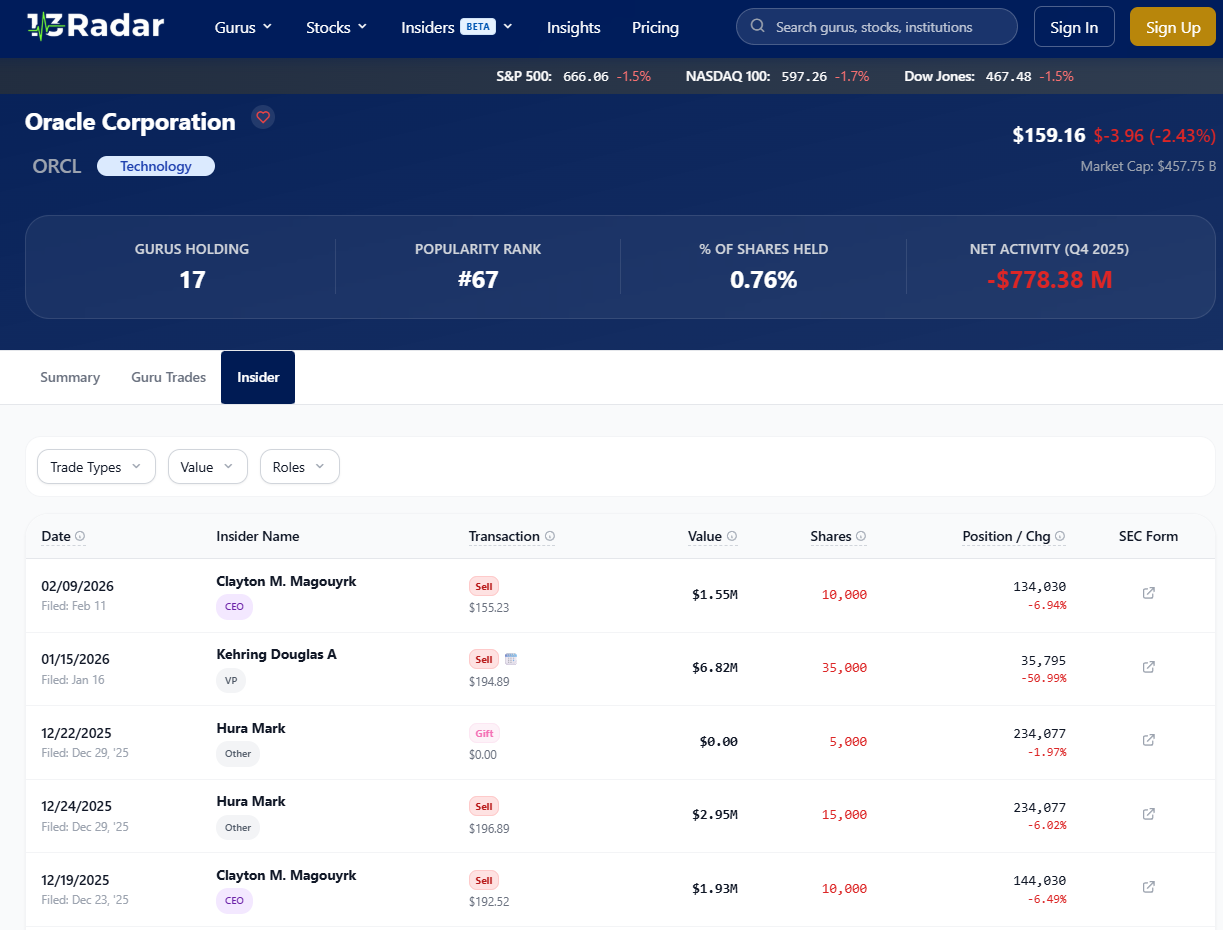
You cannot responsibly allocate capital into today's volatile tech sector without verifying the internal conviction of the leadership team. When evaluating a major player in the database and cloud computing space, you must rely on hard data rather than optimistic projections. By meticulously analyzing every new ORCL SEC Form 4, you gain an unfiltered, real-time look at how the top directors view their own company's valuation. This legally mandated document reveals exactly when, how much, and at what price the insiders are trading. If the executives who possess intimate, daily knowledge of enterprise contract renewals are using the recent market rally to aggressively cash out their personal portfolios, it is a glaring red flag that retail investors ignore at their own peril.
Contextualizing the Insider Selling Trend
Evaluating these regulatory filings is not just about spotting one-off trades; it is about recognizing broader institutional behavior within the technology sector. Recent Form 4 filings show a noticeable increase in executive sales across major tech companies. While some selling can be attributed to routine tax obligations or planned diversification, heavy and uncoordinated distribution by top-level management often signals that internal growth models do not justify the inflated public share prices. As an independent investor, your most reliable edge is identifying the divergence between what executives say on television and what they do with their own capital. Before you buy the next dip, ensure that the smartest people in the room are actually keeping their skin in the game.
Comments
Log in or sign up to join the conversation.