

“The average workweek fell to its lowest level in nearly two years in July as manufacturers cut hours for workers. Hours were also reduced in other industries, contributing to the workweek’s drop to 34.3 hours, the fewest since September 2017, from 34.4 hours in June.” (Reuters, August 2, 2019)
US payroll employment increased by 164,000 in July, somewhat below the previous months increase of 193,000.
Since the national unemployment rate stayed at 3.7%, close to its fifty-year low, the July employment expansion could be regarded as quite respectable because of the tight job market.
The alternative household survey also indicated that employment growth was strong over the past two months, and even reported stronger job growth in July than in June (283,000 versus 247,000).
Also, on the positive side, the labour force participation rate rose slightly in July and there was a sizable drop in the number of long-term unemployed.
The broader U6 unemployment rate, which accounts both for unemployed and underemployed workers, slipped lower to 7% in July compared with 7.2% in June.
Average hourly earnings in the US are still quite weak and the twelve-month pace in July was 3.2%, compared to 3.1% in June.
Despite the tight job market, employment growth has clearly slowed this year. Over the last three months payrolls rose at an average of 140,000 per month compared to a 223,000-monthly average in 2018.
Indeed, it is still a bit unclear whether the loss of job growth momentum was due to a weakening in the demand for labour or a due to a limited supply of unemployed workers.
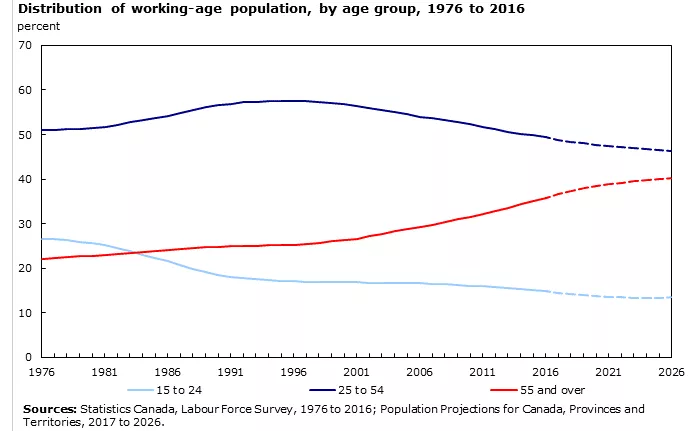
Nonetheless, the recent pace of job growth is well above the roughly 100,000 needed per month required to simply match the growth in the working-age population.
All in all, the July employment growth, although OK by most standards, still confirms some of the worries recently reflected in the Fed’s July interest rate cut.
Employment in the retail sector has now declined for six straight months, and we are continuing to see a steady slowdown in goods industry employment (manufacturing, construction, mining, etc.). Both weakening trends reflect problems created by the Trump trade war.
Indeed, on the same day that the July job figures were released, President Donald Trump escalated the trade war with an additional 10% tariff on $300 billion worth of Chinese imports starting Sept. 1. Since, the payroll report also indicated that job growth slowed and the average number of hours worked fell in July, the Fed may have the ammunition it needs to cut interest rates again next month.
Who knows, maybe President Trump desires lower interest rate even more than he fears any negative impact from the increased trade tensions?


Comments
Log in or sign up to join the conversation.