

In today’s competitive business environment, organizations need more than assumptions and experience to improve their operations. They need accurate data, measurable performance indicators, and structured problem-solving methods. This is where the Data Driven Six Sigma process plays an important role.
Data Driven Six Sigma combines the statistical approach of Six Sigma with reliable business data to identify process problems, understand their root causes, reduce variation, and improve overall performance. It helps organizations make decisions based on facts rather than guesswork.
What Is a Data Driven Six Sigma Process?
A Data Driven Six Sigma process is a structured approach to process improvement that uses data and statistical analysis to identify inefficiencies and eliminate defects.
Instead of simply identifying that a process is performing poorly, Six Sigma teams collect relevant data, analyze performance patterns, determine the factors causing the problem, and implement measurable improvements.
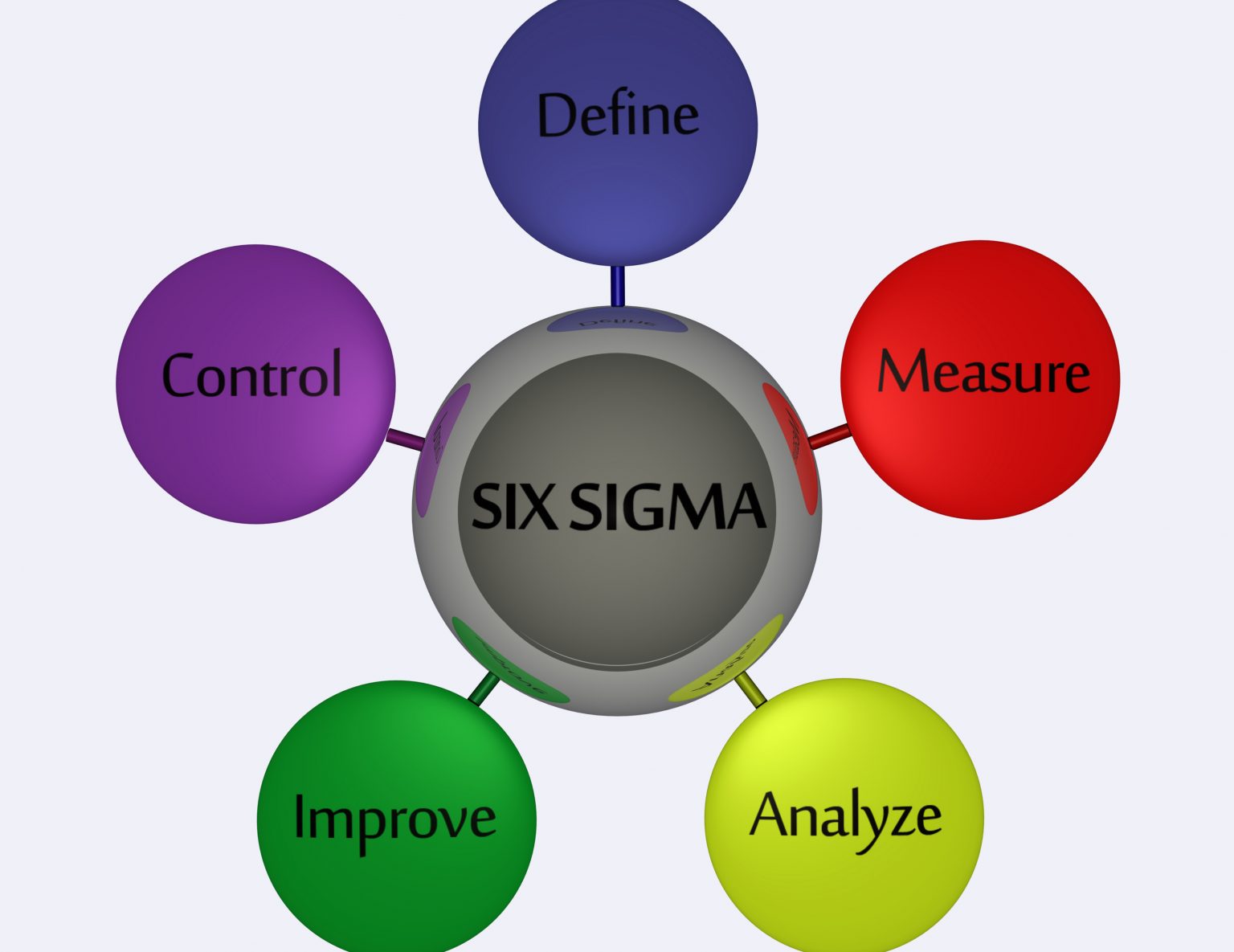
The approach is commonly built around the DMAIC methodology:
Define
Measure
Analyze
Improve
Control
Each stage uses data to support decisions and ensure that improvements are measurable and sustainable.
Why Is Data Important in Six Sigma?
Data provides an objective view of how a process is actually performing. Without reliable data, organizations may focus on symptoms instead of the underlying causes of problems.
For example, if a healthcare organization experiences a high number of claim denials, simply increasing staff or resubmitting claims may not solve the problem. Data analysis can reveal whether denials are primarily caused by eligibility issues, coding errors, missing information, authorization problems, or payer-specific requirements.
This allows organizations to focus their resources on the areas creating the greatest impact.
The Five Stages of the Data Driven Six Sigma Process
1. Define
The first stage establishes the problem, project objectives, customer requirements, and expected outcomes.
A well-defined problem should be specific and measurable. Teams should identify:
What process needs improvement?
What problem is occurring?
Who is affected?
What is the business impact?
What improvement is expected?
A clear project definition provides direction for the entire Six Sigma initiative.
2. Measure
The Measure stage focuses on collecting accurate and relevant data about the existing process.
Teams establish baseline performance and determine how frequently defects or errors occur. Common measurements may include:
Error rates
Processing time
Cost
Productivity
Defect frequency
Customer satisfaction
First-pass accuracy
Turnaround time
The quality of the data is critical because inaccurate or incomplete information can lead to incorrect conclusions.
3. Analyze
During the Analyze stage, teams examine the collected data to identify patterns, trends, relationships, and potential root causes.
Various analytical tools can be used, including:
Pareto charts
Cause-and-effect diagrams
Process mapping
Regression analysis
Hypothesis testing
Control charts
Correlation analysis
Statistical process analysis
The objective is to move beyond identifying what is wrong and determine why it is happening.
4. Improve
Once the root causes have been identified, teams develop and test solutions.
Improvements should be supported by data rather than assumptions. Teams may redesign workflows, automate repetitive tasks, improve employee training, remove unnecessary process steps, or introduce new quality checks.
Pilot testing is often useful before implementing changes across the entire organization. Performance data can then be compared with the original baseline to determine whether the improvement is producing the desired results.
5. Control
The final stage ensures that improvements remain effective over time.
Organizations establish monitoring systems, performance standards, reporting procedures, and control mechanisms to prevent the process from returning to its previous state.
Control measures may include:
Regular performance dashboards
Quality audits
Standard operating procedures
Automated alerts
Periodic data reviews
Employee training
Control charts
The goal is to make process improvement sustainable rather than temporary.
Benefits of a Data Driven Six Sigma Approach
A data-driven approach can provide several benefits to organizations.
Better Decision-Making
Reliable data allows management and process teams to make informed decisions based on measurable evidence.
Reduced Errors and Defects
Identifying the actual causes of process failures helps organizations reduce recurring mistakes and improve quality.
Improved Efficiency
Six Sigma can reveal unnecessary steps, bottlenecks, duplication, and other sources of process waste.
Lower Operational Costs
Reducing errors, rework, delays, and inefficiencies can help organizations control operating expenses.
Improved Customer Experience
More consistent and efficient processes can lead to faster service, better quality, and improved customer satisfaction.
Sustainable Process Improvement
The Control stage helps organizations monitor performance and maintain improvements over the long term.
Data Driven Six Sigma in Healthcare and Medical Billing
Data Driven Six Sigma is particularly valuable in healthcare operations and revenue cycle management (RCM), where organizations handle large volumes of transactions and financial data.
For example, medical billing teams can analyze claim denial patterns to identify recurring problems. Data may show that a significant percentage of denials are associated with incorrect patient information, eligibility issues, coding errors, or authorization requirements.
By identifying these patterns, healthcare organizations can address the underlying causes instead of repeatedly correcting individual claims.
Similarly, Six Sigma principles can be applied to:
Patient eligibility verification
Medical coding
Claims processing
Denials management
Accounts receivable
Payment posting
Prior authorization
Billing accuracy
This can help create more consistent workflows and improve financial performance.
Key Metrics to Track
The right metrics depend on the process being analyzed. However, organizations commonly track:
Defect rate
Cycle time
First-pass yield
Process variation
Rework rate
Cost per transaction
Productivity
Customer satisfaction
Error frequency
Turnaround time
Tracking these metrics before and after an improvement initiative helps determine whether the changes have produced measurable results.
Challenges in Implementing Data Driven Six Sigma
Although Six Sigma can be highly effective, organizations may face several challenges.
Poor data quality: Incomplete, inconsistent, or inaccurate data can affect analysis.
Lack of employee engagement: Process improvements are more successful when employees understand the purpose and participate in implementation.
Insufficient analytical skills: Teams may require training in statistics, process analysis, and Six Sigma tools.
Resistance to change: Employees may be reluctant to adopt redesigned processes or new technologies.
Incorrect problem definition: If the original problem is poorly defined, teams may spend resources solving the wrong issue.
Addressing these challenges early can improve the effectiveness of a Six Sigma project.
Best Practices for Data Driven Six Sigma
Organizations can improve their results by following several best practices:
Define measurable project objectives.
Use accurate and relevant data.
Establish a reliable baseline before making changes.
Focus on root causes instead of symptoms.
Involve employees who understand the process.
Test improvements before full implementation.
Monitor key performance indicators continuously.
Standardize successful process improvements.
Use technology and automation where appropriate.
Review data regularly to identify new improvement opportunities.
Conclusion
The Data Driven Six Sigma process provides organizations with a structured way to improve quality, efficiency, and performance. By combining reliable data with the DMAIC methodology, businesses can identify root causes, reduce variation, eliminate recurring errors, and create more consistent processes.
Whether applied to manufacturing, healthcare, financial operations, customer service, or revenue cycle management, a data-driven Six Sigma approach helps organizations replace assumptions with measurable insights and turn process improvement into a continuous practice.
Comments
Log in or sign up to join the conversation.