

The Global Data Center Rack Market is expanding rapidly as organizations increase their dependence on cloud computing, digital platforms, artificial intelligence, high-performance computing, and data-intensive applications. As data volumes continue to rise, businesses and technology providers require reliable physical infrastructure capable of securely housing servers, networking equipment, storage systems, and other critical hardware.
According to TechSci Research report, “Data Center Rack Market Share- Global Industry Size, Trends, Competition Forecast & Opportunities, 2031F", The Global Data Center Rack Market will grow from USD 4.99 Billion in 2025 to USD 8.47 Billion by 2031 at a 9.22% CAGR.
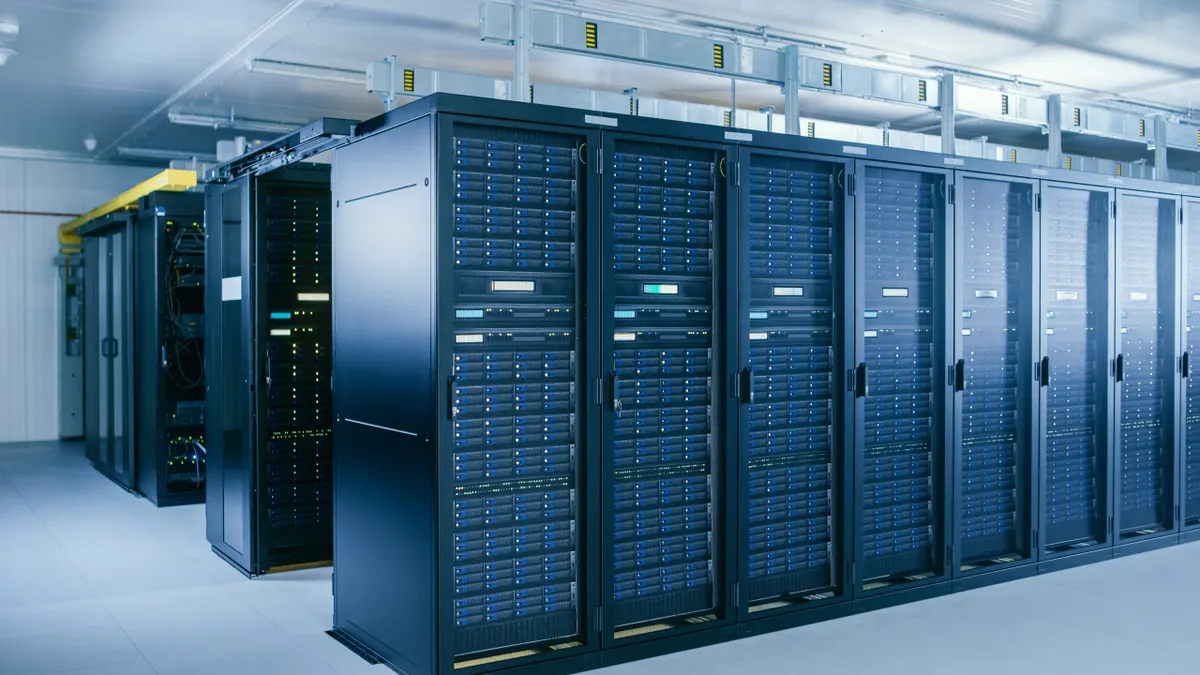
Data center racks have evolved from basic equipment-housing structures into sophisticated infrastructure components designed to address security, thermal management, cable organization, space utilization, and scalability requirements. The increasing deployment of high-density computing equipment is creating demand for rack systems that can support greater processing capabilities while maintaining efficient airflow and operational reliability.
Cabinets/Enclosed Racks currently represent a major preference within the market because they offer enhanced physical protection, organized cable management, and improved control over airflow and thermal conditions. Meanwhile, Large Data Centers continue to account for substantial demand because cloud providers, technology companies, and large enterprises require extensive rack deployments to accommodate growing computing and storage workloads.
The market is also being influenced by the expansion of edge computing. As processing moves closer to end users and connected devices, specialized rack infrastructure is increasingly required in smaller facilities, industrial environments, and remote locations.
Industry Key Highlights
The Global Data Center Rack Market is projected to grow from USD 4.99 billion in 2025 to USD 8.47 billion by 2031.
The market is expected to register a CAGR of 9.22% during the forecast period.
Cabinets/Enclosed Racks are gaining strong adoption due to their security, thermal management, and cable organization capabilities.
Large Data Centers dominated the market in 2024 based on data center size.
Asia Pacific is the fastest-growing regional market during the forecast period.
Cloud computing and increasing data storage requirements are major demand generators.
Edge computing is creating demand for flexible rack solutions suitable for distributed environments.
High-performance computing is increasing requirements for high-density racks and advanced cooling.
Artificial intelligence, machine learning, IoT, and big data are increasing rack density and infrastructure requirements.
Energy efficiency, airflow optimization, modular designs, and improved cable management are important areas of innovation.
Request For Sample Copy of Report For More Detailed Market insight
Main Drivers
Rapid Expansion of Cloud Computing
The continued growth of cloud services is one of the most important factors supporting the Data Center Rack Market.
Businesses across industries are migrating applications, databases, workloads, and storage infrastructure to cloud platforms. Cloud service providers consequently require large facilities containing substantial numbers of servers and networking systems.
Data center racks provide the physical structure needed to organize and secure this equipment. As cloud infrastructure expands, demand is increasing for rack systems capable of accommodating high-density hardware while supporting efficient cooling and maintenance.
The growing adoption of hybrid and multi-cloud environments is also creating demand for flexible data center infrastructure capable of supporting different hardware configurations.
Rising Data Storage Requirements
The volume of data generated by businesses, consumers, connected devices, applications, and digital services continues to increase.
Industries such as financial services, healthcare, retail, manufacturing, telecommunications, and media require substantial computing and storage capacity to process and retain this information.
As storage requirements increase, data center operators need additional physical infrastructure. Rack systems enable servers and storage equipment to be arranged efficiently, helping operators maximize available floor space while maintaining accessibility for maintenance.
Growth of Edge Computing
Edge computing is changing the traditional structure of data center infrastructure by moving processing capabilities closer to users and data sources.
The growth of IoT devices, connected industrial systems, autonomous technologies, and latency-sensitive applications is increasing demand for localized computing resources. These facilities may operate in offices, manufacturing plants, telecommunications locations, retail environments, or remote industrial sites.
Edge deployments often have different infrastructure requirements from large centralized data centers. Compact, adaptable, and secure rack systems can help accommodate computing equipment in space-constrained environments.
Increasing Adoption of High-Performance Computing
High-performance computing is being adopted across financial services, healthcare, scientific research, engineering, manufacturing, and other sectors.
HPC systems require powerful processors, advanced networking equipment, and specialized storage infrastructure. These systems can generate substantial heat and require effective airflow and thermal management.
Consequently, data center racks are increasingly designed to support high-density configurations and integrate with advanced cooling strategies.
Expansion of AI and Data-Intensive Technologies
Artificial intelligence and machine learning applications are creating significant infrastructure requirements because AI workloads can involve large numbers of high-performance processors and accelerators.
As organizations increase their investments in AI infrastructure, data centers require rack configurations capable of supporting higher power densities and thermal loads.
The increasing adoption of big data analytics and other computationally intensive technologies is reinforcing this requirement.
Emerging Trends
Growing Preference for Cabinets and Enclosed Racks
Cabinets/Enclosed Racks are increasingly preferred because they provide controlled environments for servers and networking equipment.
Enclosed configurations can improve physical security, cable organization, airflow management, and equipment protection. They are particularly useful in environments where high equipment density and controlled thermal conditions are important.
Modular Rack Designs
Data center operators are increasingly looking for modular infrastructure that can be expanded as computing requirements grow.
Modular rack systems can simplify installation and allow organizations to adapt infrastructure without completely redesigning their facilities. This flexibility is particularly useful for businesses experiencing changing workloads or phased data center expansion.
Advanced Thermal Management
As rack densities increase, heat management becomes increasingly important.
Modern rack solutions increasingly incorporate designs intended to optimize airflow and support advanced cooling systems. Effective thermal management helps protect equipment, maintain performance, and reduce the risk of overheating.
Improved Cable Management
Modern data centers contain large quantities of power and networking cables. Poor cable organization can obstruct airflow, complicate maintenance, and increase the risk of operational problems.
Rack manufacturers are therefore emphasizing structured cable management systems that improve organization and simplify equipment installation and maintenance.
Focus on Energy Efficiency
Energy consumption is a major operational consideration for data centers. Rack design is increasingly being connected with broader facility-level efficiency goals.
Improved airflow, optimized equipment arrangement, efficient cooling integration, and space utilization can contribute to more efficient data center operations.
Challenges in the Data Center Rack Market
Thermal Management
Increasing rack density can create substantial heat loads. Data center operators must balance higher computing capacity with effective cooling infrastructure.
Insufficient thermal management can affect equipment reliability and increase energy consumption.
Space Constraints
Data centers are under pressure to maximize computing capacity within available floor space. Higher rack densities can improve space utilization but may simultaneously create additional cooling and power requirements.
Compatibility and Standardization
Data centers often contain equipment from multiple manufacturers. Differences in hardware dimensions, networking configurations, power requirements, and installation standards can create compatibility challenges.
Rack manufacturers need to ensure their solutions can accommodate diverse equipment configurations while maintaining ease of installation.
Security Requirements
Racks house servers and other equipment containing sensitive information and supporting critical business operations. Physical access control and equipment protection are therefore essential.
Organizations increasingly require rack solutions that can support secure facility designs and controlled access.
Cost Management
The acquisition, installation, maintenance, and operation of data center racks can represent a significant investment.
Businesses must balance infrastructure costs with requirements for scalability, security, performance, and energy efficiency.
Real-World Use Cases
Cloud Service Infrastructure
Large cloud providers deploy extensive rack infrastructure to accommodate servers, storage equipment, and networking systems.
High-density rack configurations allow operators to efficiently organize large quantities of computing hardware while supporting scalable infrastructure expansion.
Financial Services
Banks and financial institutions rely on data centers to process transactions, manage customer information, and support analytics applications.
Reliable rack infrastructure helps organize mission-critical hardware while supporting security and thermal requirements.
Healthcare
Healthcare organizations increasingly depend on digital records, medical imaging, analytics, and connected healthcare applications.
Data center racks provide the physical infrastructure required to house the servers and storage systems supporting these services.
Manufacturing
Manufacturers are adopting IoT, automation, digital twins, and data analytics to optimize production processes. These technologies generate large quantities of operational data and increase computing requirements.
Rack infrastructure supports the servers and networking systems required for these industrial applications.
Telecommunications and Edge Computing
Telecommunications companies use distributed data infrastructure to support connected devices, mobile networks, content delivery, and low-latency applications.
Compact rack systems can help deploy computing resources closer to users and network endpoints.
Competitive Analysis
Schneider Electric SE
Rittal GmbH & Co. KG
Eaton Corporation plc
Vertiv Group Corp.
Dell Technologies Inc.
Emerson Electric Co.
Panduit Corporation
Legrand S.A.
Intel Corporation
Chatsworth Products, Inc.
Customers can also request for 10% free customization on this report.
Data Center Rack Market Segmentation
By Component
The market is segmented into:
Solution
Service
Solutions cover the physical and technological rack infrastructure used within data centers, while services can include installation, integration, maintenance, and related support activities.
By Rack Type
The market is divided into:
Cabinets/Enclosed Racks
Open Frame Rack
Cabinets and enclosed racks are gaining strong preference because they provide enhanced equipment protection, structured cable management, and better control of airflow.
Open frame racks can be useful in environments where accessibility and simplified equipment installation are key priorities.
By Data Center Size
The market is segmented into:
Large Data Centers
Small and Mid-sized Data Centers
Large Data Centers dominated the Global Data Center Rack Market in 2024.
These facilities support extensive server, storage, and networking infrastructure and are widely used by cloud providers, major technology companies, and large enterprises.
The continued expansion of cloud services and centralized computing infrastructure is supporting demand for sophisticated rack systems within large-scale facilities.
Large data centers also support advanced technologies such as artificial intelligence, machine learning, and high-performance computing, which require high-density rack configurations and advanced thermal management.
By Rack Height
The market is categorized into:
42U and Below
43U up to 52U
Above 52U
Different rack heights allow data center operators to select infrastructure according to equipment density, available floor space, and facility design.
By Industry Vertical
The market includes:
BFSI
Manufacturing
IT & Telecom
Retail
Healthcare
Media & Entertainment
Others
The increasing digitization of these industries is creating demand for computing infrastructure and, consequently, data center rack solutions.
By Region
The market covers:
North America
Europe
Asia Pacific
South America
Middle East & Africa
Asia Pacific is the fastest-growing region in the Global Data Center Rack Market during the forecast period.
The region's growth is supported by expanding digital infrastructure, increasing cloud adoption, rising internet usage, and the rapid development of data-intensive industries.
China, India, Japan, and Southeast Asian markets are experiencing growing requirements for data center capacity as e-commerce, financial services, manufacturing, telecommunications, and digital platforms expand.
The increasing deployment of hyperscale data centers is another important factor. Major cloud technology providers are expanding their infrastructure across the region, increasing requirements for large quantities of server and networking racks.
Government policies, data localization requirements, infrastructure investments, and digital transformation initiatives are further supporting data center development.
The adoption of AI, IoT, big data analytics, and other emerging technologies is expected to create additional demand for high-capacity rack infrastructure.
Future Outlook
The Global Data Center Rack Market is expected to continue expanding as businesses and technology providers invest in increasingly sophisticated digital infrastructure.
The market is projected to increase from USD 4.99 billion in 2025 to USD 8.47 billion by 2031, reflecting a CAGR of 9.22%.
Future growth will be closely connected with cloud computing, hyperscale data centers, edge infrastructure, artificial intelligence, high-performance computing, and expanding data storage requirements.
At the same time, data center operators will need to address challenges associated with heat generation, limited physical space, power consumption, security, and infrastructure costs.
The evolution of rack design toward modular configurations, higher densities, improved airflow, better cable organization, and enhanced equipment protection will help operators respond to these changing requirements.
As digital infrastructure becomes increasingly critical to global business operations, data center racks will remain a fundamental component of the physical architecture supporting servers, networking equipment, storage systems, and emerging computing technologies.
4 FAQ
1. What is the projected size of the Data Center Rack Market by 2031?
The Global Data Center Rack Market is expected to grow from USD 4.99 billion in 2025 to USD 8.47 billion by 2031, registering a CAGR of 9.22% during the forecast period.
2. Which data center size segment dominated the market in 2024?
The Large Data Centers segment dominated the market in 2024, supported by the expansion of cloud computing, centralized infrastructure, high-performance computing, and large-scale data storage requirements.
3. Which region is expected to grow fastest in the Data Center Rack Market?
Asia Pacific is the fastest-growing region during the forecast period. Digital transformation, cloud adoption, hyperscale data center development, government initiatives, and increasing data generation are supporting regional growth.
4. What are the major trends in the Data Center Rack Market?
Major trends include the growing adoption of Cabinets/Enclosed Racks, modular rack designs, high-density configurations, advanced thermal management, improved cable organization, edge computing infrastructure, and energy-efficient data center solutions.
Contact US:
Techsci Research LLC
420 Lexington Avenue, Suite 300,
New York, United States- 10170
Tel: +13322586602
Email: [email protected]
Comments
Log in or sign up to join the conversation.