

Data Acquisition (DAQ) System Market: Growth, Trends, Drivers and Forecast to 2030
Introduction
The global Data Acquisition (DAQ) System Market is becoming increasingly important as industries move toward connected operations, intelligent automation, and real-time decision-making. DAQ systems combine hardware and software to capture physical or electrical signals, convert them into digital information, and make the resulting data available for monitoring, analysis, storage, and control.
According to TechSci Research report, “Data Acquisition (DAQ) System Market - Global Industry Size, Share, Trends, Opportunity, and Forecast, The global Data Acquisition (DAQ) System Market was valued at USD 2.04 billion in 2024 and is projected to reach USD 2.73 billion by 2030, expanding at a CAGR of 5.00% during 2025–2030. Increasing industrial automation, wider deployment of IoT technologies, advances in sensors, and the growing use of Industry 4.0 solutions are creating sustained demand for sophisticated data acquisition capabilities.
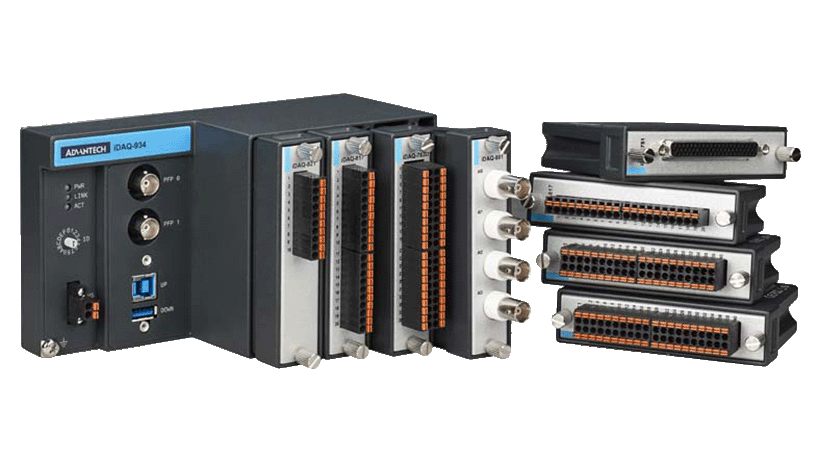
DAQ systems are particularly valuable in environments where operational decisions depend on accurate, high-speed measurements. Manufacturing plants, automotive facilities, aerospace programs, energy infrastructure, and research laboratories use these systems to capture parameters such as temperature, pressure, vibration, voltage, current, force, and motion.
At the same time, the cost of advanced DAQ infrastructure remains a significant consideration, especially for small and medium-sized organizations.
Industry Key Highlights
The global Data Acquisition (DAQ) System Market was valued at USD 2.04 billion in 2024.
The market is forecast to reach USD 2.73 billion by 2030.
The market is expected to expand at a 5.00% CAGR from 2025 to 2030.
Manufacturing is identified as the fastest-growing application segment.
North America represents the largest regional market.
Increasing adoption of industrial automation, IoT, Industry 4.0, AI, and edge computing is expanding DAQ applications.
DAQ systems are increasingly moving beyond basic measurement toward real-time analytics, predictive maintenance, and intelligent process optimization.
High initial implementation costs remain an important barrier to adoption.
Request For Sample Copy of Report For More Detailed Market insight
Main Drivers
Rising Industrial Automation
Industrial automation is one of the fundamental forces supporting the Data Acquisition (DAQ) System Market. Modern production facilities use interconnected machines, sensors, controllers, and software platforms that continuously generate operational information.
DAQ systems provide the measurement layer needed to collect this information. By monitoring machine performance, production conditions, and equipment behavior, manufacturers can identify deviations earlier and improve process consistency.
The expansion of smart factories is further increasing the need for scalable data collection. In May 2024, 46% of U.S.-based mid-to-large-cap manufacturing companies had completed projects integrating robotic automation and artificial intelligence into their operations. As automation becomes more sophisticated, the ability to capture reliable real-time data becomes increasingly important.
Growth of IoT and Industry 4.0
The proliferation of connected devices is generating larger volumes of operational data. Industrial IoT environments depend on continuous information exchange between machines, sensors, control systems, and analytics platforms.
DAQ systems help bridge the physical and digital worlds by converting measurements from industrial equipment into usable digital information. This makes them an important component of Industry 4.0 architectures.
The increasing use of connected factories is also encouraging organizations to integrate DAQ platforms with cloud infrastructure. This allows collected information to be analyzed centrally, accessed remotely, and incorporated into broader enterprise systems.
Demand for Real-Time Data Analytics
Organizations increasingly need immediate visibility into equipment and processes rather than relying exclusively on historical reports. Real-time DAQ enables operators and engineers to identify abnormalities, track performance, and respond to changing conditions quickly.
This capability is particularly relevant to predictive maintenance. Continuous measurement of vibration, temperature, pressure, or electrical characteristics can help identify unusual equipment behavior before it develops into a major operational problem.
Advances in Manufacturing Infrastructure
Investment in modern manufacturing facilities is also creating opportunities for DAQ suppliers. According to data cited in the market assessment, U.S. factory construction investment reached approximately USD 200 million per month in May 2023, about double the earlier level, and remained around that level. New and upgraded industrial facilities require measurement and monitoring infrastructure capable of supporting increasingly automated production environments.
Emerging Trends
AI and Machine Learning Integration
DAQ systems are evolving from simple data collection platforms into intelligent measurement environments. Integration with artificial intelligence and machine learning enables organizations to process measurement data more effectively and identify patterns that may not be immediately visible through conventional monitoring.
AI-enabled DAQ applications can support anomaly detection, predictive maintenance, automated quality inspection, and process optimization. This creates opportunities for manufacturers to use collected data not only to understand what happened but also to identify potential future issues.
In 2023, 72% of surveyed manufacturers reported reduced costs and improved operational efficiency after deploying AI technology, demonstrating the broader industrial interest in AI-enabled operations.
Expansion of Edge Computing
Edge computing is becoming increasingly relevant to data acquisition because many industrial applications require rapid responses. Instead of sending every measurement to a centralized cloud environment, edge-based architectures process selected information closer to where it is generated.
This approach can reduce latency, decrease network requirements, and support faster operational responses. It is particularly useful for manufacturing automation, equipment monitoring, and closed-loop control.
According to GSMA Intelligence, 73% of surveyed companies across five industries planned to increase edge investments during the 12 months following February 2024. This indicates growing interest in localized data processing and distributed digital infrastructure.
Greater Cloud Connectivity
Cloud integration is making DAQ systems more flexible and accessible. Organizations can combine measurement data from multiple locations, store larger datasets, and apply centralized analytics.
For multinational manufacturers and organizations operating distributed facilities, cloud-connected DAQ platforms can provide a unified view of equipment and processes.
More Modular DAQ Architectures
Modular systems are gaining relevance as organizations seek measurement platforms that can be adapted to different testing requirements. Users can combine different modules for temperature, pressure, vibration, electrical signals, or other measurements without replacing an entire system.
This flexibility is especially valuable in research, product development, automotive testing, and industrial validation environments.
Real-World Use Cases
Manufacturing and Smart Factories
Manufacturers use DAQ systems to continuously measure machine and production-line parameters. The collected information can support quality control, equipment monitoring, process optimization, and predictive maintenance.
As production facilities become increasingly automated, DAQ infrastructure provides the measurement foundation required for data-driven manufacturing.
Automotive Testing
Automotive manufacturers and component suppliers use DAQ systems during vehicle and component testing. Engineers can capture information related to vibration, acceleration, temperature, pressure, electrical performance, and other parameters.
These measurements can help evaluate vehicle behavior and validate components under different operating conditions.
Aerospace and Defense
Aerospace applications require accurate measurement across demanding testing environments. DAQ systems can capture data during aircraft component testing, propulsion development, structural analysis, and other engineering activities.
High-speed and synchronized measurement capabilities are particularly valuable when engineers need to analyze multiple physical parameters simultaneously.
Power and Energy
Power-generation and energy facilities can use DAQ systems to monitor electrical and mechanical characteristics. Measurements can help operators understand equipment performance, detect irregularities, and improve maintenance planning.
The technology can also support testing and validation activities involving energy equipment and electrical systems.
Research and Development
Research laboratories require flexible measurement platforms because testing requirements can vary significantly between projects. DAQ systems allow researchers to collect signals from multiple sensors and analyze them through specialized software.
This makes DAQ technology relevant to product development, engineering research, prototype testing, and experimental validation.
Competitive Analysis
National Instruments Corp.
Keysight Technologies Inc.
Siemens AG
Spectris PLC
Fortive Corporation
ADLINK Technology Inc.
AMETEK, Inc
Dewesoft d.o.o
Teledyne Technologies Incorporated
Yokogawa Electric Corporation
Data Acquisition (DAQ) System Market Segmentation
By Offering
Hardware:
The hardware segment includes data acquisition devices, modules, signal-conditioning equipment, interfaces, and other physical components used to capture and convert signals.
Software:
DAQ software enables users to configure systems, visualize measurements, process collected information, conduct analysis, and integrate data with other platforms.
By Application
R&D:
Research and development applications involve product testing, experimentation, prototype validation, and engineering analysis.
Field:
Field applications require portable or deployable measurement systems capable of collecting data outside controlled laboratory environments.
Manufacturing:
Manufacturing represents the fastest-growing segment, supported by smart factory development, automation, predictive maintenance, quality control, and Industrial IoT adoption.
By End-User
Automotive & Transportation:
DAQ systems support vehicle testing, component validation, performance monitoring, and transportation-related engineering applications.
Aerospace & Defense:
These systems are used for testing, measurement, structural analysis, and validation of advanced aerospace and defense technologies.
Power & Energy:
The segment includes applications involving power equipment, energy infrastructure, electrical measurements, and equipment monitoring.
Others:
Other end users include research institutions, electronics companies, industrial organizations, and specialized engineering operations.
By Region
North America holds the largest position in the global Data Acquisition (DAQ) System Market. The region benefits from advanced industrial infrastructure, strong R&D activity, established automation ecosystems, and adoption across manufacturing, aerospace, automotive, and other technology-intensive industries.
The market also covers Europe, Asia Pacific, South America, and the Middle East & Africa, with individual countries including China, India, Japan, Germany, the United Kingdom, France, Brazil, Saudi Arabia, the UAE, and South Africa.
Frequently Asked Questions
1. What was the size of the Data Acquisition (DAQ) System Market in 2024?
The global Data Acquisition (DAQ) System Market was valued at USD 2.04 billion in 2024.
2. What will the Data Acquisition (DAQ) System Market be worth by 2030?
The market is projected to reach USD 2.73 billion by 2030, according to the stated forecast.
3. Which segment is growing fastest in the DAQ System Market?
The manufacturing segment is identified as the fastest-growing segment, supported by Industry 4.0, smart factories, automation, Industrial IoT, predictive maintenance, and quality-control requirements.
4. What is the expected CAGR of the DAQ System Market?
The global Data Acquisition (DAQ) System Market is expected to grow at a CAGR of 5.00% between 2025 and 2030.
I kept the requested market figures, segmentation, drivers, trends, competitive landscape, and FAQs while substantially restructuring and rewriting the material for SEO use.
Comments
Log in or sign up to join the conversation.