


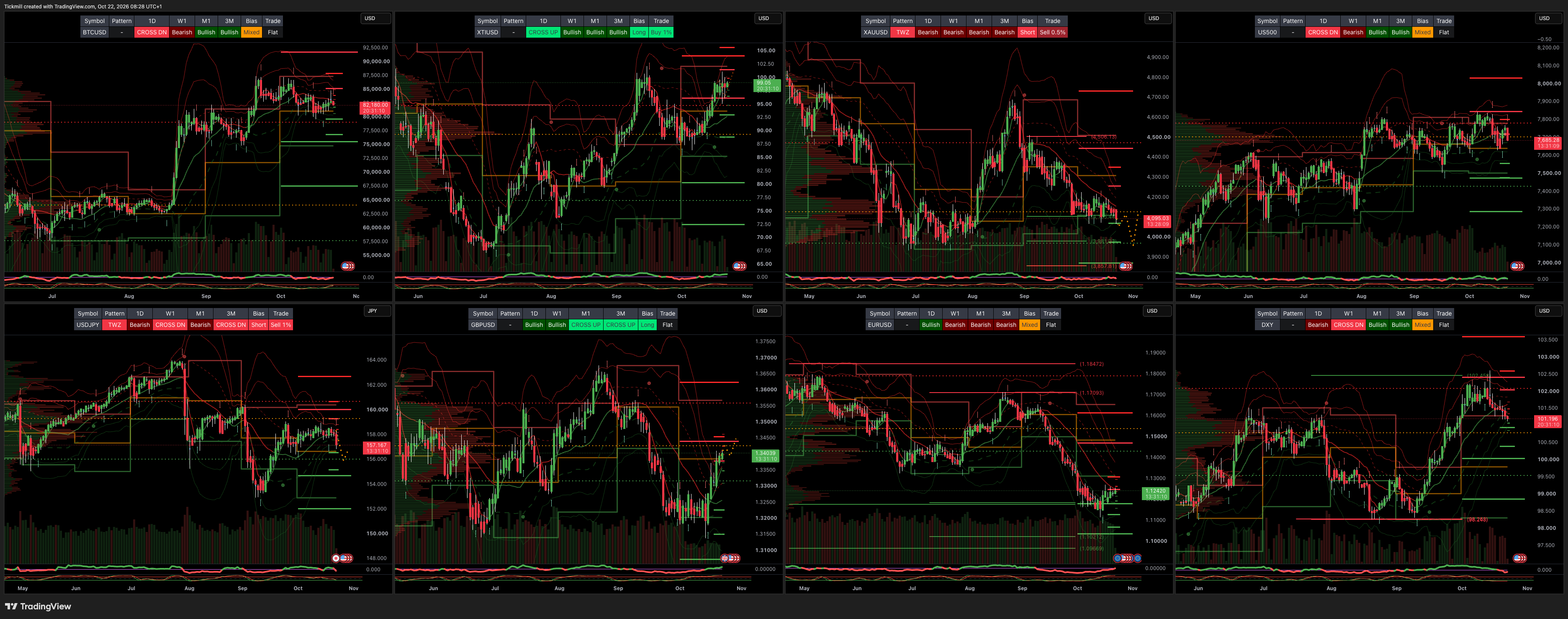
Global financial markets adopted a defensive stance overnight as escalating Middle East geopolitical risks propelled crude prices higher, capping the recent technology-led equity rebound. Risk premia expanded following a Houthi drone strike on Saudi Aramco’s Shaybah oil field—prompting the US State Department to order the departure of non-emergency personnel from Saudi Arabia. While physical exports through the Strait of Hormuz continue to flow, direct threats to critical energy infrastructure have reignited supply disruption fears, elevating inflation risks across developed market central banks.
Asia-Pacific equity bourses were hit hardest by the risk-off shift, with South Korea’s Kospi dropping nearly 2.0% as semiconductor heavyweights Samsung Electronics and SK Hynix fell ~3.0%. In Tokyo, the Nikkei 225 shed 1.1%, while Hong Kong’s Hang Seng tumbled 2.4%. US equity futures tracked regional weakness into the European open, with Nasdaq 100 contracts dropping nearly 200 points after a mixed slate of after-hours tech earnings. Despite eye-catching Q3 results from SpaceX (+161% YoY revenue growth) and merger exploration headlines with Tesla, drawdowns in Tesla (-4.5%) and IBM (-3.5%) weighed on broader risk sentiment.
Meta Shares rose 4-5% after Wednesday's market on $64.6 billion revenue, beating expectations and offering strong Q4 guidance. Adjusted EPS was $7.40, surpassing forecasts, despite a $9.9 billion charge from a legal settlement. Zuckerberg emphasized Muse's potential, with significant user engagement. He also announced a two-for-one split with a new non-voting Class C share to maintain control and fund AI ventures. However, by late evening, gains diminished due to CFO Susan Li's warning about rising costs and negative cash flow. Operating income, excluding charges, was up 11%, with Reality Labs' loss decreasing. The market liked Meta's growth and Muse story but remained wary of cash burn, signalling a shift in AI funding strategy.
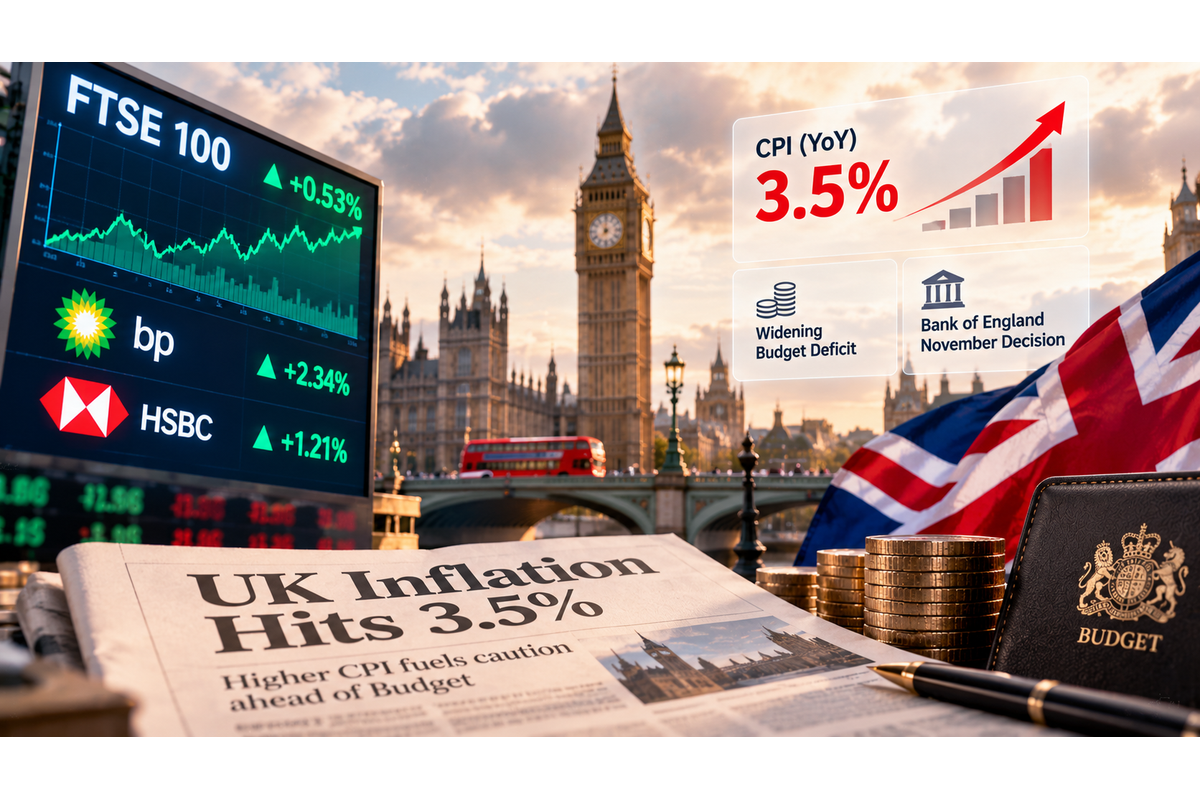
Sovereign debt curves continue to digest competing forces of growth deceleration and energy-driven inflation. In the UK, a hawkish nexus of macroeconomic data—highlighted by September headline CPI accelerating to 3.5% y/y, core CPI rising to 2.8% y/y, and services inflation ticking up to 3.7% y/y—has cemented market expectations for a November Bank of England rate hike. On the fiscal side, September Public Sector Net Borrowing printed at £24.5bn (£6.0bn above OBR year-to-date forecasts), raising the prospect of higher gilt issuance at the upcoming Budget.
Crucially for sterling fixed-income desks, the structural relationship between Quantitative Tightening (QT) and front-end gilt asset-swap (ASW) spreads has decoupled. While earlier reserve depletion mechanically drove two-year gilt ASW widening, widespread adoption of the Bank of England’s Short-Term Repo (STR) facility has mitigated reserve scarcity by allowing commercial banks to replace drained reserves with central bank repo liquidity. As a result, gilt cheapening ahead of the Budget is expected to translate through term premia and auction concessions rather than mechanical QT reserve drag.
Macro to Micro: Financial markets are navigating a direct friction between persistent supply-side energy shocks and selective megacap tech valuation adjustments. With Brent crude rebuilding its geopolitical risk premium, central banks lack the flexibility to respond to localized growth or equity market weakness. For traders, immediate cross-asset focus centers on Brent crude dynamics, US Treasury yield stability during the Fed's blackout period, front-end UK rate repricing, and STR facility usage in sterling money markets.

Comments
Log in or sign up to join the conversation.