


Markets are ending a bruising week with a spectacular relief rally in Asia, but the rebound is more repair than reset. Battered chipmakers are being aggressively bought after Wall Street’s tech recovery and strong Amazon earnings revived confidence in AI-linked demand. Yet the month’s damage remains severe, especially in Korea, while the Bank of Japan’s decision to hold rates has quickly undercut Thursday’s coordinated FX intervention. Equities have found a bid; currencies and long-end policy credibility are still doing the hard yards.
Asian equities staged a dramatic rebound on Friday after a turbulent week dominated by tech liquidation. South Korea’s KOSPI surged as much as 17%, Taiwan’s market jumped more than 7%, and Japan’s Nikkei 225 gained over 5%, as investors rushed back into heavily sold semiconductor names. The MSCI Asia-Pacific ex-Japan Index rose 4.7%, helped by a powerful recovery in the chip complex and a more constructive lead from Wall Street.
The moves in Korean chipmakers were extraordinary. Samsung Electronics and SK Hynix both jumped by nearly 30%, recovering part of the week’s brutal losses as investors reassessed whether the forced deleveraging had gone too far. The bounce is impressive, but the context matters: the KOSPI is still on track to finish July down almost 25%, which would be its worst monthly decline since the 1997 Asian financial crisis. That makes today’s rally feel less like a full restoration of confidence and more like an aggressive short-covering episode in a market that had become deeply oversold.
The rebound took its cue from the US. On Thursday, the Nasdaq Composite rose 2.78%, while the S&P 500 gained 1.66% and the Dow added 1.19%. US futures continued higher in Asian trading, with S&P 500 e-mini futures up 0.3%, as investors digested a mixed but broadly supportive set of megacap earnings. The key point is that the market has not abandoned the AI theme; it has become far more selective about who can monetise it and who is merely spending on it.
Amazon delivered the cleanest positive signal. Its shares rose more than 9% after-hours after second-quarter revenue beat forecasts, supported by strong growth in cloud computing. That matters because cloud strength is one of the more direct channels through which investors can validate AI infrastructure spending. After a week in which AI capex concerns battered semiconductors and platform stocks, Amazon’s result gave the market a reason to believe the demand side of the investment cycle is still intact.
Apple, by contrast, reminded investors that the tech tape remains uneven. Shares fell more than 6% after services revenue missed expectations and its revenue-growth forecast fell short of analyst expectations, with chip production challenges weighing on the outlook. The company still beat third-quarter revenue estimates, helped by a 22% jump in iPhone sales, but the market is currently unforgiving toward any weakness in guidance, supply constraints or margin visibility.
Chipmakers extended Thursday’s rally in after-hours US trading, with Micron up 3%, Sandisk up 5.4%, AMD up 3%, Intel up 4.3%, and Nvidia up 0.7%. That helped stabilise sentiment across Asia, where semiconductors had become the epicentre of the liquidation. The question now is whether this turns into a durable recovery or remains a violent bounce within a damaged trend. For that to improve, investors will need confirmation that AI-linked orders, pricing and margins are holding up after the recent shock.
European markets are set to follow the better tone, though with less drama. Pan-European futures rose 0.6%, while DAX and FTSE futures both gained around 0.4%. Europe is benefiting from the global risk rebound, but it lacks the same immediate earnings catalyst from the semiconductor supply chain. That means the region’s upside may remain more cautious, especially with energy, tariffs and central-bank uncertainty still in the background.
FX markets are less settled. Thursday’s unprecedented coordinated intervention by Japanese and Korean authorities briefly supported the yen and won against the dollar, but the effect has already started to fade. The yen slipped back to around 160.69 after the Bank of Japan left rates unchanged, while the South Korean won also gave back part of its earlier gains after reaching its strongest level in nine months. Intervention can slow a move, but without policy follow-through it rarely changes the direction for long.
The Bank of Japan’s message was hawkish in diagnosis but cautious in action. The BoJ held rates, as expected, but its Outlook Report made clear that inflation pressures are no longer purely temporary. The Bank said core inflation has been nearing 2%, that underlying CPI inflation may rise above the 2% price-stability target, and that it must assess whether core inflation stabilises near that level. That is a much more inflation-conscious framing than Japan has been used to for much of the past decade.
The report also flagged several concrete upside price risks. It noted that the recent yen decline is likely to boost prices, mainly for durable goods, and that year-on-year import-price growth has surged due to yen depreciation and commodity-price changes, including high crude oil. It also warned that the recent rise in semiconductor prices is likely to raise costs for related durable goods, while stronger-than-expected demand for aluminium-related materials and parts could intensify pressures.
The BoJ’s concern is not limited to imported inflation. It said firms’ active wage and price-setting behaviour is likely to persist, inflation expectations should rise moderately, and upward pressure on wages and prices is probably stronger than implied by the output gap. The output gap itself has turned slightly positive and is expected to stay positive near current levels. That combination — positive output gap, firmer wages, higher import costs and persistent price-setting behaviour — points to a central bank that is increasingly aware it may be behind the curve.
Yet the Bank still avoided moving today. It said Japan’s economy is expected to sustain moderate growth, though at a slower rate, while exports and production should rise moderately. It also described risks to the economic outlook as evenly balanced and said it will consider the timing and pace of rate increases while assessing the baseline scenario and risks, particularly the impact of the Middle East, global AI demand and currency trends. In other words, the BoJ is preparing the ground for future tightening, but still wants optionality.
That is why the yen sold off after the decision. Markets heard the risks, but they did not get the policy action. Dollar/yen rose around 0.83% after the announcement, showing that traders remain willing to test Japanese officials’ tolerance for currency weakness. The BoJ may be trying to move gradually, but a yen near the recent danger zone makes gradualism harder to defend.
The broader central-bank backdrop remains complicated after this week’s Fed and BoE decisions. The Fed’s hold, combined with three hawkish dissents, left the long end of the Treasury curve under pressure as investors questioned whether Chair Warsh is relying too much on markets to tighten financial conditions. The BoE’s own hold, if paired with a hawkish communications package, will likely reinforce the same theme: central banks want to preserve optionality, but bond and currency markets are increasingly demanding clearer reaction functions.
For risk assets, today’s rebound is welcome but fragile. The AI trade has shown it can still attract buyers when earnings support the demand story and positioning becomes stretched to the downside. But the recent selloff exposed how crowded the trade had become, especially in Korea and Taiwan. Once investors begin questioning returns on AI capex, valuation support becomes much more dependent on hard evidence from cloud revenue, chip pricing, order books and margins.
End of week market message: Friday’s rally is powerful, but it does not erase July’s damage. Amazon has helped revive the AI demand story, and chipmakers are enjoying a ferocious relief bid after forced selling. But Korea’s monthly loss remains historic, Apple’s guidance shows the tech story is uneven, and the BoJ has again shown the gap between inflation concern and policy action. The tape is better, but not healed. This is a relief rally with a currency warning label.
Overnight Headlines
BoJ Holds Rates Steady At 1.0%, Raises Economic Outlook
China's Factory Activity Unexpectedly Falls Back Into Contraction
Fed Chair Warsh Hints At New Inflation Roadmap, Stoking Investor Angst
China Raises Concerns Over US Trade Restrictions In Call With Bessent
Trump Faces Escalation Conundrum As Iran War Flares Once Again
US Says Hamas Has Agreed To Broad Plan To Disarm
Tokyo Inflation Quickens, Keeping BoJ On Interest Rate Hike Path
Japan Declines To Confirm Yen Intervention, Hints At US Support
Sony Q1 Profit Rises 40%, Beating Estimates
Apple Beats Revenue Expectations Despite China Weakness
Amazon Lifts CapEx Plan After Strong Cloud Sales Growth
Rivian Narrows Loss While Rolling Out Lower-Cost Electric Model
SK Hynix Shares Surge In Seoul On US Peer Rally, Chey Purchase
DeepSeek Is Developing Massive AI Data Center In Inner Mongolia
Coinbase Posts Loss As Revenue Falls For Third Straight Quarter
FX Options Expiries For 10am New York Cut
(1BLN+ represents larger expiries and is more magnetic when trading within the daily ATR.)
EUR/USD: 1.1500 (EU3.59b), 1.1450 (EU2.24b), 1.1400 (EU1.55b)
USD/JPY: 163.00 ($1.51b), 162.50 ($880.8m), 164.00 ($854.9m)
USD/CAD: 1.4100 ($3.21b), 1.3600 ($1.12b), 1.3400 ($834m)
AUD/USD: 0.6900 (AUD552.2m), 0.7025 (AUD538.7m), 0.6975 (AUD537.5m)
USD/BRL: 5.0750 ($1.19b), 5.4000 ($941.4m), 5.1500 ($896.1m)
USD/MXN: 17.60 ($760.2m), 17.80 ($657.9m), 16.92 ($475m)
EUR/GBP: 0.8800 (EU474.9m), 0.8575 (EU401.2m), 0.8570 (EU301.7m)
USD/CNY: 6.7000 ($700m), 6.6000 ($600m), 6.6500 ($300m)
GBP/USD: 1.3250 (GBP538m), 1.3500 (GBP373.6m), 1.3275 (GBP325m)
NZD/USD: 0.5735 (NZD414.1m)
USD/KRW: 1440.00 ($620m), 1450.00 ($310m), 1400.00 ($300.7m)
CFTC Positions as of 24/7/26
Equity fund speculators cut their S&P 500 CME net short position by a hefty 43,383 contracts, bringing it down to 316,072. Meanwhile, equity fund managers have also adjusted their stance, trimming the S&P 500 CME net long position by 14,710 contracts to a total of 926,413.
In the treasury futures arena, speculators are busy recalibrating their positions. They've reduced their net short position in CBOT US 5-year Treasury futures by 20,954 contracts, now standing at 1,273,329. On the flip side, they've ramped up their net short position in CBOT US 10-year Treasury futures by 48,031 contracts, pushing it to 879,706. The CBOT US 2-year Treasury futures saw a slight reduction as well, with speculators trimming their net short position by 2,880 contracts to 1,154,597. In a similar vein, the CBOT US UltraBond Treasury futures experienced a decrease in net short positions by 3,057 contracts, settling at 321,350. However, it's not all reductions; speculators have increased their net short position in CBOT US Treasury bonds futures by 7,734 contracts, now totaling 186,790.
Bitcoin is holding strong with a net long position of 3,054 contracts!
The Swiss franc is showing a net short position of -34,242 contracts. The British pound isn't faring much better with a net short position of -55,561 contracts. The euro follows suit with a net short position of -41,338 contracts, while the Japanese yen rounds out the list with a significant net short position of -152,125 contracts.
Technical & Trade Views
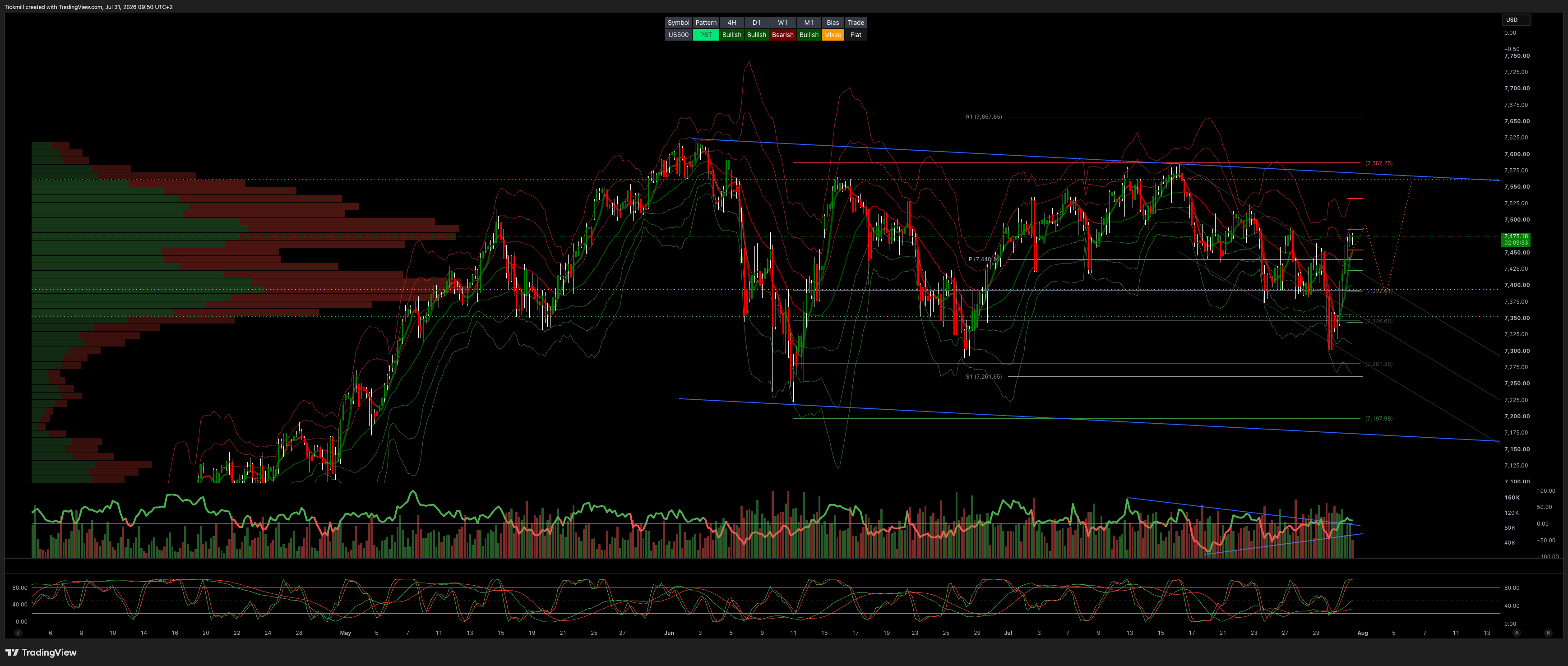
SP500 - 7450/40 weekly bull/bear level
Daily VWAP Bullish
Weekly VWAP Bearish
Above 7390 Target 7560
Below 7380 Target 7280
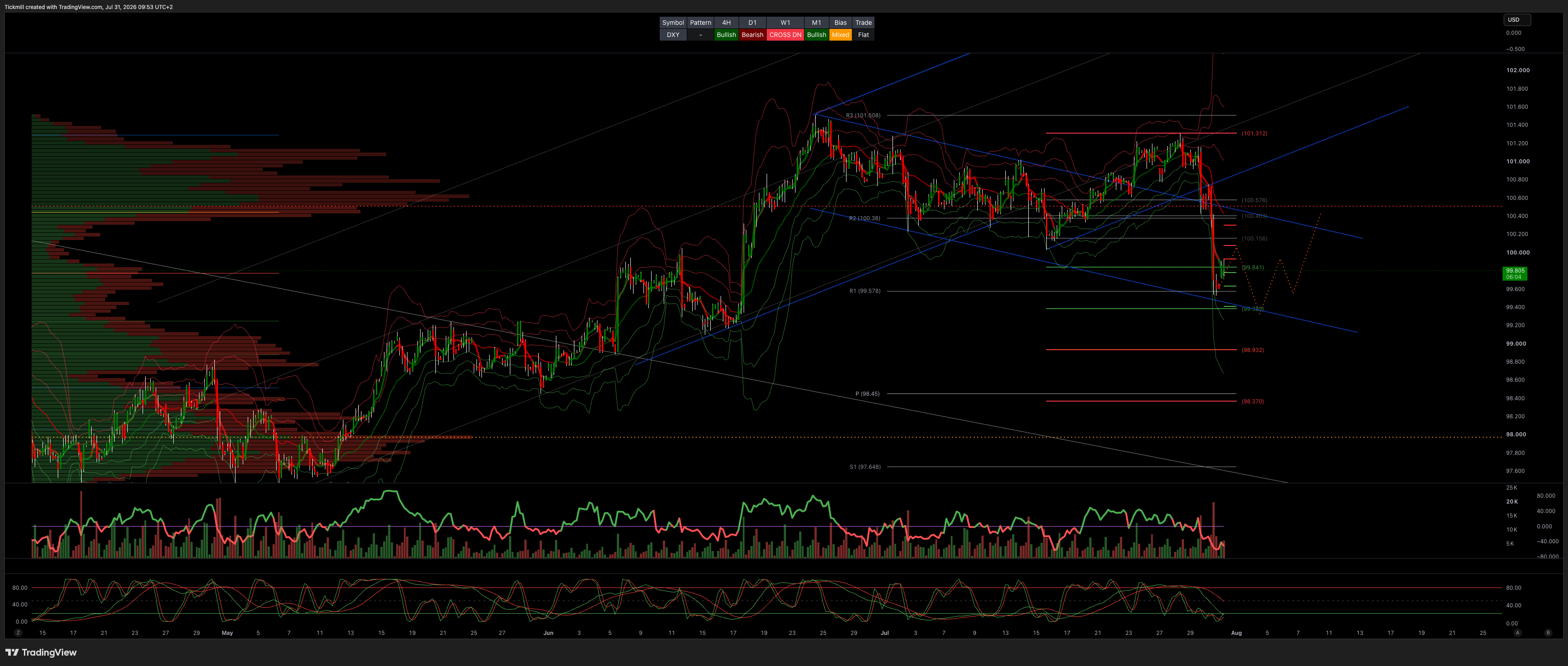
DXY - 100.5 weekly bull/bear level
Daily VWAP Bearish
Weekly VWAP Bullish>Bearish
Above 99.75 Target 102.50
Below 99.40 Target 98.40
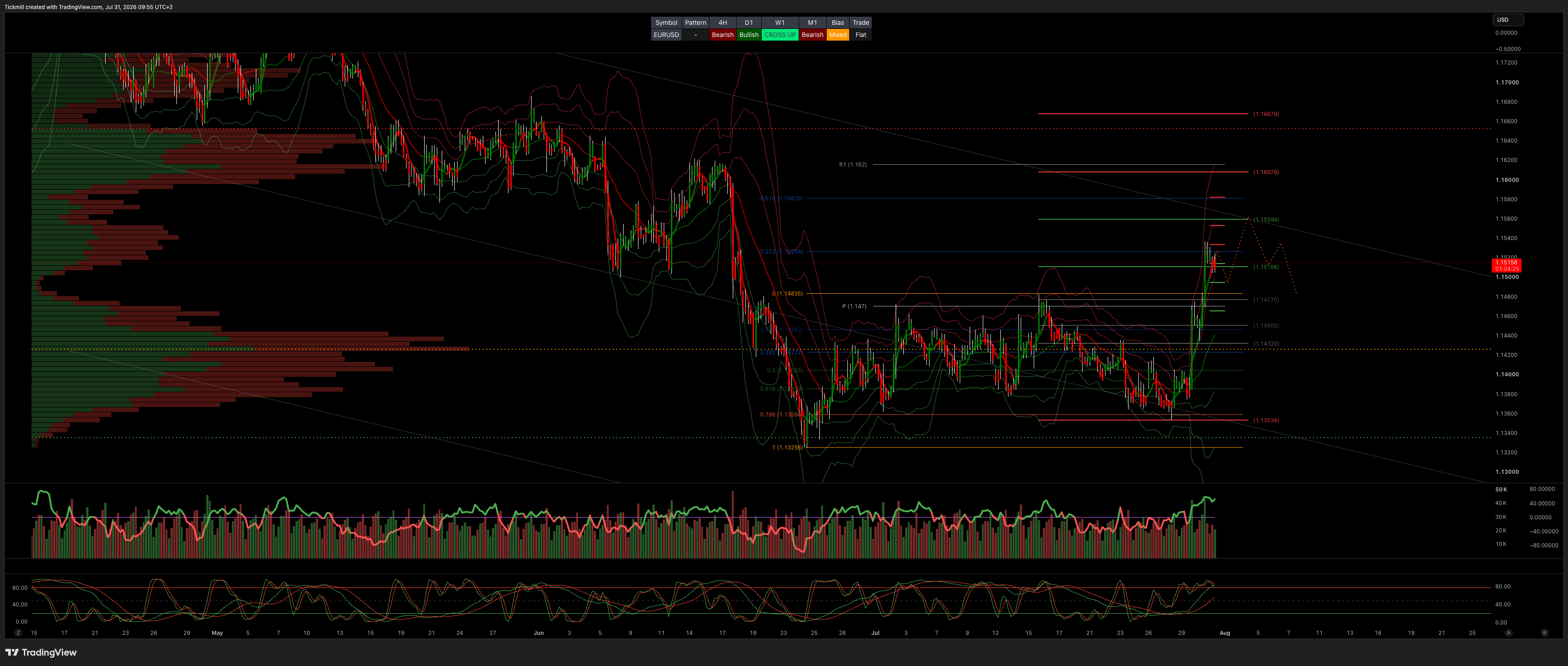
EURUSD - 1.1485 weekly bull/bear level
Daily VWAP Bullish
Weekly VWAP Bearish>Bullish
Above 1.1550 Target 1.1780
Below 1.1450 Target 1.1320
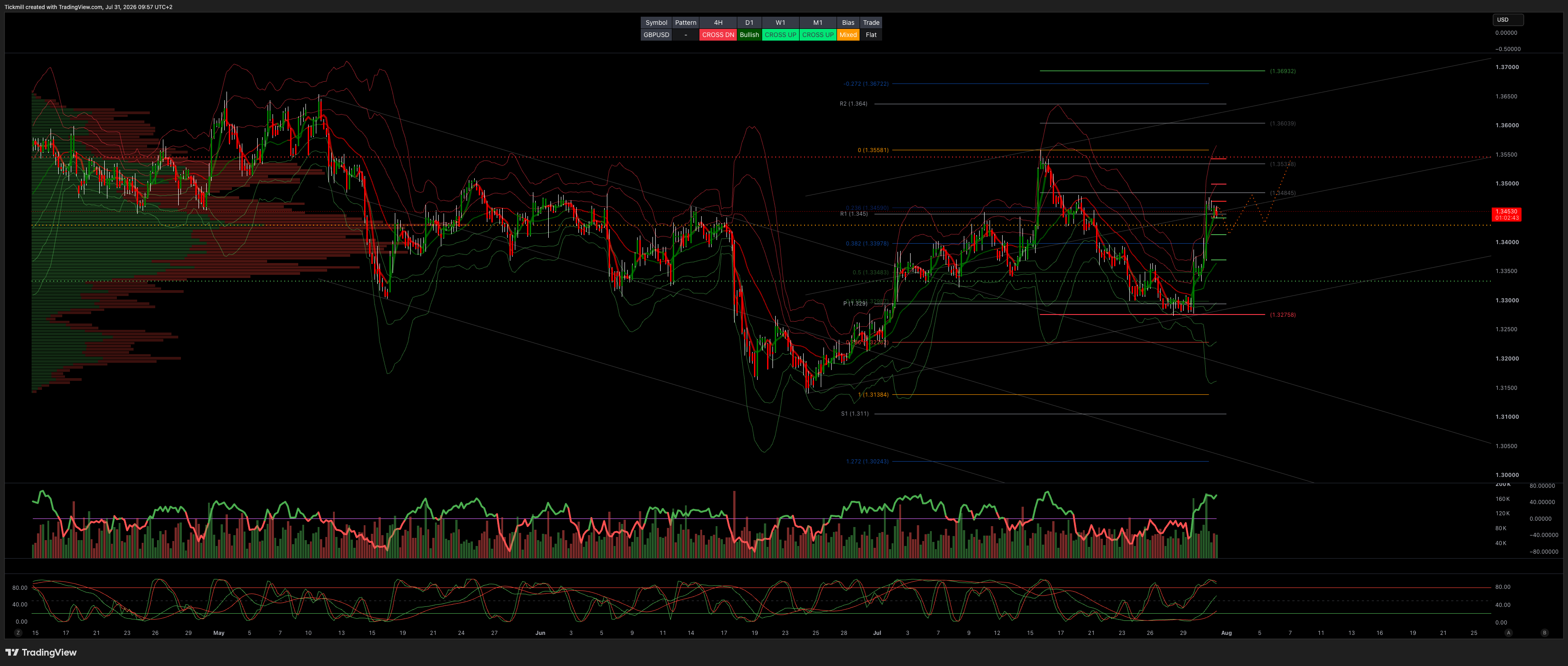
GBPUSD - 1.33 weekly bull/bear level
Daily VWAP Bullish
Weekly VWAP Bearish>Bullish
Above 1.3450 Target 1.3640
Below 1.33 Target 1.3220
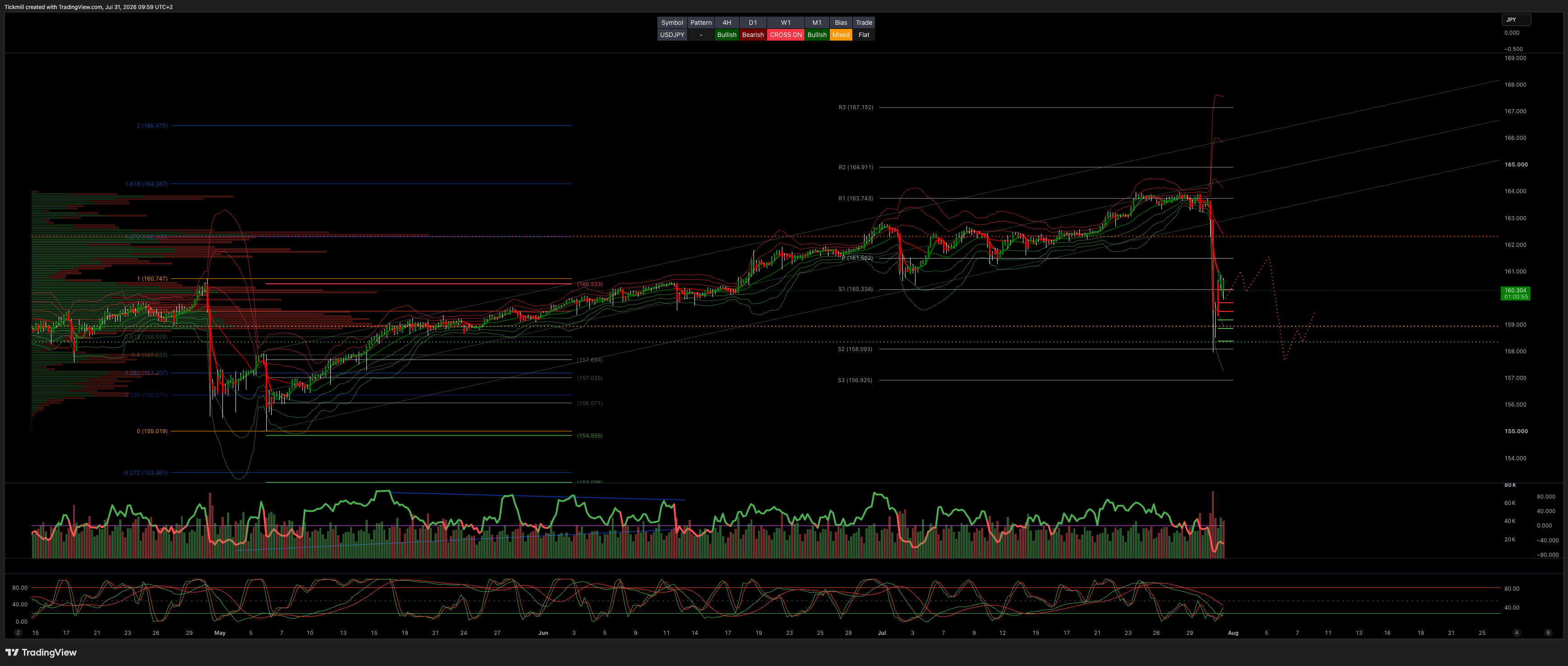
USDJPY - 162.85 weekly bull bear level
Daily VWAP Bullish
Weekly VWAP Bullish
Above 162.85 Target 165
Below 161 Target 160.50
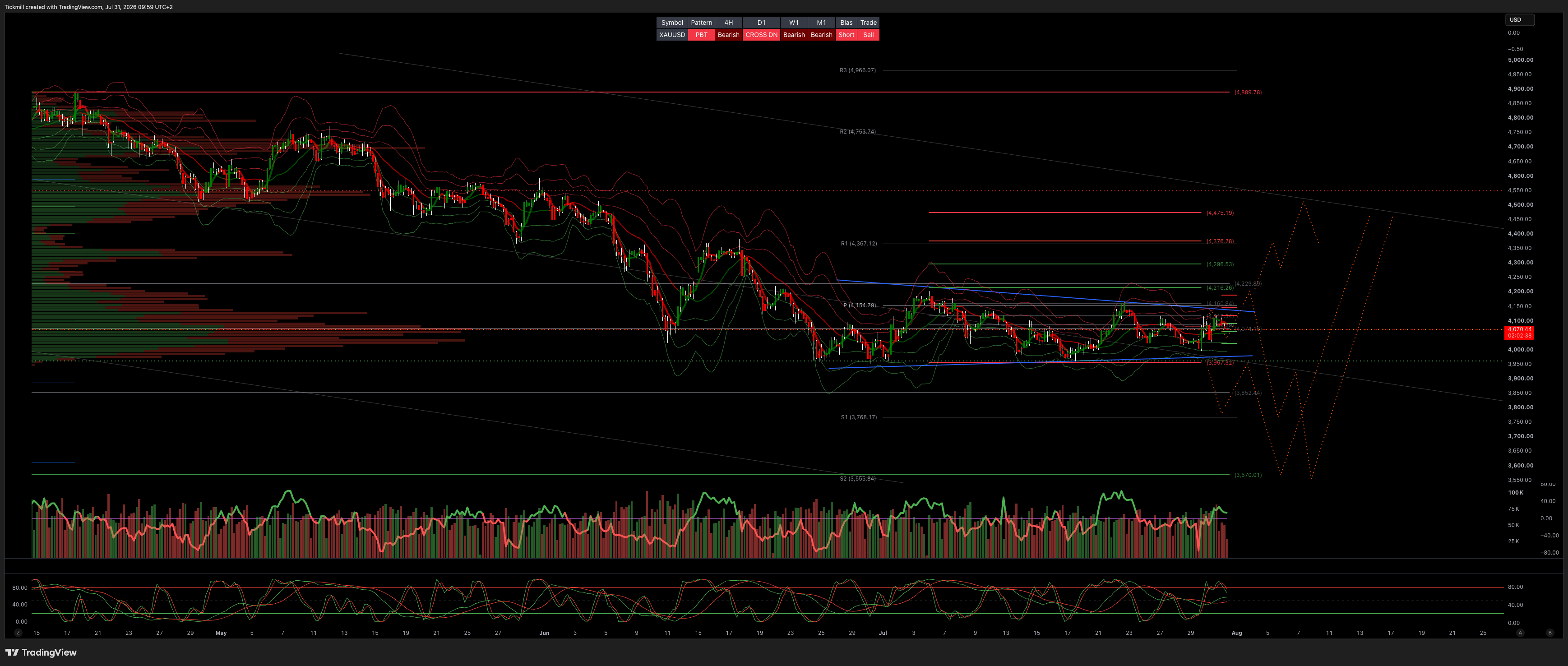
XAUUSD - 4100 weekly bull bear level
Daily VWAP Bearish
Weekly VWAP Bearish
Above 4200 Target 4500
Below 4100 Target 3569
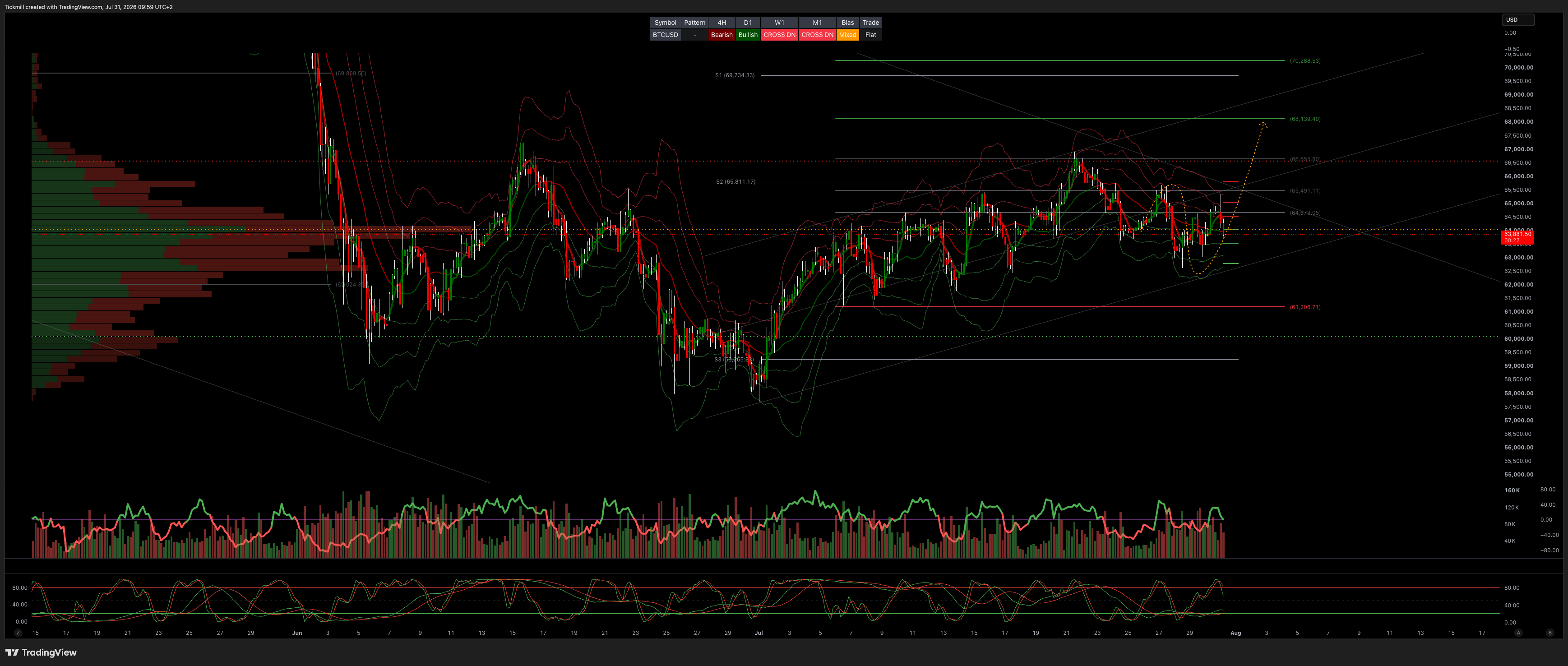
BTCUSD - 61k weekly bull bear level
Daily VWAP Bearish
Weekly VWAP Bullish
Above 62.5k Target 68.1k
Below 61k Target 52.2k



Comments
Log in or sign up to join the conversation.