

Inflation increased to 2.5% in September, fostered by fuel prices and a persistently elevated core rate. The print suggests a tangible monthly gain in regulated prices, as energy distributors start to lift end prices, while pricing remained benign in the food segment. A hike in November seems increasingly likely, as rates adjust to a new equilibrium
Second-round effects start to materialise
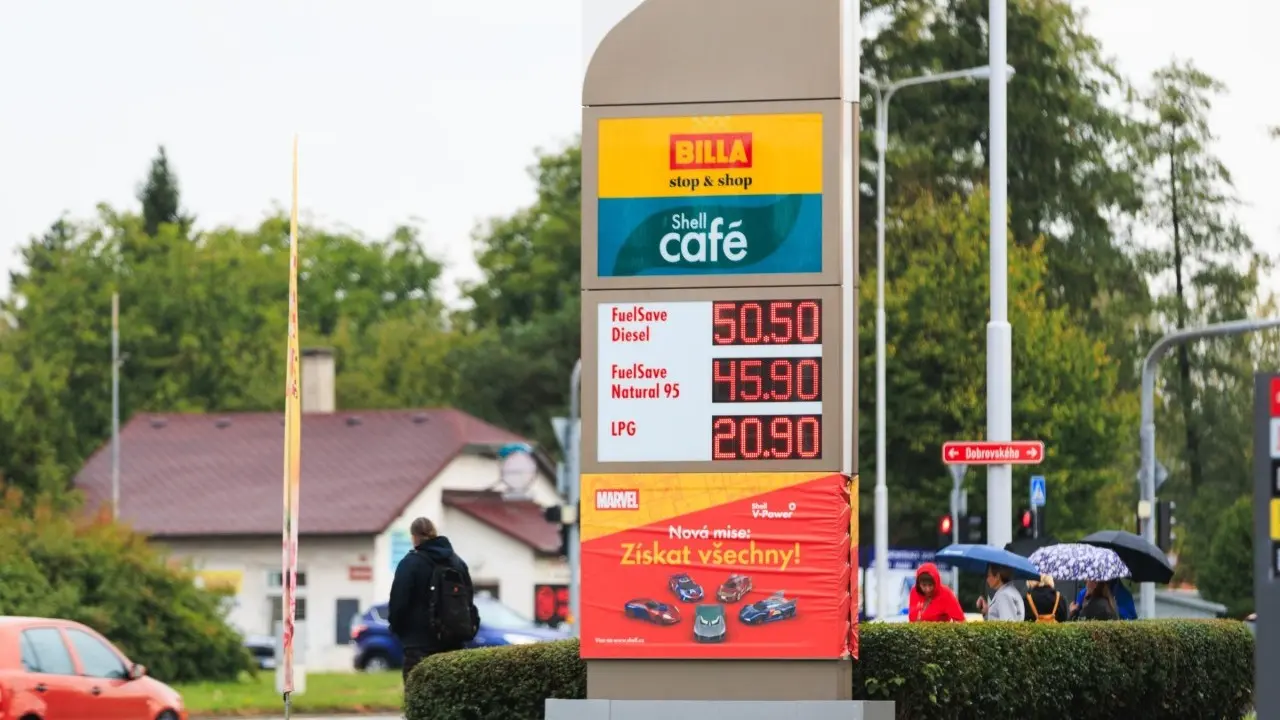
Czech headline inflation increased to 2.5% year-on-year in September, while the price level remained unchanged from the previous month. Both readings came in 0.1ppt above the market consensus, yet in line with our forecast. In a monthly comparison, the limited breakdown suggests a punchy increase in fuel prices but also tangible gains in regulated prices. The energy distributors are just beginning to pass through the persistently elevated prices of the underlying assets, such as oil and natural gas, into the end prices for their customers. In contrast, food prices remained on the benign side in September, though a tiny price increase in unprocessed foodstuffs likely heralds an expected turnaround over the coming months. We see the upcoming return of food price growth along with the current price gains in regulated prices as the first tangible second-round effects linked to the Strait of Hormuz conflict.
Expensive inputs and weaker koruna to drive goods prices higher
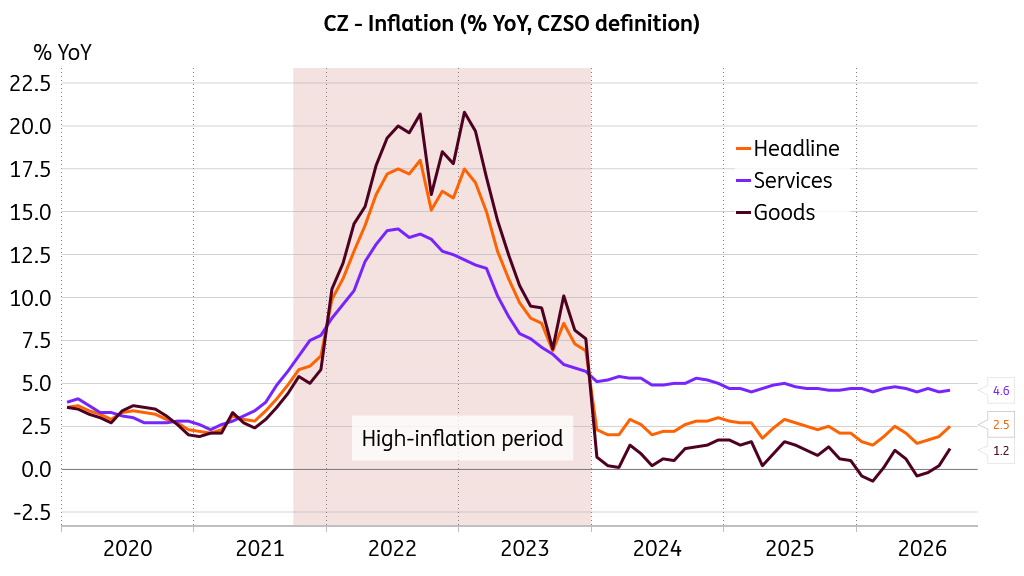
Services price growth picked up by 0.1ppt to 4.6% YoY in September, which is not compatible with medium-term price stability. Meanwhile, goods prices recorded a visible monthly increase in September that resulted in 1.2% annual growth, up from 0.2% previously. For sure, September’s rising Brent Crude prices and refined products took its toll, while the weakening koruna went in the same direction. That said, we should see a more pronounced FX impact on CPI in October, as there is a time lag for import prices to trickle down to consumer price tags, while the USD continued to gain strength. We estimate that annual core inflation landed at around 3.1% in September.
Import price dynamics precede core inflation
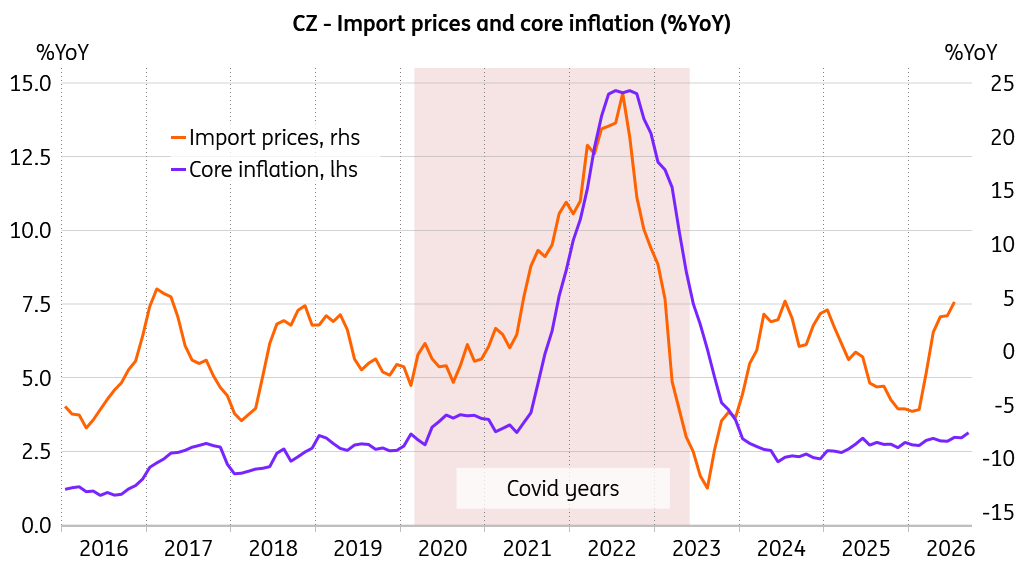
With all this crunching, an interest rate hike in November seems inevitable. In any case, we reiterate our stance that this is not the onset of a genuine hiking cycle, when monetary policy is reacting to the vision of an overheating economy and excessive domestic demand. The Czech economy will remain below its potential with a negative output gap for some time, in our view. We understand this as a rebalancing process toward higher equilibrium interest rates that we believe are above generally assumed levels. Indeed, as the world has shifted toward a new steady state with increased scarcity and costly resources, the cost of capital must adjust either to maintain some balance and also to keep inflation in check. With that in mind, we see an 80% probability of a rate rise in November, and a 30% chance for another hike in December, should upcoming inflation prints exceed our expectations.
Increased scarcity boosts costs and equilibrium rates
The time of rapid globalisation seems to have disappeared into the abyss of history, along with the almost endless reservoir of cheap labour force to be shared in China and ever decreasing costs of goods since the turn of the century. For sure, the retreat and, in specific strategic sectors, a complete reversal of globalisation has its costs, such as that consumption in advanced economies fostered by ultra-low or even negative real interest rates without elevated consumer inflation is no longer possible. And guess what, history went on and made the world add fuel to the fire, switching into a new steady state, where protracted conflicts and the struggle for materials and influence became fashionable for all the right reasons once again.
Negative real interest rates got hard to conciliate with price stability
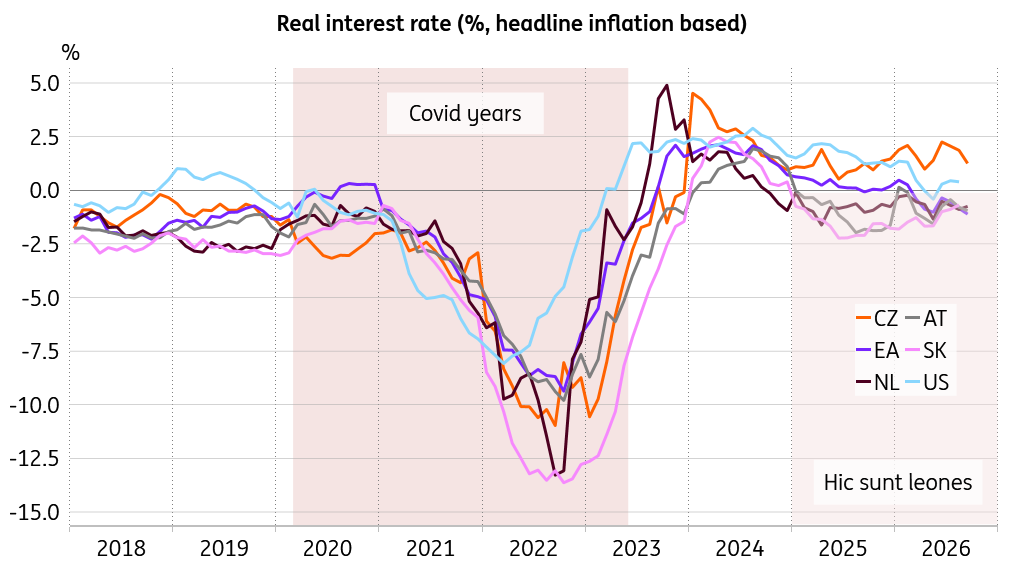
My take is that each of these two steps made the equilibrium interest rate, which is needed to keep inflation within reasonable boundaries, higher than before. Ergo, you can’t hope for decent inflation that would be compatible with broad price stability, while maintaining an ultra-low or negative real interest rate any longer. And here we stand, the Fed and the Czech National Bank are likely to make it into the new normal. In contrast, the European Central Bank looks at the interest rate hovering at sub-zero since March, while it has been negative for more than a year-and-a-half for countries such as the Netherlands, Austria, and Slovakia. Considering the outcome, the ECB didn’t seem to have its hand on the pulse at the right time. So, a gargantuan task is emerging: how to fix this and not to break the eurozone economy with French bond yields soaring?
Inflation has just set on its upward climb
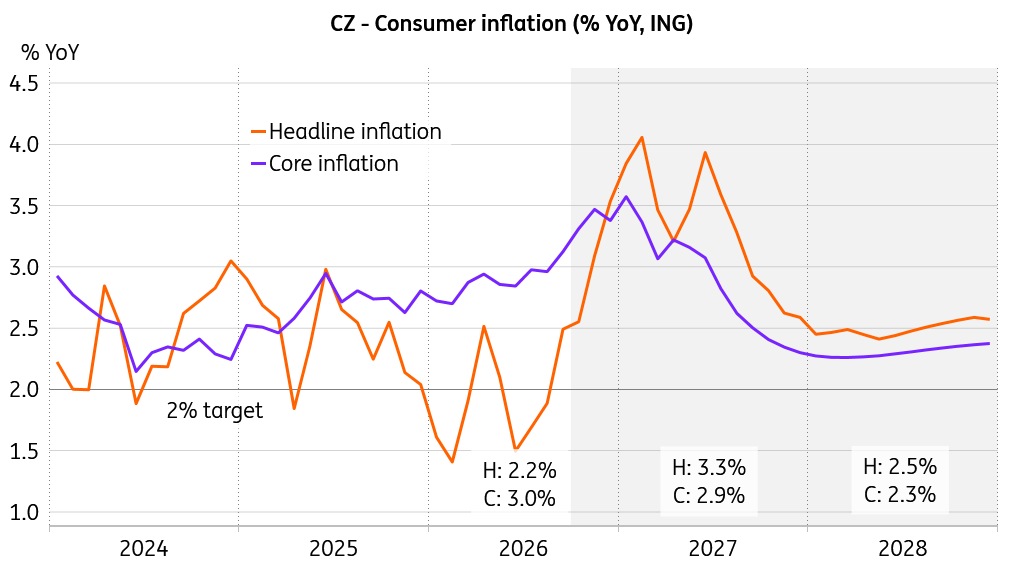
We expect Czech inflation to become more elevated over the coming months, averaging 3.3% next year. Meanwhile, the real interest rate is set to remain broadly positive. And that is a good thing, as it is beneficial for the structural advances of the economy, and it has ultimately become a necessity to keep inflation within reasonable boundaries in today’s world conditions. Don’t take me wrong, this will not change tomorrow, nor any time soon. So, the CNB may raise rates regardless of whether the ECB proceeds further. A potentially increasing interest rate differential vis-à-vis the euro would help the koruna dampen imported inflation, which has just recently picked up and is set to increase further over the coming months. We reiterate our maxim that a structurally strong economy is accompanied by a strong currency.



Comments
Log in or sign up to join the conversation.